Third Mumbai Expansion Gains Momentum, But Land, Environment and Infrastructure Remain Key Challenges
Third Mumbai Expansion Gains Momentum, But Land, Environment and Infrastructure Remain Key Challenges
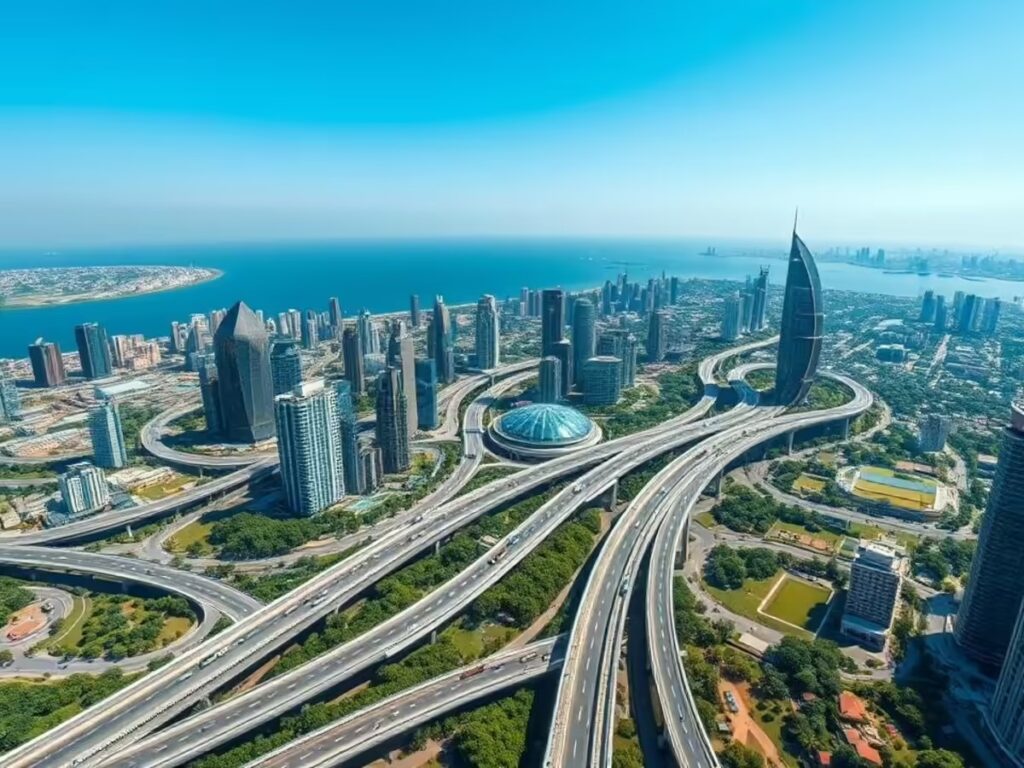
The proposed KSC New Town near Navi Mumbai International Airport is set to become one of India’s largest planned urban developments, with 74 more villages added to the project and the master plan expected by August 2026.
The Maharashtra government is moving ahead with its ambitious plan to develop Third Mumbai, a mega urban project aimed at easing population pressure on Mumbai and Navi Mumbai while creating a new economic and logistics hub in the Mumbai Metropolitan Region (MMR). The project has received a significant boost with the inclusion of 74 additional villages, expanding the proposed city’s footprint from 324 sq km to nearly 371 sq km, making it almost three times the size of the original Mumbai city.
The new urban centre, officially named KSC (Karnala-Sai-Chirner) New Town, is being planned around the Navi Mumbai International Airport and will cover large parts of Panvel, Pen, Karjat and adjoining regions in Raigad district.

The latest expansion includes 52 villages from the Karjat-Neral belt and 22 villages from the Alibag-Poynad region. Villages such as Neral, Mohpada, Bekare, Kadav, Diksal, Vengaon, Umroli and Humgaon have been brought under the development plan, along with several villages around Karjat city including Mulgav, Dhak, Patharaj, Pali, Vashvali, Poshir, Dahivali and Kondhane. In the coastal belt, Poynad, Pezari, Shahbaz, Ambepur, Navkhar, Kelwane, Kurul, Varsoli, Mapgaon, Chaul and Akshi are among those included.

The master plan for KSC New Town is expected to be finalised by August 2026, while drone mapping and LiDAR surveys required for planning have already been completed. The Urban Development Department has appointed Singapore-based consultancy Surbana Jurong Infrastructure to prepare the comprehensive development blueprint.
Experts believe the project could transform the region into a major destination for real estate, logistics, tourism and commercial investments. Its strategic location next to the Navi Mumbai International Airport and connectivity through major infrastructure projects is expected to drive long-term growth.
Three major connectivity projects are expected to form the backbone of Third Mumbai’s development. The Mumbai Trans Harbour Link (Atal Setu) has significantly reduced travel time between South Mumbai and Chirle, improving access to the proposed city. The operational Navi Mumbai International Airport is expected to attract hotels, commercial establishments and premium residential developments. Meanwhile, the upcoming Virar-Alibag Multimodal Corridor is expected to strengthen logistics and warehousing by connecting the region with the rest of the MMR.
To support the project, MMRDA has allocated ₹4,000 crore in its 2026-27 budget for initial development works, reflecting the government’s commitment to creating a world-class planned city.
However, despite the ambitious vision, several challenges remain.
Land acquisition and compensation continue to be the biggest hurdle. Industry representatives say transparency in plot allocation, infrastructure development and timelines will be crucial to gaining the confidence of landowners and investors. According to Prakash Baviskar, President of the Naina Builder Welfare Association, landowners should be treated as development partners rather than mere beneficiaries.
He said, “If the Third Mumbai is to be built successfully, it is necessary to make the landowners not beneficiaries but partners in development. Trust, fair return and timely implementation are the three pillars of the success of this project.”
He also pointed out that while landowners in the NAINA project are entitled to receive 40 per cent of developed plots, the proposed Third Mumbai policy currently provides 22.5 per cent, making policy clarity an important concern.
Environmental sustainability is another major challenge. The proposed area includes fertile agricultural land, forests and environmentally sensitive zones, requiring authorities to strike a balance between rapid urbanisation and ecological conservation.
Infrastructure readiness also remains a critical factor. Experts believe that alongside roads, metro lines, railway connectivity, schools, hospitals, markets and other civic amenities must be developed simultaneously. Without timely infrastructure, residential and commercial demand may not grow at the anticipated pace.
With its strategic location, massive scale and planned infrastructure, Third Mumbai has the potential to emerge as Maharashtra’s next major growth engine. However, the success of the project will ultimately depend on transparent land policies, sustainable planning and timely execution that balances development with the interests of local communities.
Disclaimer: The final project area, village inclusion, compensation policies and development timelines are subject to government approvals and may change as the master plan progresses.