Bought a Flat? Can You Be Forced to Pay the Previous Owner’s Maintenance Dues? Here’s What the Law Says

Bought a Flat? Can You Be Forced to Pay the Previous Owner's Maintenance Dues? Here's What the Law Says
Property buyers should verify pending maintenance charges and obtain a No Dues Certificate before completing a purchase to avoid future disputes.
By Vidhi Lalla
Buying a home does not always end with the registration of the sale deed. In some cases, new homeowners may receive unexpected demands from housing societies asking them to clear maintenance dues left unpaid by the previous owner. Legal experts say whether a buyer is liable depends on state laws, society bye-laws and the terms of the sale agreement.

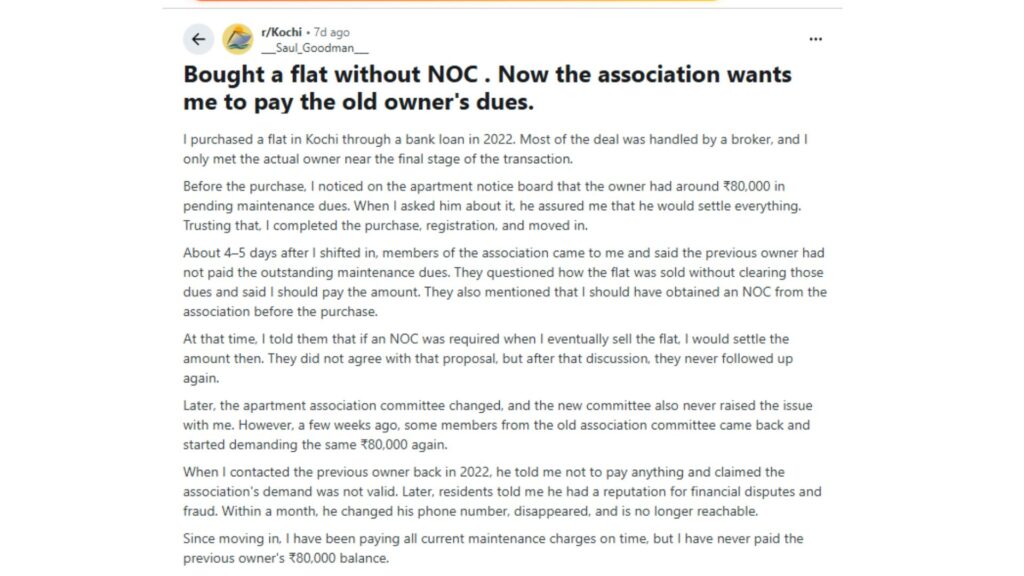
The issue recently came into focus after a homebuyer claimed he was asked to pay ₹80,000 in unpaid maintenance charges that allegedly belonged to the previous owner of his apartment. Although the seller had assured him that the dues would be cleared before the sale, the apartment association later demanded payment from the new owner.
According to legal experts, a housing society cannot automatically recover the previous owner’s dues from the new buyer in every case. Whether the society can legally demand payment depends on several factors, including whether the unpaid dues are treated as a personal liability of the former owner or as a charge attached to the property under applicable laws and society bye-laws.
Many housing societies require a No Objection Certificate (NOC) or No Dues Certificate before approving the transfer of a flat. These documents help confirm that maintenance charges, repair contributions and other society dues have been cleared before the property changes hands. If such verification is skipped, disputes may arise after the purchase.
The sale agreement also plays an important role. If it contains an indemnity clause requiring the seller to clear all outstanding liabilities before handing over possession, the buyer may have the right to recover any amount paid from the previous owner.
Legal provisions also vary from state to state. In some states, apartment ownership laws provide that a purchaser may become jointly responsible for unpaid common maintenance charges up to the date of transfer, while in others the liability remains with the previous owner unless specifically provided under law or society rules.
Experts advise buyers to carry out thorough due diligence before purchasing a property. This includes verifying maintenance records with the housing society, obtaining a written No Dues Certificate, checking utility bill payments and ensuring the sale agreement clearly states that all outstanding liabilities will be cleared by the seller before registration.
They also recommend maintaining written communication with the seller and retaining all documents related to the transaction, which may prove useful if disputes arise later.
While a buyer may, in certain circumstances, be required to clear pending dues to avoid complications with the society, they may still have the legal right to recover that amount from the previous owner if the sale agreement or applicable law supports such a claim.
FAQs
1. Can a housing society recover the previous owner’s maintenance dues from a new buyer?
It depends on the applicable state law, society bye-laws and the terms of the sale agreement. Liability is not automatic in every case.
2. Is a No Dues Certificate necessary before buying a flat?
Although requirements vary, obtaining a No Dues Certificate or NOC from the housing society is strongly recommended to confirm there are no outstanding maintenance charges.
3. What precautions should homebuyers take before purchasing a property?
Buyers should verify maintenance and utility dues, obtain a written No Dues Certificate, review society records and include an indemnity clause in the sale agreement requiring the seller to clear all pending liabilities.
Disclaimer: Property laws and housing society regulations differ across states. Buyers should seek legal advice for disputes involving maintenance dues or property transfers.