Are We Turning Our Kids Into Content Machines? Sudha Murty’s Message Every Parent Should Read
Are We Turning Our Kids Into Content Machines? Sudha Murty’s Message Every Parent Should Read
Childhood is supposed to be a phase full of play, learning, and innocence. Instead, more children today are finding themselves in front of phone cameras, becoming part of a steady stream of online content. Many parents begin posting even before the child is born, sharing ultrasound photos, daily milestones, and every small moment. By the time the child starts school, a digital identity is already built for them, complete with followers and constant public attention.
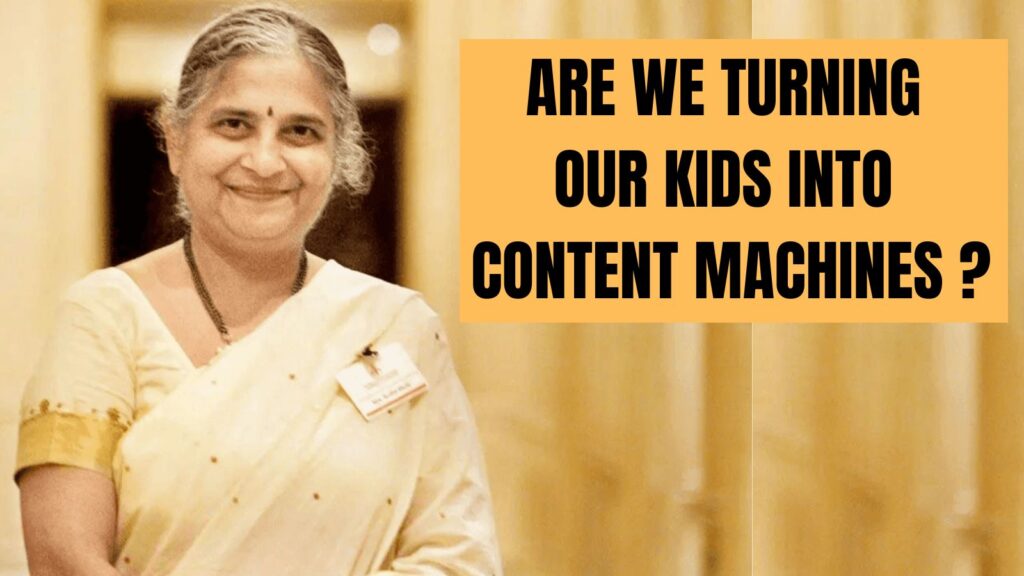
This growing trend prompted Rajya Sabha MP and author Sudha Murty to raise the issue during the Winter Session of Parliament. She warned that children are increasingly being shaped into “content machines,” often without understanding or consent. While parents may consider online posts harmless, the long-term emotional impact can be serious.
From dance reels and cute skits to elaborate costume shoots, children frequently appear in content that spreads quickly. Sudha Murty cautioned that these posts come with a hidden price. Young children cannot grasp the meaning of becoming public figures or being judged by strangers. Regular online exposure can make them self-conscious early in life and affect how they develop emotionally.

Murty noted that India has strict rules protecting children who work in films and advertisements, covering work hours, safety, and exploitation safeguards. In contrast, social media operates with no such boundaries. Online content reaches far larger audiences, yet there are no clear protections for minors. She called for guidelines that restrict inappropriate portrayals, prevent commercial misuse, and ensure children are not pressured into influencer roles before they understand what they are doing.
She also urged parents to focus on values like education, sports, good habits, and emotional growth, rather than trends and algorithms. When a child’s self-worth starts depending on likes and comments, it can distort their understanding of real achievement and happiness. According to Murty, childhood should not be shaped by the need to perform for an audience.
Beyond Murty’s concerns, the broader social impact is becoming visible. Children who grow up chasing followers often struggle to find balance outside the digital world. Exposure to online criticism, hate comments, and unrealistic expectations adds to mental pressure. In extreme cases, the desire for validation has led some individuals to harm themselves when their online goals were not met. These risks only grow when such pressures begin in early childhood.
Sudha Murty’s message is simple and firm: children deserve a childhood free from digital performance demands. They should enjoy real-life experiences, friendships, learning, and play, without the burden of being constantly watched online. Social media can wait; childhood cannot.