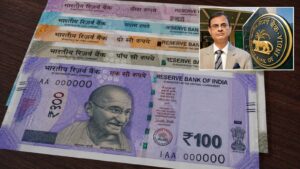
At ₹90 And Sliding: Indian Rupee Touches All-Time Low On Market Uncertainty

At ₹90 And Sliding: Indian Rupee Touches All-Time Low On Market Uncertainty
The Indian rupee plunged past the ₹90-per-dollar milestone for the first time ever, closing at a record low of ₹90.21 on Wednesday, December 3, 2025. The currency’s decline reflects sustained foreign investor outflows and rising crude oil prices, which continue to weigh heavily on the domestic unit.
The rupee opened at 89.96 against the U.S. dollar and sank to an intraday low of 90.30 before settling at the fresh all-time low, marking a fall of 25 paise from its previous close. Analysts noted that uncertainty surrounding the India-U.S. trade deal and the Reserve Bank of India’s (RBI) lack of intervention further intensified the downward pressure on the rupee.
On Tuesday, December 2, the currency had already touched a lifetime low of 89.96, impacted by speculative short-covering and strong import demand for dollars.

“The rupee hit a fresh all-time low of 90.30 amid selling pressure from foreign investors and a surge in crude oil prices. Uncertainty over the announcement of India-US trade deal has also weighed on the rupee. However, a weak U.S. dollar index prevented a sharp fall,” said Anuj Choudhary, Research Analyst at Mirae Asset ShareKhan.
Choudhary added, “We expect the rupee to trade with a slight negative bias due to ongoing FII outflows and higher crude oil prices. However, a soft dollar and rising chances of a Fed rate cut in December may provide some support, keeping the USD-INR range between ₹89.80 and ₹90.50.”
According to Anil Kumar Bhansali, Head of Treasury and Executive Director at Finrex Treasury Advisors LLP, “The rupee was easily allowed by the RBI to cross 90, and it even fell to 90.30 before the central bank intervened.”
Meanwhile, the domestic economy shows signs of resilience in other areas. The seasonally adjusted HSBC India Services PMI Business Activity Index rose to 59.8 in November from 58.9 in October, driven by new business growth.
Despite these positives, the falling rupee has put pressure on domestic equity markets. The Nifty slipped below the 26,000 mark, while the Sensex dropped nearly 200 points in early trade, reflecting investor caution over potential inflation and foreign investor activity.
“The depreciation in the rupee will halt and even reverse once the India-US trade deal comes through. This is expected later this month. However, the impact will largely depend on the specific tariffs imposed on India under the deal,” market analysts noted.
At the opening bell on Wednesday, both benchmark indices showed muted movement. The Sensex inched up by 12 points to 85,151, while the Nifty slipped 18 points to 26,014. Among the top performers in the morning session, shares of HUL, Titan, Tata Motors PV, NTPC, BEL, Trent, Bajaj Finserv, Kotak Bank, Ultratech Cement, Maruti Suzuki, L&T, Power Grid, and ITC saw the largest declines.
Analysts observed, “A key concern is the continued depreciation of the rupee and fears of further declines, especially since the RBI has not intervened to support the currency. This is prompting FIIs to sell, even as corporate earnings grow and GDP rebounds strongly.”