“Buy Your Tickets… !”: India’s First Bullet Train To Launch On August 15, 2027, Ashwini Vaishnaw Announces
"Buy Your Tickets... !": India’s First Bullet Train To Launch On August 15, 2027, Ashwini Vaishnaw Announces
Mumbai–Ahmedabad high-speed corridor to open in phases, with Surat–Bilimora stretch first
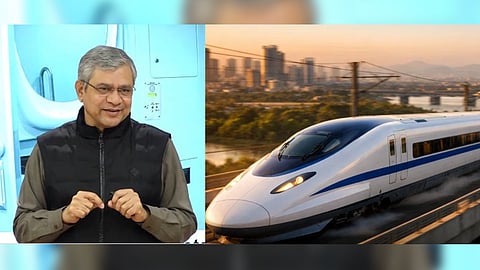
India is set to enter the era of high-speed rail travel on August 15, 2027, with the launch of the country’s first bullet train, Union Railway Minister Ashwini Vaishnaw has announced. The long-awaited Mumbai–Ahmedabad High-Speed Rail Corridor will mark a major leap in India’s transport infrastructure, combining Japanese Shinkansen technology with Indian engineering at scale.
Speaking on the project’s timeline, Vaishnaw said the bullet train would be ready for operations by Independence Day 2027. He added, in a lighter moment, that people could “buy a ticket now itself,” underscoring confidence in the project’s progress and delivery schedule.
The 508-kilometre Mumbai–Ahmedabad corridor will not open all at once. Instead, Indian Railways and the National High Speed Rail Corporation Limited (NHSRCL) have planned a phased rollout to ensure safety and operational readiness. According to the minister, the first operational section will be Surat to Bilimora, followed by Vapi to Surat. The next phases will see Vapi to Ahmedabad open, then Thane to Ahmedabad, and finally the full Mumbai to Ahmedabad stretch.

This phased approach allows sections that are construction-ready to begin services while work continues on more complex segments. Officials say this will help familiarise passengers with high-speed rail while steadily expanding coverage along the western corridor.
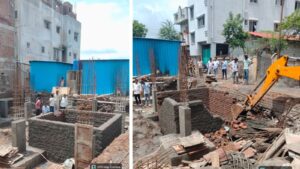
As of early 2026, the project has crossed several key milestones. Over 330 kilometres of viaduct construction 408 kilometers of supporting piers have been erected, while 17 of the planned 25 river bridges are now complete, along with major progress on stations, depots, and track infrastructure.
One of the most challenging components remains the 21-kilometre underground tunnel between Mumbai’s Bandra-Kurla Complex (BKC) and Shilphata, which includes a significant undersea stretch. This section is considered critical for connecting south Mumbai to the rest of the high-speed network.
The bullet train project is being developed in collaboration with Japan and is based on Shinkansen standards, known globally for speed, punctuality, and safety. Trains on the corridor are expected to operate at speeds of up to 320 kmph, reducing travel time between Mumbai and Ahmedabad to around two hours, compared to the current six to seven hours by conventional rail.

Vaishnaw also linked the bullet train’s progress to the broader success of modern Indian rail initiatives, including the Vande Bharat Express network. He said these projects have created a “new sense of confidence across the country,” with states and MPs increasingly demanding advanced rail services for their regions.
Once operational, the Mumbai–Ahmedabad bullet train is expected to transform business travel, regional connectivity, and urban development along its route, which includes major hubs such as Mumbai, Thane, Vapi, Surat, Vadodara, and Ahmedabad.
With August 15, 2027 now officially set as the launch date, India’s first bullet train is no longer a distant vision, but a countdown milestone in the country’s infrastructure journey.