Can see through walls: Scientists Develop WiFi Technology That Can Detect Human Movement Inside Rooms Without Cameras

Can see through walls: Scientists Develop WiFi Technology That Can Detect Human Movement Inside Rooms Without Cameras
Researchers have created a system that uses WiFi signals and artificial intelligence to track human movement inside rooms without cameras.
Scientists have developed a new technology that allows WiFi signals to detect people and their movements even through walls, raising both excitement and concern in the scientific community. The innovation uses ordinary wireless signals along with artificial intelligence to identify human presence and activity inside buildings.
Researchers demonstrated that WiFi signals can be used to create basic motion maps of people inside a room, even when they are not visible to cameras. The system works by analysing how wireless signals interact with the human body and nearby objects.
Unlike traditional surveillance systems that depend on cameras or specialised sensors, this technology relies on existing WiFi routers combined with advanced deep learning algorithms. By studying how the signals bounce, reflect and distort as they pass through walls and objects, the software can interpret movement patterns.

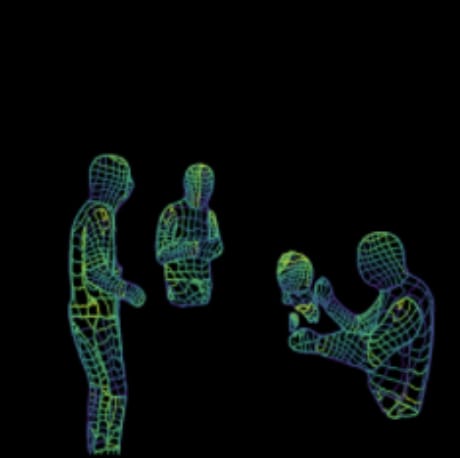
Using these signal changes, the system can generate dynamic three-dimensional silhouettes that represent people moving behind walls. During tests, researchers were able to detect multiple individuals in a room and recognise basic postures such as standing, sitting or walking.
BREAKING: Someone just open-sourced software that sees you through walls using only WIFI signals. pic.twitter.com/sGUCg9zyHx
— Anonymous News (@YourAnonOne) March 8, 2026
One of the main advantages of the technology is its cost-effectiveness. Since most homes and offices already have WiFi networks, the system does not require expensive hardware installations. Instead, the analysis is done through software that interprets wireless signal data.
Researchers believe the technology could have several useful applications, particularly in healthcare and emergency situations. For example, it could help monitor elderly people living alone by detecting unusual inactivity or falls inside homes. It could also assist search-and-rescue teams by locating survivors trapped under debris after disasters such as earthquakes or building collapses.
Another benefit highlighted by scientists is that the system does not produce traditional images or video footage. Instead, it generates abstract motion data, which may offer some level of privacy compared to camera-based monitoring systems.
However, the development has also sparked serious concerns about privacy and surveillance. Experts warn that if such technology becomes widely accessible, it could potentially be misused to track individuals’ movements without their knowledge.
Researchers have acknowledged these concerns and emphasised that the technology is still in its early experimental stages. Work is ongoing to integrate safeguards and privacy protections before it can be considered for broader real-world use.
The study highlights how everyday wireless infrastructure could evolve beyond simple internet connectivity and become a powerful sensing tool, potentially transforming fields such as healthcare monitoring, smart homes and emergency response.