Centre Mandates Full Six-Stanza ‘Vande Mataram’ At Official Events, Standing Required
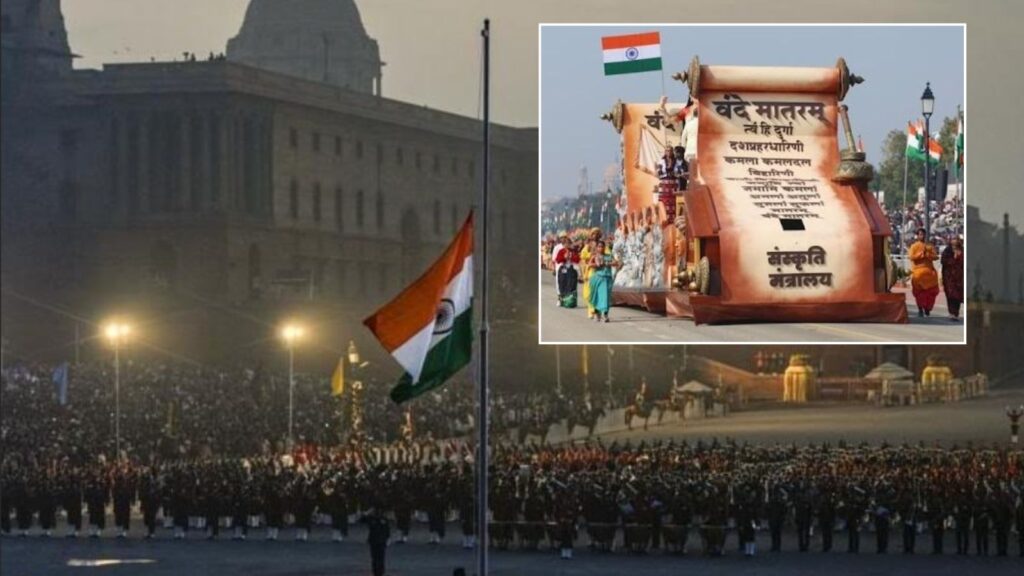
Centre Mandates Full Six-Stanza ‘Vande Mataram’ At Official Events, Standing Required
Union Home Ministry issues fresh protocol for national song at government functions, schools directed to begin day with national anthem.
The Union Home Ministry has issued new guidelines mandating the singing or playing of the national song Vande Mataram at designated government functions, with the full six-stanza official version now required at significant ceremonial occasions.
Under the directive, the six-stanza rendition lasting around 3 minutes and 10 seconds, will be performed during key state events, including the unfurling of the national flag and formal functions attended by the President of India. The song will be played both on the President’s arrival and departure at such ceremonies.
The guidelines also specify that Vande Mataram will be rendered before the national anthem Jana Gana Mana when both are performed at an event. The national anthem, by comparison, runs for 52 seconds.

According to the new protocol, standing during Vande Mataram will be mandatory at official government events. However, this requirement will not extend to cinema halls or similar public entertainment venues.
The Home Ministry has also instructed that the national song be included at civilian honour ceremonies such as the Padma Awards, as well as other official state functions where national symbols are observed.
In addition, schools have been directed to begin the day with the national anthem, reinforcing the role of national songs in daily institutional practice.
Officials said the move is intended to ensure uniformity and clarity in ceremonial observances across government institutions, with detailed instructions circulated regarding the approved version, duration, and sequence of performance.
The directive comes soon after Prime Minister Narendra Modi launched a year-long commemoration marking 150 years of Vande Mataram. The programme, running from November 7, 2025, to November 7, 2026, marks a century and a half since the composition of the iconic song, which became a rallying cry during India’s freedom struggle and remains a symbol of national pride.