Children’s Rights In Father’s Property: What Indian Law Actually Says
Children’s Rights In Father’s Property: What Indian Law Actually Says
The Hindu Succession Act, 1956 and its 2005 amendment changed inheritance rules in India by giving daughters equal rights in ancestral property and clarifying how self-acquired assets can be distributed
There is a common belief in many Indian families that children automatically have equal rights over every property owned by their parents. However, Indian law makes a clear distinction between ancestral property and self-acquired property.

Under the Hindu Succession Act, 1956, inheritance rules apply to Hindus, Buddhists, Jains and Sikhs. The law governs how property is divided among legal heirs and defines coparcenary rights within joint Hindu families.
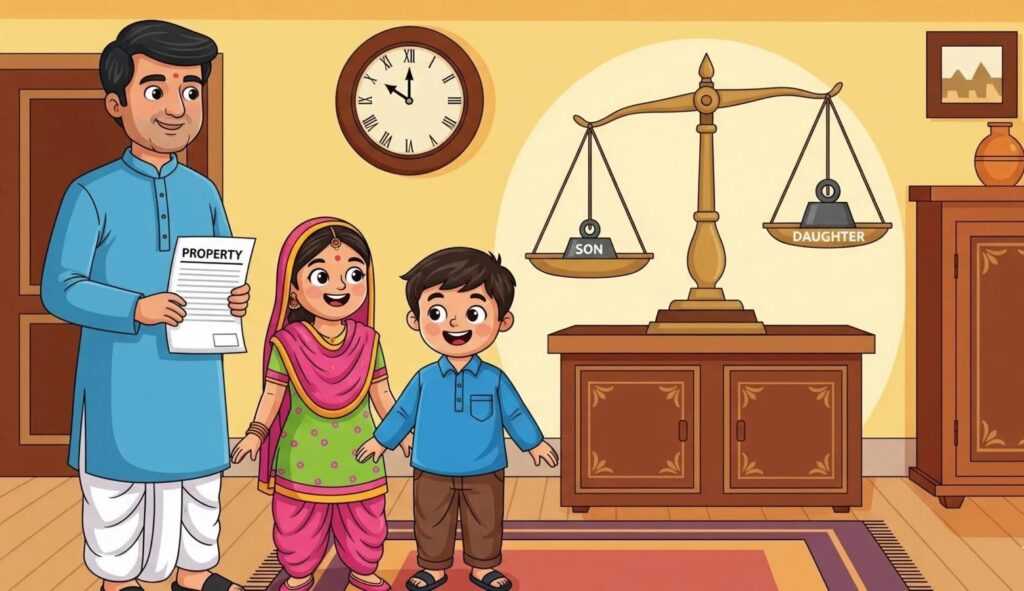
A major change came with the Hindu Succession (Amendment) Act, 2005, which granted daughters equal rights in ancestral property.

Daughters now have the same legal rights as sons in ancestral property, including equal ownership and inheritance rights.
Before the amendment, daughters had limited claims in joint family property. The revised law also made daughters equal coparceners and gave them equal responsibility in family property matters.
The law mainly separates property into two categories: Ancestral property and Self-acquired property.
Ancestral property refers to property that has remained undivided within a family for four generations.
Children acquire rights in such property by birth itself. A father cannot independently sell or transfer ancestral property without the consent of other legal heirs who also have a share in it.
In contrast, self-acquired property refers to assets purchased or earned by an individual using personal income or resources.
Parents have full legal rights over self-acquired property and can sell, gift or transfer it to anyone of their choice.
They may also transfer such property to one child, multiple heirs or even a third person through a will.
The law also clarifies the status of inherited property.
If a father inherited property from his own father after 1956, courts generally treat it as self-acquired property unless it continues as part of an undivided Hindu family property arrangement.
Another important issue arises when a person dies without leaving a will.
If a father dies intestate, meaning without a will, the property is distributed equally among Class I heirs under the Hindu Succession Act.
These heirs include the widow, mother, sons and daughters. If no Class I heirs exist, the property passes to other categories of legal heirs as defined under succession laws.
Legal experts say many family disputes happen due to confusion between ancestral and self-acquired property rights.
The 2005 amendment is considered a landmark reform because it aligned inheritance laws with constitutional principles of gender equality and strengthened daughters’ financial and legal standing within families.
Disclaimer: Property and inheritance disputes can involve complex legal interpretations depending on family structure, wills, religion and state-specific circumstances. Readers are advised to consult a qualified legal expert for case-specific guidance.