From Kandmool to Coconut: 4 Sacred Fruits Rooted in Hindu Mythology and Devotion

From Kandmool to Coconut: 4 Sacred Fruits Rooted in Hindu Mythology and Devotion
Fruits have always held an important place in Hindu mythology, not just as food but as sacred offerings in rituals and ceremonies. Many fruits mentioned in ancient texts were considered symbols of purity, devotion, and spiritual significance. They were often used as naivedya (offerings) to gods, or as part of daily rituals and religious observances. Beyond their physical nourishment, these fruits were linked to stories, moral lessons, and the lives of revered figures. Here are four notable fruits from Hindu mythology that continue to capture attention for their spiritual and cultural importance.
Kandmool – The Forest Root-Fruit

Kandmool is described in the Ramayana as a rare root-fruit found in forests and mountains. It has a brown outer skin and a white, crunchy interior. This fruit is said to have been a staple food for Rama, Sita, and Lakshmana during their exile, providing sustenance in the wilderness. Although it exists in nature, it is rare and not widely cultivated today. Kandmool highlights the connection between survival, simplicity, and the resources provided by nature.

Narikela (Coconut) – Symbol of Purity

The coconut, known as Shriphala in Sanskrit, is one of the most revered fruits in Hinduism. Its use in rituals and as an offering symbolizes purity and the cleansing of negative thoughts. The hard shell represents the ego, and breaking it signifies the revelation of inner purity. Coconuts are present in almost every puja and auspicious ceremony, from temple offerings to weddings and housewarming events, reinforcing their sacred status across traditions.
Pippala Fruit – Fruit of the Ashwatha Tree
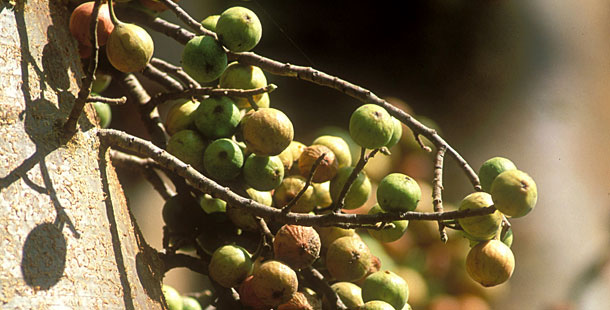
The Pippala fruit comes from the sacred Ashwatha tree and has spiritual significance mentioned even in the Rigveda. Though the tree and its small figs exist in reality, the fruit is particularly symbolic of wisdom, longevity, and spiritual awareness. It is often associated with meditation, sacred rituals, and divine connection, reflecting its importance beyond just a food item.
Ber – A Fruit of Devotion
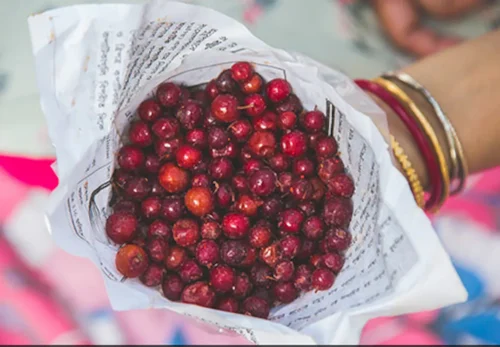
Ber, or jujube fruit, is closely associated with the story of Shabari, a devoted follower of Rama. Shabari carefully tasted each berry to ensure it was sweet before offering it to Rama. Despite being half-eaten, the offering was accepted with love, emphasizing that devotion and intention matter more than perfection. The story makes Ber a symbol of sincere devotion and spiritual humility.