FY26 Housing Market Value Likely to Jump 20%, Sales Volume May Stay Unchanged
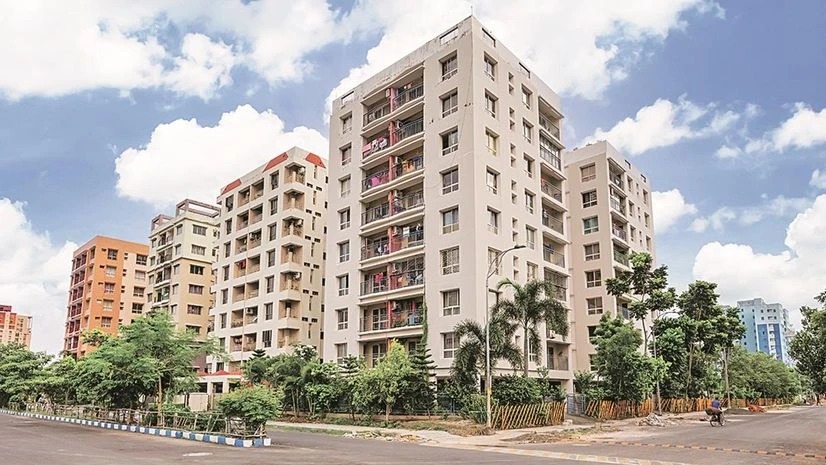
FY26 Housing Market Value Likely to Jump 20%, Sales Volume May Stay Unchanged( Representative Image)
Luxury demand drives record revenues even as mid-range buyers retreat amid rising prices and longer EMIs.
India’s housing boom is taking a new shape — one driven by the wealthy. New data from ANAROCK shows that while fewer homes are being sold, the total value of those sales is hitting record highs, reflecting the growing dominance of luxury and ultra-luxury properties in the country’s real estate landscape.
According to ANAROCK’s FY26 outlook, the overall housing sales value across the top seven cities — Mumbai Metropolitan Region (MMR), Delhi-NCR, Bengaluru, Pune, Chennai, Hyderabad, and Kolkata — is projected to rise nearly 20% year-on-year, even though sales volumes are likely to remain stagnant or grow by no more than 4%.

In FY25, 4,22,765 homes worth ₹5.59 lakh crore were sold, marking a 6% increase in value despite a 14% fall in unit sales. By FY26-end, total sales value is expected to cross ₹6.65 lakh crore, underscoring how price escalation and larger ticket-size homes are reshaping the market.
“After peaking in overall absorption in FY2024, housing volumes have moderated,” said Prashant Thakur, Executive Director and Head – Research & Advisory, ANAROCK Group. “However, the sales value of total homes sold is growing because budgets are expanding and buyers are prioritising luxury.”
Luxury Drives The Surge
The first half of FY26 has already recorded 1.93 lakh homes sold worth nearly ₹2.98 lakh crore, or 53% of the total value achieved in FY25. Nearly 42% of new launches in this period were in luxury and ultra-luxury categories — a clear signal that developers are chasing premium demand rather than mid-income volumes.
High-net-worth individuals, NRIs, startup founders and corporate executives are leading the charge, favouring spacious, amenity-rich homes in projects such as DLF Camellias, Lodha Malabar, and Emaar’s The Palm Springs. Developers, in turn, are cutting low-margin inventory to focus on higher-end launches.
City-Wise Trends: NCR and Chennai Lead
Delhi-NCR and Chennai have emerged as front-runners, achieving 74% and 71% of their FY25 sales value respectively in just the first half of FY26. MMR, despite being India’s costliest market, achieved only 45% of last year’s value, signalling some saturation at the top end.
| City | H1 FY26 Sales Value | % of FY25 Value Achieved |
|---|---|---|
| NCR | ₹75,859 crore | 74% |
| Chennai | ₹12,370 crore | 71% |
| MMR | ₹1 lakh+ crore | 45% |
| Pune | ₹30,324 crore | 46% |
| Hyderabad | ₹30,646 crore | 52% |
| Bengaluru | ₹43,627 crore | 55% |
| Kolkata | ₹5,429 crore | 50% |
Why Values Are Rising While Volumes Stall
Analysts point to five key drivers behind this trend:
– A luxury boom that offsets lower sales with higher prices
– Rising per sq. ft. costs due to land scarcity and material inflation
– Shift toward end-user, not speculative, demand
– Aggressive NRI re-entry post-pandemic
– Developers prioritising premium projects for stronger margins
The Bigger Picture
India’s property cycle now resembles mature global markets — fewer transactions, higher values, and a sharp wealth skew. With average home prices rising 15–25% over the past two years, affordable and mid-range buyers are increasingly squeezed out. Analysts expect this will lead to longer loan tenures, higher down payments and fewer sub-₹80 lakh options across major metros.
The bottom line: India’s real estate boom is no longer mass-market — it’s premium-first, price-heavy, and powered by deep-pocketed buyers.
Disclaimer: This article is for informational purposes only and does not constitute investment advice. Readers should conduct independent due diligence or consult financial advisors before making property-related decisions.