Housing Society Sinking Fund Explained: Rules, Purpose and Why Every Resident Should Know About It
Housing Society Sinking Fund Explained: Rules, Purpose and Why Every Resident Should Know About It
Housing Society Sinking Fund Rules in Maharashtra: How Societies Create and Use It. Learn what a sinking fund in a housing society is, how it is created, the rules under Maharashtra cooperative housing laws, and why it is important for building maintenance and repairs.
Housing Society Sinking Fund: Rules, Purpose and Why Residents Should Understand It
With the rapid growth of residential complexes in urban areas, the management of housing societies has become increasingly important. Maintenance of buildings, repainting, lift repairs, pipeline replacement and other major infrastructure work require significant financial resources.
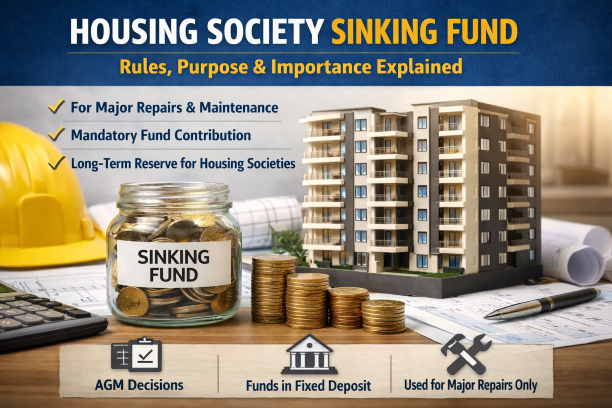
To manage these future expenses efficiently, housing societies create a Sinking Fund — a long-term reserve meant for major repairs and structural maintenance of the building.

What is a Sinking Fund?
A sinking fund is a long-term reserve fund maintained by a housing society to cover major expenses that arise over time. The fund is typically used for large-scale repairs or infrastructure upgrades that cannot be managed through regular maintenance charges.
Common uses of the sinking fund include:
- Structural audit of the building
- Major repainting projects
- Roof repairs
- Lift replacement or major lift repairs
- Water tank repairs or replacements
- Major plumbing or pipeline work
The primary objective of the fund is to ensure that societies are financially prepared for significant repairs that may arise after several years.
What Do the Rules Say?
According to Maharashtra Cooperative Housing Society regulations, it is mandatory for every registered housing society to create a sinking fund.
After the formation of the society, members contribute to this fund along with their monthly maintenance charges. As per the guidelines, societies must deposit at least 0.25% of the building’s construction cost annually into the sinking fund.
The amount collected from members is generally calculated based on:
- The area of the flat, or
- A proportion decided by the society in accordance with its bylaws.
How is the Sinking Fund Created?
The decision regarding the sinking fund is taken during the Annual General Meeting (AGM) of the housing society. Members collectively decide the monthly contribution required for the fund.
The collected amount is kept separately in the society’s bank account. In many cases, societies also place this money in fixed deposits, allowing the fund to grow through interest.
Importantly, the sinking fund cannot be used for routine expenses. It is reserved strictly for major repairs and long-term maintenance work.
Rules for Using the Fund
Housing societies must follow certain procedures before using the sinking fund. Major expenses require approval through a resolution passed in the general body meeting.
The fund can be used for work recommended through structural audits or technical reports, ensuring that the money is utilized only for essential infrastructure improvements.
This system helps societies manage unexpected repair costs without placing sudden financial pressure on residents.
Why is the Sinking Fund Important for Members?
A properly maintained sinking fund allows societies to plan for future repairs without collecting large lump-sum contributions from members.
Without such a fund, societies may face financial strain during major repair projects, which can lead to disputes among residents.
Experts say that maintaining a transparent and regularly funded sinking reserve helps ensure better building maintenance and preservation of property value.
Disclaimer:
This article is intended for general informational purposes only. Housing society rules and financial practices may vary depending on specific society bylaws and government regulations. Residents are advised to refer to official Maharashtra Cooperative Housing Society guidelines or consult society management committees or legal experts for accurate and updated information.