How Many Plants Should Your Living Room Really Have? Stanford Researchers Pinpoint the Ideal Amount
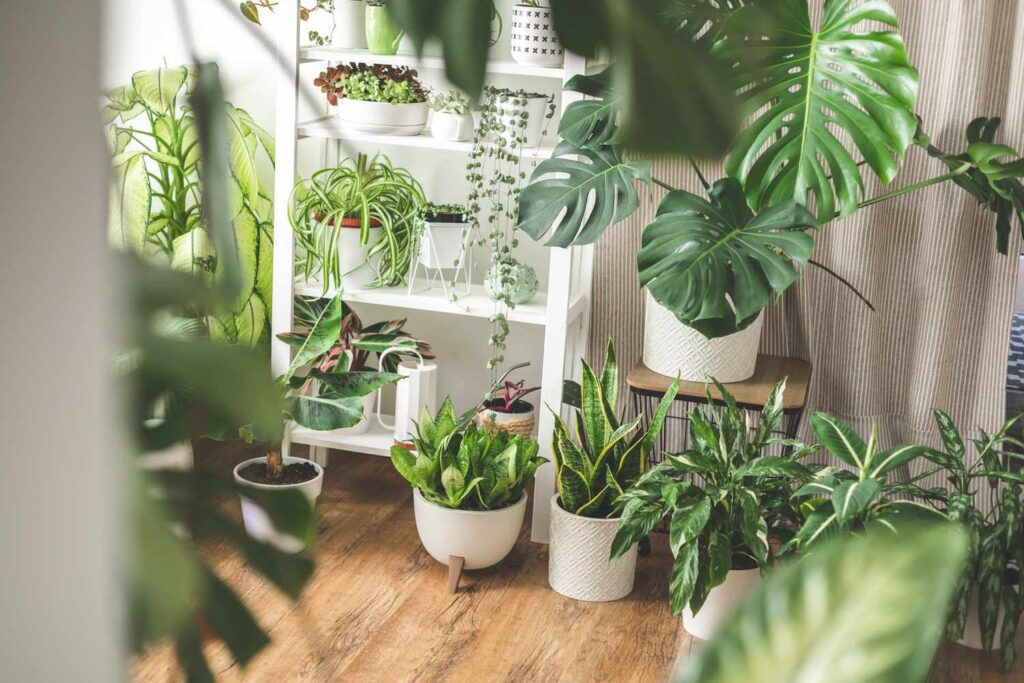
How Many Plants Should Your Living Room Really Have? Stanford Researchers Pinpoint the Ideal Amount
For years, indoor greenery has been praised as an accessible way to feel calmer, breathe easier, and make modern living spaces feel less sterile. Yet most people rely on instinct rather than evidence when deciding how many plants to bring home.
Stanford University researchers decided to challenge that guesswork by examining whether there is, in fact, an optimal level of indoor nature. Their findings reveal that while plants do support emotional wellbeing, more is not always better—and the right balance matters far more than most of us realize.
To test this idea, researchers created a method called Nature View Potential (NVP), which allowed them to design virtual rooms featuring different amounts of plants, natural elements, and exposure to outdoor scenery.

Participants were then asked to rate how each room made them feel, focusing on stress levels, relaxation, comfort, and overall psychological ease.
The results pointed to a clear sweet spot. The study showed that when about 20 percent of a room’s visual field is filled with plants or nature-like materials, people experience the strongest mental benefits.
To put this into practical terms, a living space of roughly 13 square metres feels most restorative with around 15 to 17 medium-sized plants. Rooms with this level of greenery consistently helped reduce stress responses, increase feelings of comfort, strengthen connections to nature, and support smoother recovery after mentally demanding tasks.
However, the researchers also discovered that surpassing this ideal limit can create the opposite effect. When greenery was increased to approximately 60 percent of the room, participants began reporting feelings of chaos and visual overload.
What might look impressive in a social-media-worthy “indoor jungle” becomes, in everyday life, a source of unease and distraction. Instead of producing calm, the environment began to feel crowded and mentally tiring.
Despite this, the study reinforces that indoor plants remain valuable for enhancing living environments when used thoughtfully.
Numerous studies have already shown that even a few well-placed plants can improve air quality, uplift mood, sharpen concentration, and promote a sense of stability and relaxation. Gentle varieties like pothos, ferns, peace lilies, and snake plants are particularly known for their soothing presence.
When applying these insights at home, size and space matter. Smaller rooms generally benefit from about five to ten plants, while medium-sized areas can comfortably accommodate ten to seventeen without causing visual strain.
It is also important to avoid blocking natural light or overcrowding pathways. Mixing plant heights and leaf shapes can create a harmonious arrangement without overwhelming the eye. Choosing low-maintenance varieties helps ensure that the presence of plants remains enjoyable rather than burdensome.
In the end, the study offers a reminder that harmony lies not in abundance but in thoughtful curation. A well-balanced collection of plants can transform a room into a restorative retreat, while excess can quietly chip away at the very comfort people seek to create. The goal is not to build a jungle indoors but to design a space where nature enhances daily life rather than competes with it.