Human–Wildlife Conflict Continues: Leopard Seen on Early-Morning Walk in Pashan; Residents Panic as Forest Officials Struggle to Capture It
Human–Wildlife Conflict Continues: Leopard Seen on Early-Morning Walk in Pashan; Residents Panic as Forest Officials Struggle to Capture It
CCTV footage captures big cat roaming residential societies in Pashan-Sutarwadi at dawn, raising safety concerns as authorities struggle to track frequent wildlife movement in urban Pune
Residents of Pashan-Sutarwadi in Pune woke to alarming news on Friday morning after CCTV cameras captured a leopard moving through two neighboring housing societies around 3:50 AM on December 6, 2025. The sighting has sparked concerns among citizens who complain the Forest Department lacks awareness protocols despite repeated leopard appearances in the area.
The latest incident marks another chapter in Pune’s ongoing struggle with human-wildlife conflict as leopards increasingly venture into residential zones. Citizens express frustration over what they perceive as inadequate response from authorities who appear reactive rather than proactive in managing the situation.

Morning Encounter Captured On Camera
Security cameras recorded the leopard in the early hours confirming the animal headed toward Shivnagar. However, its location after that remains unknown, leaving residents anxious about potential encounters.
The timing particularly worries residents who venture out for morning walks, exercise routines, or early work commutes. The 3:50 AM to 3:54 AM window when the leopard was spotted falls during a period when some residents are active, creating genuine safety concerns.
Forest Department Confirms Authenticity
A senior Forest Department officer verified the CCTV footage as genuine, confirming it was not AI-generated content that has recently caused confusion in similar cases. Following verification, department teams deployed camera traps near Pashan Lake to monitor the leopard’s movements and determine whether it regularly uses the area as part of its territory.
The Forest Department faces the challenge of distinguishing between genuine sightings and fabricated content. Officials report receiving approximately 40 calls daily regarding leopard sightings, compared to just 10 calls per month previously. This surge, coupled with AI-generated images circulating on social media, makes it difficult to prioritize genuine emergencies and conduct timely rescue operations.
Pattern Of Repeated Sightings
The Pashan-Sutarwadi incident follows a series of leopard sightings across Pune in recent days.
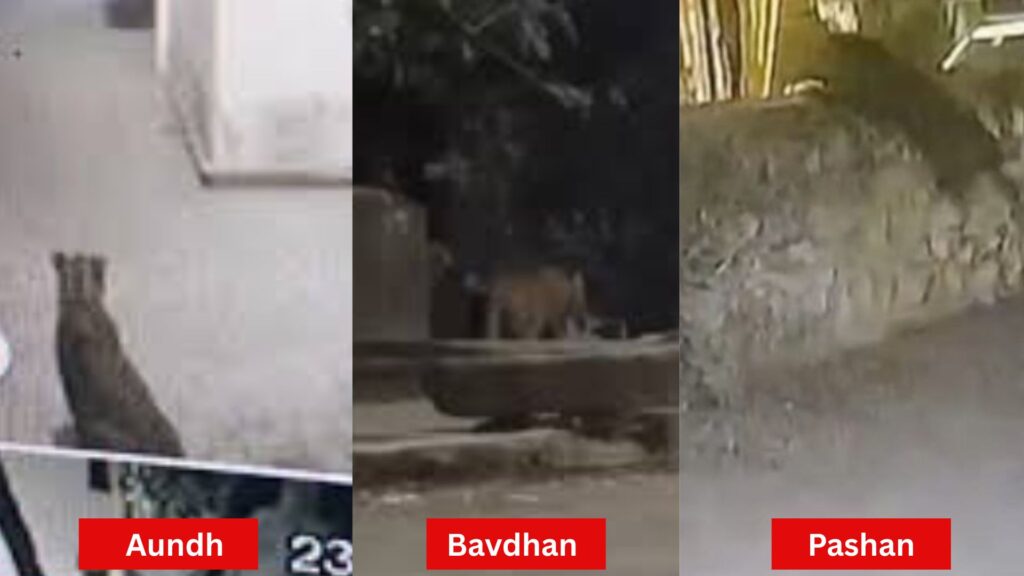
According to residents, a leopard was first seen on November 23 at 3:50 am inside the RBI Quarters in Aundh, where it was seen calmly walking before disappearing through Sindh Colony. Two teams from the Forest Department conducted checks in the area, but no trace of the animal was found.
A leopard was spotted near Lantana Gardens on Pashan Road in Bavdhan shortly after midnight on December 1, captured on mobile phone by a resident around 12:30 AM. Forest teams verified that sighting and suspected the animal was moving along the Ramnadi nala, a natural corridor connecting green patches in the region
On December 5 at 3:54 am, the leopard was captured on CCTV entering the premises of Priyogi Plaza Society in Pashan Sutaarwadi. A few minutes later, around 4:12 am, the big cat walked past Mukta Residency towards Shivanagar. Despite clear footage, residents say the Forest Department remained unaware of its movement and reached the spot only after receiving calls from locals
Earlier sightings occurred in Aundh, Sindh Society, Lohgaon, and Khadakwasla. Despite night-long patrolling and deployment of night-vision drones in these areas, forest teams have been unsuccessful in capturing any of the leopards. The animals appear to move through urban areas using natural corridors like the Ramnadi nala that link the NDA hills to forests in Mulshi.
Wildlife experts note that leopards have traditionally inhabited hills around the National Defence Academy due to natural forest cover. However, the frequency of sightings in adjoining urban areas has increased significantly, indicating either growing leopard populations or shrinking natural habitats pushing them toward human settlements.
Citizens Demand Proactive Measures
A Pashan resident living near the forest area, criticized the Forest Department’s approach. He stated authorities remain in deep slumber, only waking when locals alert them about leopard sightings. Despite living adjacent to forest areas, residents receive no directives or guidelines on handling big cat encounters.
Residents of Shivanagar also reported spotting the leopard near Pashan Lake, but forest staff claimed no signs were found during their visit. This repeated inability to track the wild animal has led to widespread public anger, with several citizens demanding transfers of officials responsible for wildlife monitoring in the region.
“CCTV cameras easily capture the leopard, but the Forest Department fails to spot it on ground. Why are they not present in the known active hours of the leopard, especially around 3–4 am?” questioned several local residents.
Experts say that while leopards typically hunt at night and return to secluded hilltops before dawn, rapid urbanisation and destruction of grasslands on Pashan and Vetal Tekdi have pushed these animals closer to human settlements. Grasslands once home to rabbits and deer have been flattened, fenced or burned, reducing natural prey and disturbing the ecological balance. Locals allege that illegal hunting inside restricted hill zones and large walls built by agencies have further disrupted habitat and movement corridors
Residents demand the Forest Department conduct awareness drives in forest-adjacent neighborhoods, teaching locals how to respond when encountering leopards. They point out that school timings in rural parts of Pune have been adjusted for safety, but similar measures have not been implemented in urban areas near forests despite comparable risks.
The lack of official communication frustrates citizens who rely on social media for information about leopard locations. However, the authenticity of such information remains questionable, leaving residents uncertain whether to believe reports or take precautionary measures.
Challenges In Wildlife Management
Authorities appeal to citizens and media to verify information before circulating content, noting that many people share AI-generated photos and videos without authentication. Publishing accurate, verified information strengthens public awareness on this critical issue.
An NGO assisting forest officials in leopard capture efforts, urged citizens to remain cautious without panicking. She advised particular vigilance during early morning and nighttime hours when leopards are most active.
Authorities have issued helpline numbers for reporting sightings, including the Forest Department helpline 1926 and the ResQ helpline 9172511100. However, citizens complain that reporting alone does not address their safety concerns when actual encounters occur.
Urban Expansion Meets Wildlife Habitat
The increasing human-wildlife conflict in Pune reflects broader challenges facing rapidly expanding Indian cities. Urban development encroaches on traditional wildlife corridors and habitats, forcing animals to navigate through residential areas while seeking food, water, and territory.
The Pashan-Bavdhan belt sits at the interface between developed urban areas and the forested NDA hills connected to Mulshi forests. This geography creates natural pathways for leopards moving between habitats, inevitably leading to encounters with human populations.
Forest officials believe wildlife movement into city-adjacent areas relates to seasonal changes affecting food and water availability in natural habitats. As green cover experiences variations and natural resources become scarce, animals venture closer to human settlements where water bodies, garbage, and prey animals like stray dogs provide sustenance.
Safety Advisory And Ongoing Monitoring
Authorities have intensified monitoring across affected areas, installing additional camera traps and conducting regular patrols. Residents receive advisories to avoid walking alone during late night or early morning hours, keep children supervised outdoors, avoid leaving pets outside overnight, and immediately report leopard sightings to authorities.
The Forest Department continues searching for the leopard spotted in Pashan-Sutarwadi while simultaneously tracking other animals sighted elsewhere in the city. The challenge lies in safely capturing and relocating these animals without harm to either the leopards or human populations.
As Pune continues grappling with wildlife sightings, the incident underscores the urgent need for comprehensive urban wildlife management strategies that balance conservation needs with public safety concerns.