India’s First Barrier-Free Toll Plaza to Come Up Under MLFF System, Plans to Extend to 25 Toll Plazas
India’s First Barrier-Free Toll Plaza to Come Up Under MLFF System, Plans to Extend to 25 Toll Plazas
NHAI and ICICI Bank sign landmark agreement to roll out Multi-Lane Free Flow tolling, starting with Choryasi Fee Plaza on NH-48.
In a major step towards modernizing highway travel, the Indian Highways Management Company Limited (IHMCL), promoted by the National Highways Authority of India (NHAI), has signed an agreement with ICICI Bank to implement the country’s first comprehensive Multi-Lane Free Flow (MLFF) tolling system. The pilot project will be launched at the Choryasi Fee Plaza on NH-48 in Gujarat, making it the first barrier-free toll plaza in India.
The agreement was signed in the presence of NHAI Chairman Shri Santosh Kumar Yadav along with senior officials of NHAI, IHMCL, and ICICI Bank at NHAI headquarters in New Delhi. A similar agreement has also been signed for Gharaunda Fee Plaza on NH-44 in Haryana. NHAI plans to extend the MLFF tolling system to around 25 plazas during the current financial year, with locations currently being finalized.

Speaking at the event, Shri Yadav said, “The Multi-Lane Free Flow tolling system marks a significant milestone in the evolution of tolling in India. By leveraging technology, it will create a more efficient, transparent, and user-friendly tolling ecosystem aligned with our vision of technology-driven transformation.”
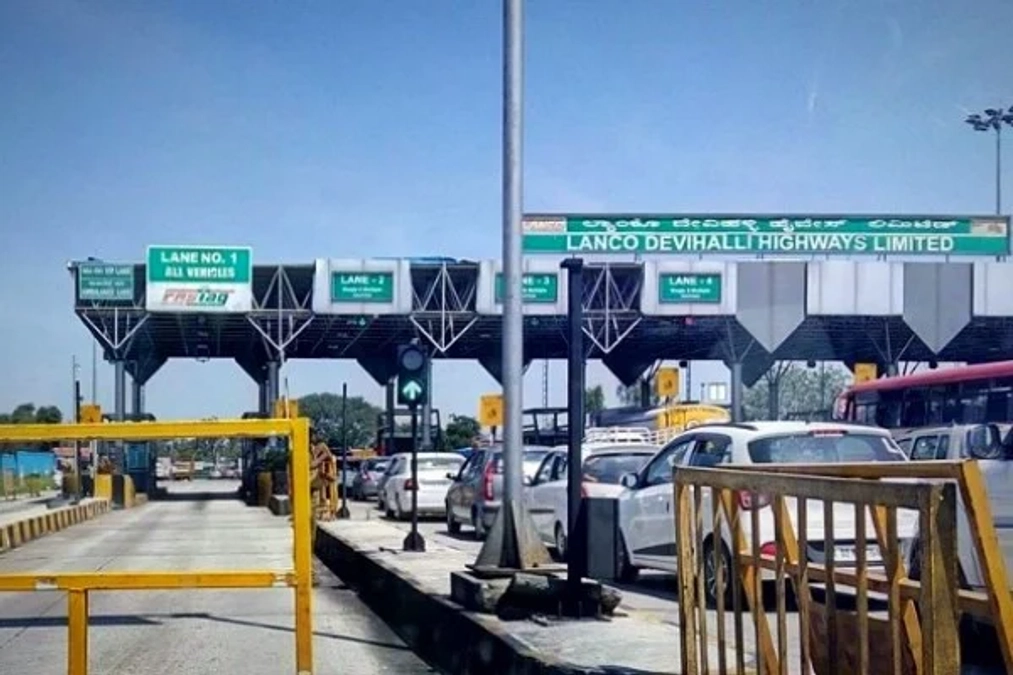
The MLFF system eliminates physical toll barriers and enables toll collection through high-performance RFID readers and Automatic Number Plate Recognition (ANPR) cameras. Vehicles can pass without stopping, as the system reads FASTags and Vehicle Registration Numbers (VRN) seamlessly. This will reduce congestion, save travel time, improve fuel efficiency, and cut emissions.
India currently has a total road network of over 63 lakh km, of which 1,46,342 km are National Highways—a 55,055 km increase since 2014. The rollout of MLFF across 25 toll plazas is expected to not only improve user convenience but also enhance toll revenue collection and contribute to a smarter, more efficient national highway network.