Maggi, Chips, Cheese Balls’: Teacher’s Viral Video Sparks Fresh Debate on Kids’ School Lunches
Maggi, Chips, Cheese Balls’: Teacher’s Viral Video Sparks Fresh Debate on Kids’ School Lunches
There was a time when parents constantly reminded their children to finish their homemade tiffins—packed with roti, rice, vegetables or eggs—believing that good food was the foundation of good health. Today, however, school lunch boxes are increasingly filled with colourful packets of instant noodles, chips and cheese balls. While the occasional snack may seem harmless, experts warn that frequent dependence on such ultra-processed foods can have long-term consequences for a child’s growth and wellbeing.
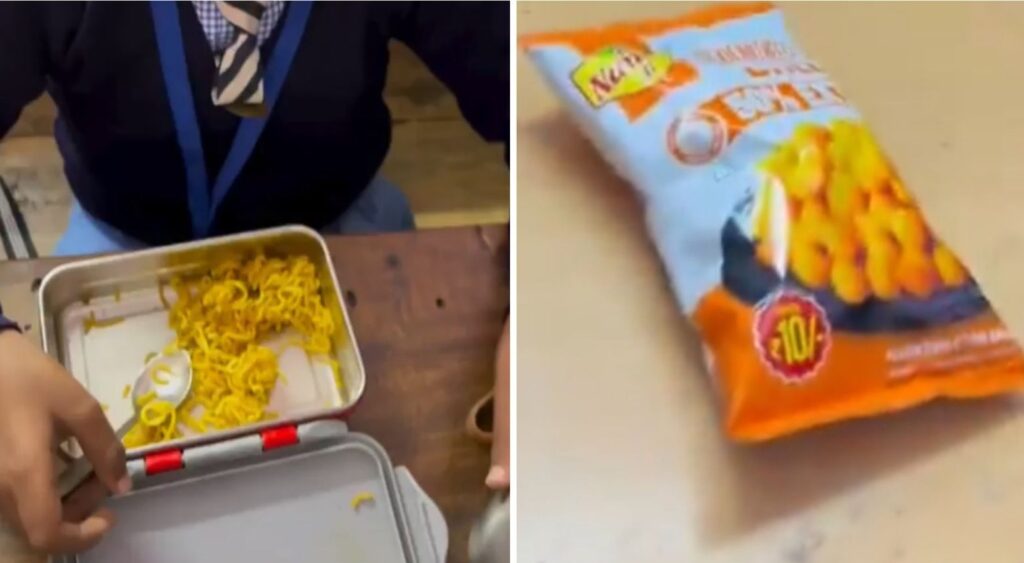
This concern recently came into the spotlight after a video shared by a teacher went viral on social media, igniting a nationwide conversation on child nutrition. The clip, shared on X (formerly Twitter) by a user named Vineeth K, showed a classroom scene where most children had lunch boxes packed with junk food items such as chips, cheese balls and instant noodles. Only a few students were seen carrying home-cooked meals like roti with sabzi or eggs.
Captioning the video, Vineeth K wrote, “Saddest video I have seen this week.” In a follow-up line, the user added, “The video is staged or not, this is true in many households. Give good nutrition to your kids.”

The video quickly gained attention, crossing over 2.58 lakh views, and sparked intense debate online. Many viewers expressed alarm at what they described as the growing normalisation of unhealthy eating habits among young children.
One user commented, “Maggi and Lays aren’t lunch, they’re snacks cosplaying as a meal. Fun once in a while, sure—but as a regular lunch, it’s mostly salt, carbs, and empty calories doing a lot of hype with very little nutrition. Kids need fuel, not just crunch and nostalgia.”
Saddest video I have seen this week
— Vineeth K (@DealsDhamaka) January 12, 2026
The video is staged or not, this is true in many households. Give good nutrition to your kids pic.twitter.com/YIpyxfbRPT
Another viewer placed the responsibility squarely on parents, writing, “Parents are responsible for this. Don’t give your child such junk in tiffin.”
A third user shared a personal perspective, saying, “Never understood this nonsense… I’ve always taken roti/rice sabji/egg curry, sometimes fruits, sometimes mixed chowmein in lunches… later had to buy from cafeteria in life.”
As the discussion grew, several parents joined in, sharing their own challenges and choices. One parent explained that they consistently pack homemade meals for their four-year-old child and allow junk food only on rare occasions, stressing that eating habits are shaped early and begin at home.
However, not everyone felt the issue was that simple. Some users highlighted practical and structural difficulties, especially for working parents. One comment pointed to early school start times, arguing that rushed mornings make it harder to prepare elaborate meals. The user also questioned whether long school hours truly lead to better learning outcomes, suggesting that school schedules may need reconsideration.
Despite differing viewpoints, many agreed on one point: children’s nutrition cannot be ignored. Whether through better planning at home, more awareness among parents, or supportive policies from schools, ensuring balanced and nutritious meals remains essential. The viral video may have started as a brief classroom clip, but it has clearly reopened an important conversation about what children eat—and who is responsible for shaping those choices.