Menstrual Health Is a Fundamental Right, Says Supreme Court; Free Sanitary Pads Mandatory in Schools
Menstrual Health Is a Fundamental Right, Says Supreme Court; Free Sanitary Pads Mandatory in Schools
Landmark ruling makes menstrual hygiene facilities compulsory across government and private schools nationwide
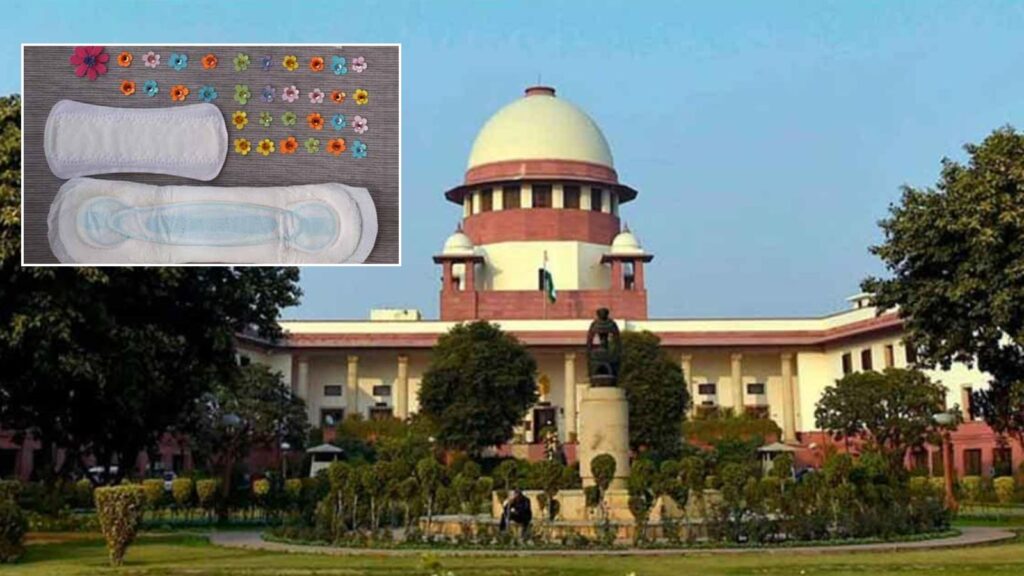
In a landmark judgment with far-reaching implications for girls’ education and dignity, the Supreme Court of India has declared that the right to menstrual health is an integral part of the fundamental right to life and dignity under Article 21 of the Constitution.
The ruling, delivered on Friday, January 30, 2026, directs a nationwide rollout of free menstrual hygiene facilities for school-going girls and makes compliance mandatory for all schools — government as well as private — across urban and rural India.
The Court ordered pan-India implementation of the Union government’s Menstrual Hygiene Policy for School-going Girls for students from Classes 6 to 12. Importantly, the Bench clarified that the policy is now binding in nature, and private schools failing to comply risk de-recognition.

Emphasising dignity, privacy and equality, the Court said schools must provide separate, functional toilets for girl students with adequate privacy, accessibility and safety, including provisions for children with disabilities. It observed that the absence of such basic infrastructure forces many adolescent girls to miss school, directly affecting their right to education.
The judgment also mandates the free and regular availability of sanitary pads in schools. These must be easily accessible to students, preferably through vending machines inside toilet premises or at clearly identified locations within school campuses.
In addition, schools have been instructed to set up menstrual hygiene management (MHM) corners. These should be stocked with spare uniforms, innerwear, disposable sanitary pads and other essential items to help girls manage emergencies during menstruation without embarrassment or disruption.
On the issue of equality under Article 14, the Court held that lack of access to gender-segregated toilets and menstrual absorbents amounts to systemic discrimination against adolescent girls. Applying the doctrine of substantive equality, it noted that menstrual poverty places girls at a double disadvantage — compared to boys and to girls who can afford sanitary products — with the burden becoming even heavier for children with disabilities.
The Court also laid down clear directions on waste management. All schools must install safe, hygienic and environmentally compliant disposal systems for menstrual waste in line with the Solid Waste Management Rules. Each toilet unit must have covered bins for menstrual waste, along with regular cleaning and maintenance.
The Bench observed that failure to provide clean washrooms, menstrual products, proper disposal mechanisms and awareness converts a natural biological process into structural exclusion. Such neglect, it said, undermines not only access to education but also long-term opportunities for girls.
The ruling is being seen as a major step towards addressing menstrual stigma, school drop-outs among adolescent girls and gender-based inequality in education, while placing a clear legal obligation on institutions to uphold menstrual dignity.
Disclaimer: This article is based on court directions and publicly available reports. Implementation timelines and modalities may evolve through subsequent government notifications.