Mumbai May Soon Get Underground Rail Line Between Parel and CSMT – What to Know
Mumbai May Soon Get Underground Rail Line Between Parel and CSMT – What to Know
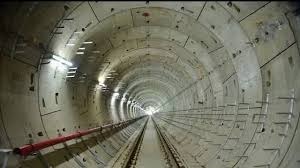
Mumbai is on the verge of a significant leap in public transportation, as plans take shape for its first underground railway corridor. Building on the momentum of the underground Mumbai Metro Line 3, Central Railway (CR) is now considering a similar subterranean approach for the proposed fifth and sixth lines between Parel/Currey Road and Chhatrapati Shivaji Maharaj Terminus (CSMT).
This development would be part of the second phase of a broader infrastructure expansion aimed at strengthening the suburban network along the Kurla-Parel-CSMT route. While the first phase—a 10.1-kilometre section from Kurla to Parel—is already underway, the second phase proposes a 7.4-kilometre underground stretch connecting Parel to CSMT.
Faced with persistent issues related to land acquisition and the displacement of residents, CR is exploring tunnelling as a way to sidestep the delays and disputes typical of above-ground projects. Authorities believe underground construction could offer a faster and less disruptive solution in Mumbai’s densely packed urban environment. “If the Metro can go underground, so can we,” a railway official commented.

The proposal is currently in its preliminary phase. Central Railway and the Mumbai Rail Vikas Corporation (MRVC) have held initial discussions, but the final decision will depend on the results of upcoming technical feasibility studies. These will also clarify which agency will take charge of execution.
Preliminary plans suggest the underground line would follow the alignment of existing tracks, at a depth of about 20 to 25 metres—deep enough to avoid buildings, roads, and other buried infrastructure. “We are still evaluating the feasibility of tunnelling between Parel and CSMT,” a senior CR official told Hindustan Times. “Terms of reference are being drafted, and a consultant will soon be appointed.”
A key aspect of the study involves identifying suitable entry and exit points for tunnel boring machines. At the CSMT end, two options are being considered: one within the terminus premises—either near suburban or long-distance platforms—and another near P D’Mello Road. The latter could face complications due to the overlapping presence of Metro Line 11 and the existing Metro Line 3 station.
If the underground plan is approved, the estimated project cost could soar to ₹3,000 crore, nearly triple the initial 2008 estimate of ₹890.89 crore. That figure was already revised to ₹1,337 crore due to various delays and rising costs.
Should it move forward, this underground corridor could become a landmark project—easing traffic congestion, speeding up commutes, and transforming Mumbai’s heavily burdened rail network into a more modern and resilient system.