New Cockroach Species Discovered in Pune Sparks Curiosity — and Online Jokes
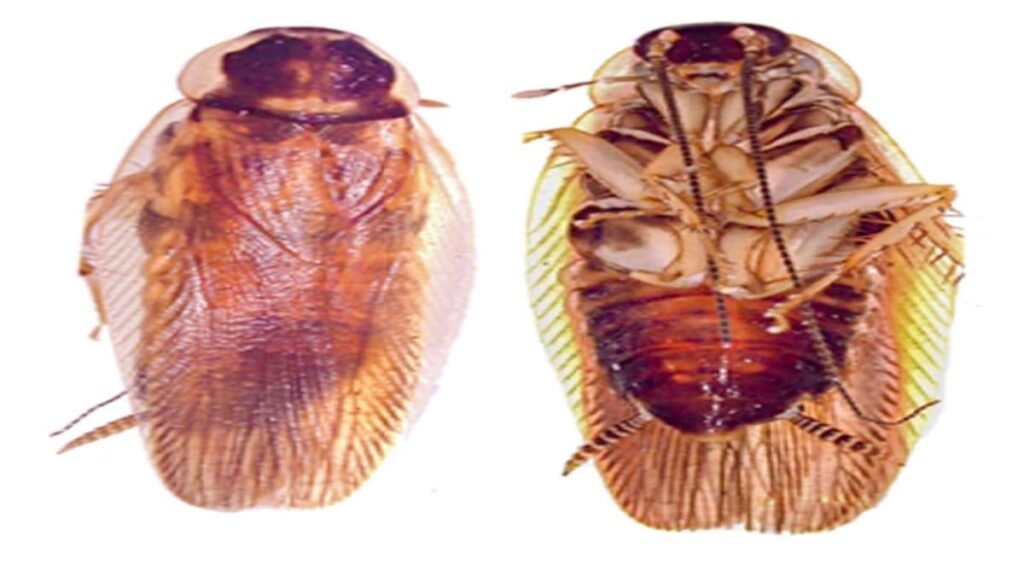
New Cockroach Species Discovered in Pune Sparks Curiosity — and Online Jokes
An unexpected scientific find from Maharashtra has brought a rather unpopular insect into focus. Researchers have discovered a new species of cockroach in the farmlands of Pune district, showing that even well-explored regions can still reveal hidden biodiversity.
A team from the Zoological Survey of India (ZSI), along with specialists from its Pune and Chennai units and a local college, recorded this species in Nathachiwadi, a village set amid agricultural fields. The newly identified insect has been named Neoloboptera peninsularis, a name that highlights its presence across Peninsular India.
What sets this finding apart is not just the species itself, but how it was identified. For the first time in India, scientists relied on advanced DNA-based techniques to confirm a cockroach species. Instead of depending only on visible traits, they used genetic tools like DNA barcoding, phylogenetic analysis, and genetic distance comparisons. This “integrative taxonomy” approach allowed them to uncover differences that cannot be seen with the naked eye, ensuring the classification was precise.

The fieldwork, however, was anything but simple. The cockroaches were found hiding among palm shrubs and layers of dry, decaying leaves — an environment rich in organic material that such insects thrive in. Their speed and natural camouflage made them difficult to spot, forcing researchers to collect them manually. Once gathered, the specimens were preserved in 70 percent ethanol and stored at ZSI’s Pune facility for further examination.
Globally, the Neoloboptera genus includes only six known species across countries such as India, China, Afghanistan, and Thailand. Until now, India had records of just two: Neoloboptera indica (first described in 1865) and Neoloboptera chakrabortyi (identified in 1995). This newly discovered species becomes the third confirmed member from the country, ending a long gap without specimen-based additions.
In terms of appearance, Neoloboptera peninsularis has a glossy yellowish-brown body and fully developed wings. Scientists noted several distinguishing features, including asymmetrical cerci (appendages at the rear) and a uniquely shaped, whip-like structure in the male genitalia. Although it bears some resemblance to N. chakrabortyi, specific anatomical differences — such as the asymmetry in its subgenital plate and denser bristle patterns — clearly set it apart.
Beyond the excitement of discovery, the research also highlights larger gaps in scientific knowledge. The team pointed to what are known as Linnaean, Wallacean, and Darwinian shortfalls — essentially the lack of complete information about species identification, distribution, and evolutionary relationships. Their findings suggest that many more species may still be waiting to be identified, especially in underexplored regions like the Deccan Plateau.
The internet, meanwhile, had a field day reacting to the news. One user joked, “The new species was hiding here all along,” while another quipped, “Using modern DNA tech to find what we’ve been spotting under the fridge for years — peak innovation.” A different comment summed up the general sentiment with humor: “One more species to scare us.”
Researchers believe this discovery is just the beginning. They emphasized the need for more targeted field surveys and genetic sampling, noting that the molecular data generated will help build stronger DNA reference systems for identifying species in the future.