Nitin Gadkari Pushes 100% Ethanol Goal, Signals Cleaner Fuel Shift For India
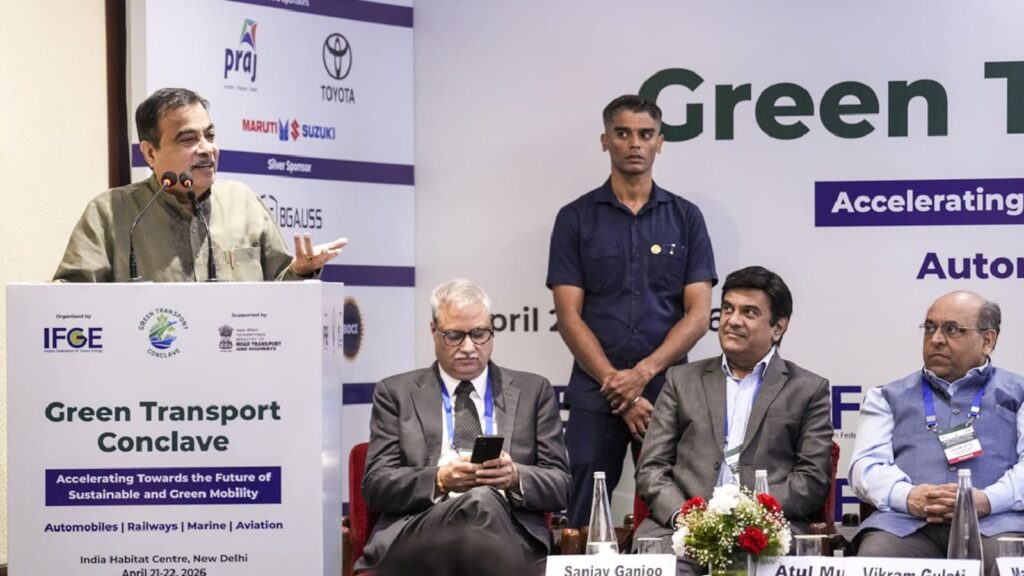
Nitin Gadkari Pushes 100% Ethanol Goal, Signals Cleaner Fuel Shift For India
Union Minister says India should move towards full ethanol blending, reduce oil imports and strengthen energy self-reliance.
Union Minister Nitin Gadkari has said India should aim to achieve 100% ethanol blending in the future, calling it an important step towards reducing dependence on imported crude oil and building long-term energy security.
Speaking on the country’s fuel future, Gadkari said India currently imports nearly 87% of its oil requirement, leading to an annual outflow of around ₹22 lakh crore. He said this heavy dependence also exposes the country to global tensions, supply disruptions and price volatility.
According to the minister, the shift toward alternative fuels such as ethanol, biofuels and green hydrogen is necessary not only for economic reasons but also to reduce pollution caused by fossil fuels.

India had already launched E20 petrol in 2023, which contains 20% ethanol blending. Gadkari said many existing vehicles can run on E20 fuel with minor modifications and the next step is to gradually expand the programme further.
Green Hydrogen Also In Focus
Gadkari also highlighted the potential of green hydrogen, describing it as a major fuel option for the future. He said the government wants to reduce hydrogen production cost to $1 per kg, which could help India emerge as an energy exporter in the long run.
He added that hydrogen production from waste and other innovative methods can strengthen the circular economy while creating fresh business and employment opportunities.
No Immediate End To Petrol-Diesel Vehicles
The minister clarified that petrol and diesel vehicles cannot be phased out overnight. Instead, he said the focus should be on offering practical, affordable and cleaner alternatives rather than forcing sudden change on consumers.
He also urged automobile companies to prioritise quality and innovation so Indian manufacturers can compete strongly in global markets.
Why It Matters
If India successfully increases ethanol use at scale, it could lower fuel import bills, support farmers through feedstock demand, improve air quality and reduce exposure to international oil shocks.
However, experts note that full ethanol adoption would require major investments in vehicle compatibility, supply chains, water management, crop planning and fuel infrastructure.
The statement signals that India’s long-term transport strategy is increasingly centred on domestic renewable fuels rather than conventional fossil fuels.