Pune: Jungle Cats Found Thriving On Vetal Hills, Study Sparks Conservation Push

Pune: Jungle Cats Found Thriving On Vetal Hills, Study Sparks Conservation Push (Photo credit by Ketan Bhave )
Pune, April 27, 2026:
In a significant finding highlighting Pune’s hidden urban biodiversity, a recent scientific study has confirmed the permanent presence of jungle cats on the Vetal Tekdi (Hills). The research underscores the ecological importance of the city’s hill ecosystems even as rapid urbanisation continues to expand.
The study, published in the journal ZOO’s Print, reveals that the Jungle Cat—locally known as “ran manjar”—has established a sustained habitat in the Vetal Hills region. This discovery has renewed calls for stronger protection of Pune’s hill ranges, often referred to as the city’s “green lungs.”
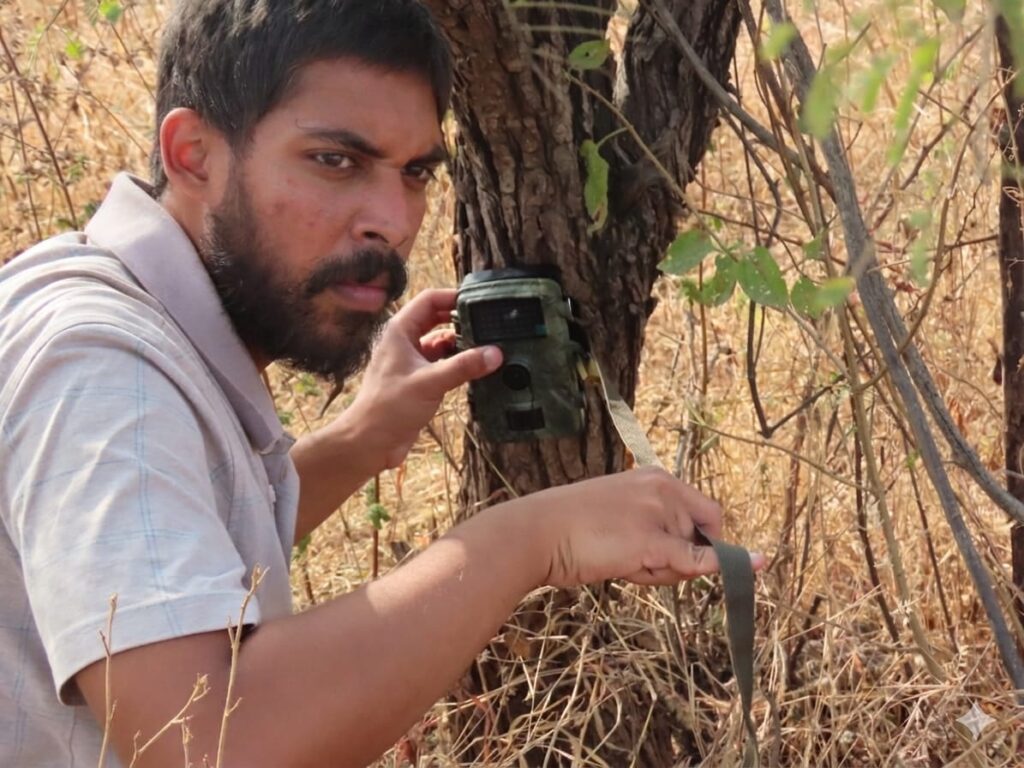
The research was carried out by wildlife enthusiast Arnava Gandhe along with ecologist Arijit Jere and photographers Rohit Khare and Ketan Bhave. The team deployed advanced trail cameras across Vetal Hills and adjoining hill ranges within the city. The first visual evidence of the jungle cat was recorded in April 2025. Continued monitoring led to further confirmation, including sightings of a kitten in May and clear photographic documentation in November 2025, establishing the species’ permanent presence.

Apart from jungle cats, the study also recorded several other mammal species, indicating that the area functions as an important urban biodiversity hotspot. Species captured on camera include the Asian Palm Civet, Small Indian Civet, Indian Crested Porcupine, and Golden Jackal.
Historically, Pune’s hill ecosystems supported even richer wildlife. Earlier studies had documented over 50 mammal species in the region, including hyenas and antelope species. While some biodiversity still persists, researchers warn that increasing human encroachment is rapidly degrading natural habitats. Analysis of land-use changes between 2014 and 2024 shows a steady decline in grasslands and scrub forests due to urban expansion.
Experts have raised concerns over ongoing infrastructure development, including proposed roads and tunnels in the Vetal Hills area, which could fragment habitats and disrupt wildlife corridors. Encroachments, particularly near Chandani Chowk and western hill slopes, have further intensified the threat.
The study stresses the urgent need for policy-driven conservation measures to protect Pune’s urban biodiversity. Researchers point to successful examples such as Sanjay Gandhi National Park in Mumbai and Jhalana Leopard Reserve, where wildlife thrives within city limits under legal protection.
However, Pune’s hill ecosystems currently lack such formal safeguards. The study concludes that if these natural habitats are to survive over the next few decades, urban biodiversity conservation must become an integral part of city planning and development policies.