‘Sab Kuchh Frozen Hai’: Man Claims to Reveal What Really Happens Behind 10-Minute Food Deliveries | Viral Video
‘Sab Kuchh Frozen Hai’: Man Claims to Reveal What Really Happens Behind 10-Minute Food Deliveries | Viral Video
Clip showing industrial freezers in cloud kitchens sparks debate on reheated meals, transparency, and nutrition
A viral video circulating on social media in late January 2026 has triggered a nationwide debate over how “fresh” ultra-fast food deliveries from major platforms really are. The clip, widely shared on Instagram, claims to reveal the backend operations of cloud kitchens that support 10-minute food delivery services offered by apps such as Zomato.
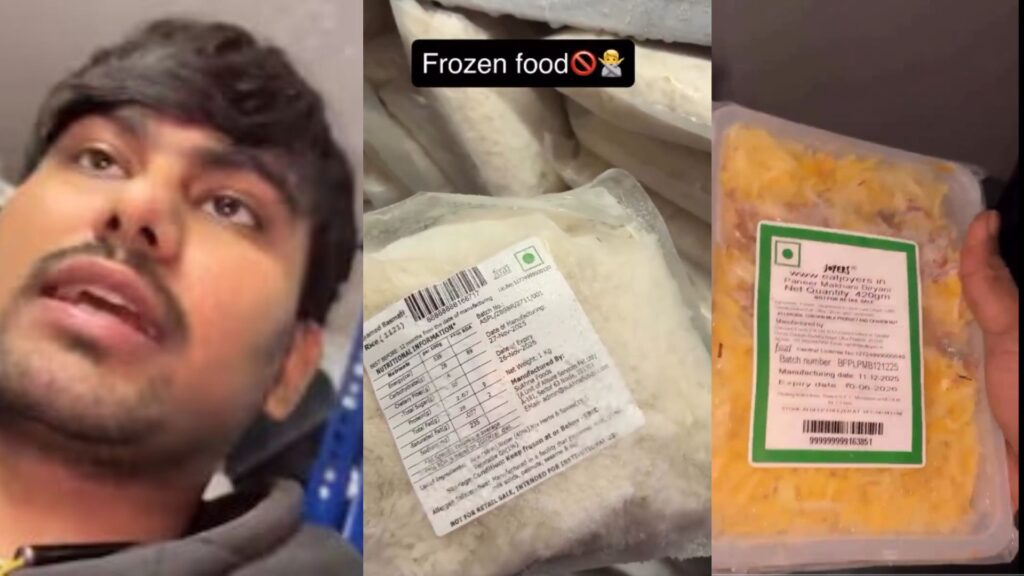
In the video, a food blogger tours what appear to be large industrial freezers inside a cloud kitchen facility. The freezers are shown stocked with pre-frozen items including dal, rice, kadhi, parathas, and desserts like rasmalai. The blogger explains that these meals are not cooked from scratch after an order is placed, but are instead reheated to meet aggressive delivery timelines.

The visuals have challenged the popular assumption that ultra-fast delivery meals are freshly prepared in real time. According to the claims made in the video, bulk cooking and blast-freezing allow kitchens to store food for extended periods, enabling rapid dispatch once an order comes in.
The video has drawn mixed reactions online. Some users expressed disappointment, arguing that customers are led to believe they are receiving freshly cooked meals, not reheated food. Concerns were raised about nutritional value, taste, and the lack of clear disclosure about food preparation methods on delivery platforms.
Others, however, defended the practice, pointing out that blast-freezing is a widely used method in the global food industry. Supporters argue that when done correctly, freezing can preserve food safely, maintain consistency, and reduce contamination risks compared to repeated fresh cooking in high-pressure environments.
The debate has also highlighted broader industry challenges. Experts note that delivering full meals within 10 minutes is commercially and logistically difficult unless kitchens rely on pre-prepared components. Ultra-fast delivery models are considered more viable for snacks, beverages, or ready-to-eat items rather than complete traditional meals.
So far, food delivery platforms have not issued detailed public responses to the specific claims made in the video. The viral clip has renewed calls from consumers for greater transparency, including clearer labelling around whether meals are freshly cooked, partially prepared, or reheated.
As ultra-fast delivery becomes more competitive, the controversy underscores a growing tension between speed, quality, and honesty in food service with consumers increasingly demanding to know what exactly is arriving on their plates.
Disclaimer: Claims in viral videos are based on creator observations and social media reactions. Consumers should rely on official disclosures and food safety guidelines when making dining choices.