Silent Threat on Your Balcony: Pigeon Droppings May Harm Your Lungs — Here’s How to Stop Them Safely
Silent Threat on Your Balcony: Pigeon Droppings May Harm Your Lungs — Here’s How to Stop Them Safely
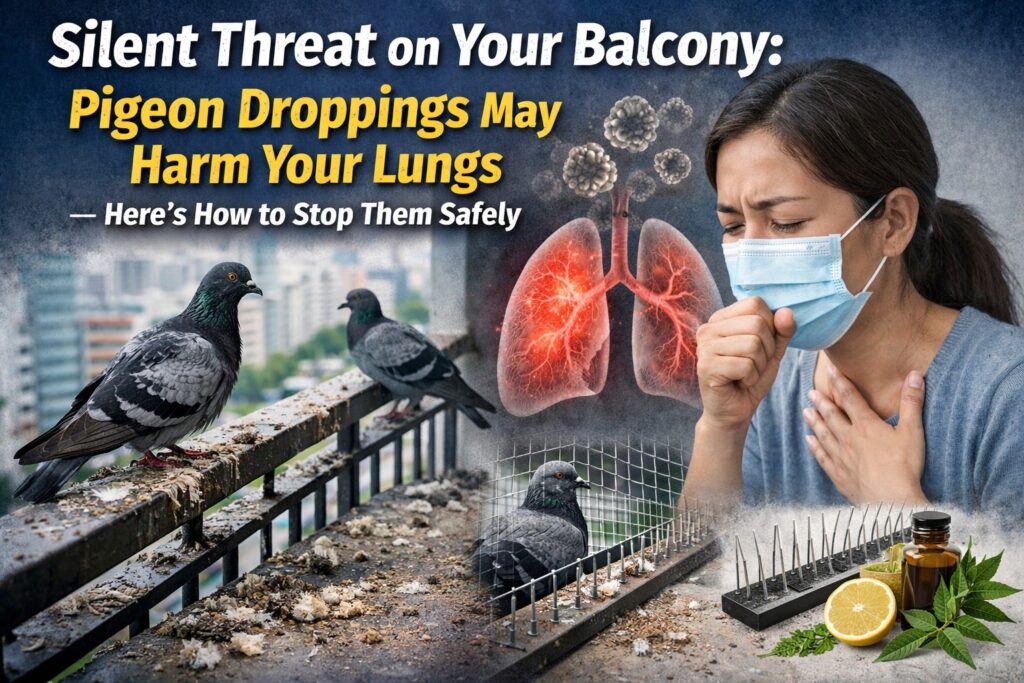
Pigeons are now a common sight across urban housing societies, often nesting on balconies, terraces and old structures. While widely regarded as harmless birds, their droppings can create serious hygiene problems and hidden health risks. Besides stains and foul odour, accumulated pigeon waste can contain bacteria and fungi that affect the human respiratory system.
Experts say the concern goes beyond cleanliness. Scientific findings indicate pigeon droppings can harbour microorganisms such as Cryptococcus neoformans, a fungus that grows well in warm, damp deposits. When dried droppings turn to dust, spores may become airborne and inhaled. People with weak immunity, chronic lung illness, or conditions like HIV/AIDS are particularly vulnerable, though prolonged exposure can irritate even healthy individuals. Occupations at higher risk include bird handlers, cleaners, and workers maintaining old buildings.
Humane Ways to Prevent Pigeons
You can discourage pigeons without hurting them:

- Install balcony nets or bird spikes
- Clean surfaces regularly to remove nesting traces
- Hang reflective ribbons, CDs, or moving strips
- Avoid feeding pigeons near the house
- Place neem or lemon leaves in corners as natural repellents
- Grow tall or thorny plants along railings
- Play mild nature or bird-disturbance sounds occasionally
Why Prevention Matters
Reducing roosting spots limits droppings, lowers infection risk and keeps living spaces hygienic. With simple precautions and non-harmful deterrents, residents can maintain cleanliness while allowing safe coexistence with urban wildlife.