Which Place in India Is Popularly Called the ‘Amsterdam of India’?
Which Place in India Is Popularly Called the ‘Amsterdam of India’?
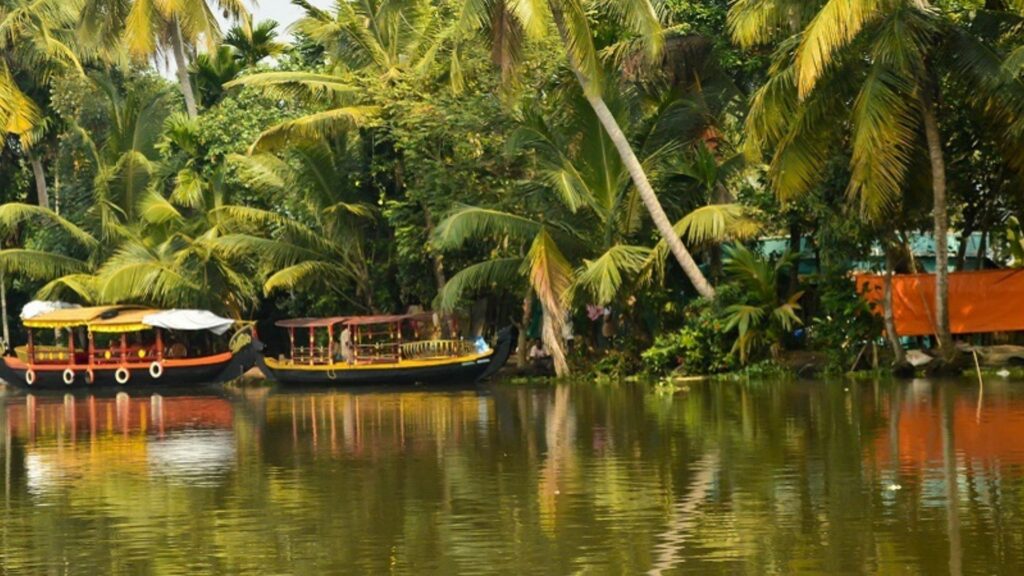
Kerala’s iconic backwaters, ancient maritime networks and engineered waterways give Alleppey its famous European parallel.
Alleppey, or Alappuzha, holds a special place on India’s tourism map. Often called the “Amsterdam of the East,” this coastal town in Kerala is celebrated for its serene canals, palm-lined waterways and an intricate backwater network that has shaped its culture and economy for centuries. But Alleppey’s charm goes far beyond boat rides and houseboats.

Long before modern tourism, Alleppey was a vibrant maritime hub with historic trade links to Ancient Greece and Rome. Its strategic position along the Arabian Sea made it a thriving port town, marked by a century-old pier, an active harbour and a sea bridge that extended deep into the water. These structures became symbols of a bustling trade era that stretched across continents.
The region’s most electrifying cultural attraction, the Nehru Trophy Boat Race, takes place every year on Punnamada Lake. Thousands gather to witness the spectacular competition of handcrafted snake boats slicing through the water in perfect rhythm—an event that combines athletic skill, tradition and community pride.


Alleppey also houses one of the oldest lighthouses on the Laccadive Sea coast. Built in 1862, the lighthouse stands as a reminder of Kerala’s maritime heritage and continues to be a significant navigational landmark along India’s south-western shoreline.
Beyond history and culture, Alleppey is an engineering and ecological marvel. The Kuttanad region—often called the “Rice Bowl of Kerala”—is one of the rare places in the world where paddy cultivation happens up to 2.2 meters below sea level. This is made possible through complex geotechnical systems involving earthen bunds, carefully maintained canals, and round-the-clock pumping mechanisms that keep fields from flooding.

The backwaters themselves form a delicate estuarine ecosystem where freshwater from rivers meets saline water from the Arabian Sea. This blend supports a rich variety of aquatic plants, fish and bird species. Continuous sediment reshaping and systematic dredging over decades have maintained the signature canal network for navigation and flood control.

As a coastal district with laterite-rich sandy soil, Alleppey faces ongoing challenges from coastal erosion. To protect the land and its people, authorities regularly monitor the shoreline and implement scientific measures to strengthen vulnerable belts. The vast backwater system acts as a natural flood buffer and an essential groundwater recharge zone, helping stabilise the region’s hydrological cycle.
With its blend of natural beauty, human innovation and historical depth, Alleppey continues to live up to its celebrated nickname—an Indian destination whose rivers, culture and canals echo the timeless charm of Amsterdam.