Mumbai-Pune Expressway ‘Missing Link’ To Open By August 2025, Reducing Travel Time
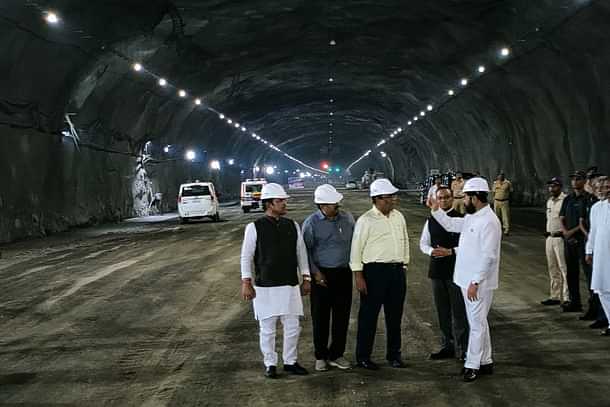
Mumbai-Pune Expressway ‘Missing Link’ To Open By August 2025, Reducing Travel Time
The ‘Missing Link’ will cut travel time between two cities by nearly 30 minutes
A senior official from the Maharashtra State Road Development Corporation (MSRDC) has announced that the ‘missing link’ on the Mumbai-Pune Expressway is expected to be operational by August this year, providing seamless connectivity between the two cities. The MSRDC, which is overseeing the project, has nearly finished work on the 13-kilometer stretch located in the expressway’s ghat section. Once completed, this section will reduce travel time between Mumbai and Pune by 30 minutes.
According to MSRDC, “The project is nearly finished, with only the cable-stayed bridge work left. That will be done by August, so by the end of August 2025, the missing link will be operational.”
The proposal for this missing link was introduced in 2017 to alleviate traffic congestion and shorten travel times in the Lonavala ghat area, where vehicles often slow down significantly. The Mumbai-Pune expressway, which is the first of its kind in the country, handles an average of 60,000 vehicles daily, with that number increasing to 100,000 on weekends and holidays, according to MSRDC. This increase in traffic has made the construction of the missing link necessary.

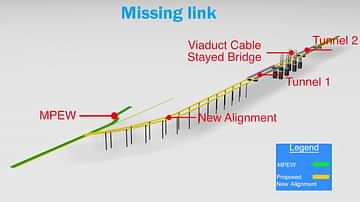
MSRDC explained that travel time will be reduced by half an hour because the new route will be 6 kilometers shorter and will feature a nearly straight road with fewer curves, which will save time. He mentioned that while the existing road will still be available for use, vehicles carrying hazardous materials will need to take the ghat road, while others can use the new missing link.
Currently, the journey from Mumbai to Pune takes over three hours.
What is the ‘missing link’ project?
Officially called the Yashwantrao Chavan Expressway (YCEW), the Mumbai-Pune Expressway features a six-lane cement concrete pavement with 2.5-meter-wide paved shoulders on both sides, stretching 94 kilometers in total. The expressway connects with the older Mumbai-Pune highway, known as NH-4, at the Khalapur toll plaza near the Khandala exit.
While the section from Adoshi Tunnel to the Khandala exit is designed as a six-lane road, it currently accommodates traffic as if it were a 10-lane road, combining the six lanes of the expressway and the four lanes of NH-4. The missing link project aims to alleviate this bottleneck by establishing a shorter, straighter route that bypasses the challenging ghat section.
An MSRDC official highlighted the issues in the ghat section, stating, “In the ghat section, there is an upgrade because of which heavy vehicles find it difficult to climb it and their speed is reduced. And so all the vehicles behind them get stuck.” This slowdown not only increases travel times but also contributes to a higher number of accidents, as vehicles tend to speed on the rest of the expressway to make up for lost time.
A feasibility study proposed an alternative route for the expressway to alleviate traffic congestion in the ghat section.
MSRDC appointed a technical advisory committee to evaluate the detailed project report (DPR) submitted by the consultant. Based on the committee’s recommendations, the alignment of the missing link and the DPR was approved, allowing work on the project to commence.
The project started in 2019, with an initial completion target of 2022; however, delays occurred due to the pandemic. Initially, MSRDC officials estimated the project cost to be around Rs 5,000 crore, but it is now projected to reach Rs 6,700 crore.
Currently, the section of the Mumbai-Pune Expressway from the Khopoli exit to the Sinhgad Institute is 19 km long. The missing link will shorten this distance to 13.3 km, effectively reducing the expressway length by 6 km.
This link will traverse hilly terrain and includes the construction of two tunnels and two bridges.
For construction purposes, the project has been split into two packages. Package-I consists of two eight-lane tunnels, measuring 1.75 km and 8.92 km in length, while Package-II includes two eight-lane viaducts that are 790 meters and 660 meters long.
However, this task has presented challenges, particularly with the construction of the cable-stayed bridge, as noted by MSRDC.
“This cable-stayed bridge is at a height of 100 meters in the valley. So the wind speed is critical here. The wind velocity is a problem, and we are designing and building it keeping in mind the cyclonic conditions also. So it will withstand the cyclone as well.”, it stated.
The first, smaller bridge, which is at a height of 60-80 meters, has been completed. However, the second bridge is situated over a deep valley, according to MSRDC.
The Mumbai-Pune expressway was constructed around two decades ago. Over the years, the number of vehicles using the expressway has steadily increased, resulting in significant traffic congestion. It was initially designed to accommodate an average of 20,000 vehicles per day, but that number has risen each year, leading to longer travel times in the Khandala ghat section.
With the Navi Mumbai International Airport starting operations this year, MSRDC is optimistic that the missing link will help reduce travel time for passengers, especially those traveling from Pune to the airport.