What’s the Real Story Behind Hanging Lemon–Chilli Outside Shops and Vehicles? Tradition, Belief & Science Explained
What’s the Real Story Behind Hanging Lemon–Chilli Outside Shops and Vehicles? Tradition, Belief & Science Explained
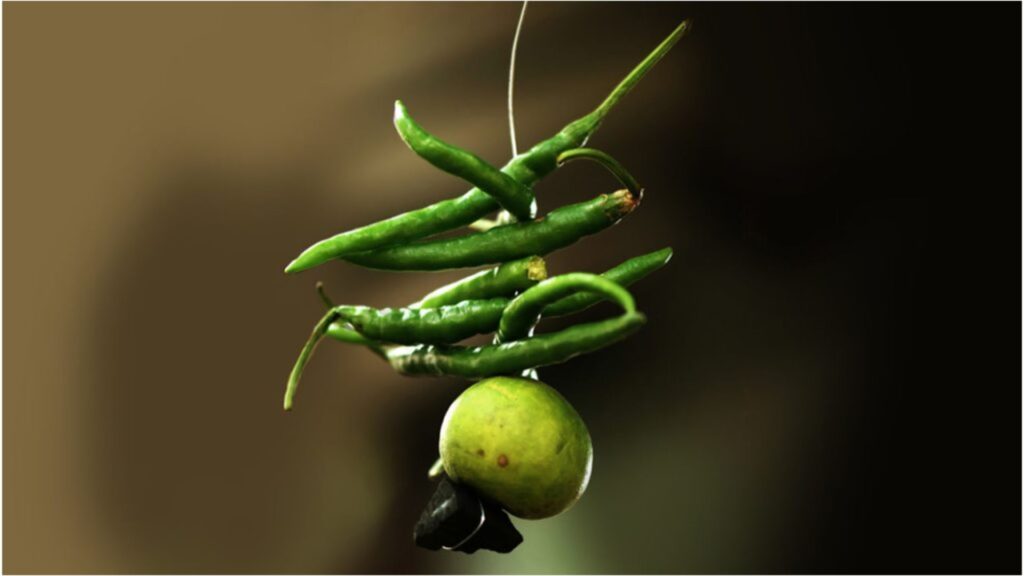
If you have an old photo of a busy Indian marketplace or if you’ve ever taken a closer look at your neighbourhood shops, you’ll definitely spot one common sight—a single lemon paired with a bunch of chillies dangling at the entrance. If you’ve ever wondered why this tiny combo appears outside shops, autos, trucks, and even newly bought vehicles, you’re not alone. Many assume it’s just for decoration, while some instantly call it a shield against the “evil eye.” But the truth is much deeper.
This simple lemon–chilli string carries layers of cultural wisdom, emotional comfort, and even a bit of science. It has survived centuries not just because of belief, but because it offered practical benefits long before modern solutions existed.
Walk through any line of shops early in the morning and you’ll likely see a vendor carrying dozens of fresh lemon–chilli strings. Shopkeepers—regardless of whether they believe in superstition—buy them almost automatically.

For many, this ritual is less about blind belief and more about reassurance. Hanging the lemon–chilli acts like setting a symbolic guard at the door. It gives people a sense of confidence that their place is protected from negativity or misfortune. In a way, it’s a psychological comfort tool that quietly says, “This space is safe and guarded.”
Is There Actual Science Behind This Practice?
Interestingly, yes. Lemons contain citric acid, while chillies release capsaicin—two natural compounds known to repel insects. Long ago, when chemical repellents weren’t available, people used this combination as a simple DIY protection against flies and pests.
The acidic smell from the lemon and the strong vapours from the chillies created an environment that insects disliked, particularly useful in India’s warm, humid climate. So even if the ritual is wrapped in belief, it also carried a very practical, scientific advantage.
The Astrological Belief: Protection From Shani
In astrology, this practice connects strongly to Shani (Saturn). Many believe that unfavorable Shani influence can bring obstacles and unwanted troubles. That’s why lemon–chilli strings are often hung on Tuesdays and Saturdays—days linked with Shani.
According to traditional belief, the lemon and chillies absorb negative energy, jealousy, or “nazar” directed toward a person or business. After a week, the dried string is thrown away to symbolically discard all that negativity. For countless families, this is a weekly ritual passed down not through scriptures but through lived experience and stories.
What’s interesting is that no religious scripture officially prescribes this ritual. It grew through oral traditions, habits, and observations, continuing simply because generations felt it worked. These subtle daily practices form a large part of India’s cultural texture—quiet gestures that create a sense of safety and continuity.
Disclaimer: This article is intended for general informational and cultural understanding. It discusses traditional beliefs and commonly referenced scientific explanations without promoting superstition.