Wanowrie’s Growth Journey Part 1: Decades of Infrastructure, Planning And Public Facilities
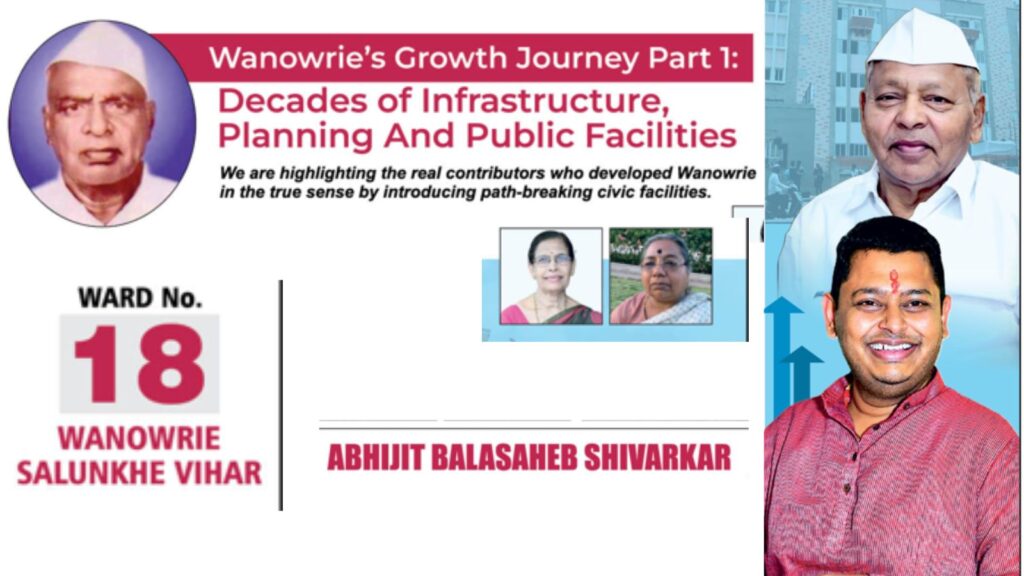
Wanowrie’s Growth Journey Part 1: Decades of Infrastructure, Planning And Public Facilities
We are highlighting the real contributors who developed Wanowrie in the true sense by introducing path-breaking civic facilities.
Wanowrie’s evolution into one of Pune’s well-established residential neighbourhoods is the result of sustained planning, public investment and people-centric infrastructure built over several decades. What was once a quiet, largely agrarian stretch on the city’s outskirts has gradually transformed into a self-sufficient suburb with strong civic amenities and community spaces.
The groundwork for Wanowrie’s development was laid by Late Vitthalrao Shivarkar, who established the area’s first school, introducing organised education at a time when basic social infrastructure was scarce. This early focus on community needs set the tone for future growth.
The momentum continued under Balasaheb Shivarkar, former Minister of State, who addressed one of the locality’s most pressing requirements by enhancing the water storage capacity at Bakers Hill, now known as Bakri Hill, ensuring improved water supply to the growing population.
Shivarkar family gave their personal property spread across 25,000 square feet to PMC to set up a hospital. Today, Late Namdev Genji Shivarkar Hospital stands tall at the same premises serving lakhs of people.

A new phase of development began in 2007, when Abhijit Balasaheb Shivarkar took charge as councillor and prioritised completing stalled civic projects. His efforts helped convert long-pending plans into functional public facilities.
From 2014 onwards, Kavita Balasaheb Shivarkar further strengthened Wanowrie’s civic framework by introducing modern, resident-focused amenities designed to improve daily living for families, senior citizens and youth alike.
Today, Wanowrie reflects a balanced model of urban growth, integrating education, culture, sports, open spaces and essential infrastructure. Its public facilities cater not only to local residents but also to neighbouring areas, reinforcing its role as a key civic hub in southeast Pune.
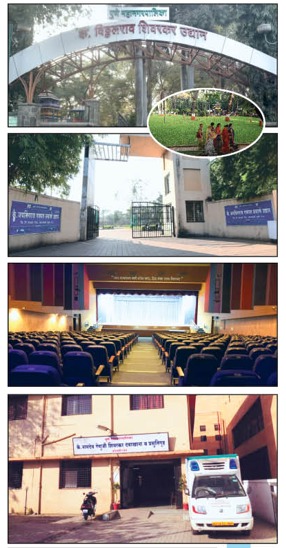
Among the most significant landmarks is the Late Vitthalrao Shivarkar Garden. Established nearly five decades ago, it marked Wanowrie’s first organised public open space. After the relocation of an STP project, the garden was expanded to around seven acres and now features a one-kilometre jogging track, open gym, children’s play area and mature trees, serving as an important green space.
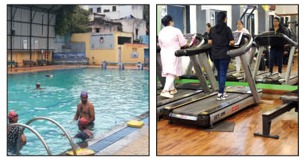
The Late Bapusaheb Kedari Swimming Pool, built in 1997, was East Pune’s first PMC-constructed pool. Rebuilt in 2011 as per safety norms, it remains a widely used recreational facility.
Cultural life is anchored by the Mahatma Phule Sanskrutik Bhavan and Late Savitribai Shivarkar Multipurpose Hall, completed in 2007, which hosts programmes ranging from school events to large social gatherings. The Late Vilasrao Deshmukh Sports Complex, established in 2017, further added indoor sports infrastructure, promoting fitness and youth engagement.
Collectively, these initiatives highlight how consistent public service and infrastructure-led planning have shaped Wanowrie into a livable, well-connected and community-oriented suburb.