Why Mobile Networks Are Not Working Properly at Navi Mumbai International Airport
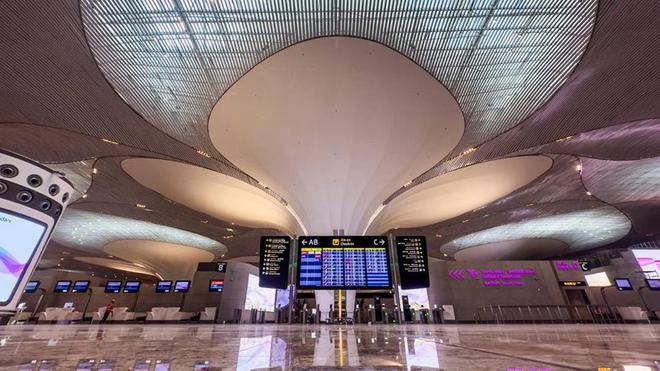
Why Mobile Networks Are Not Working Properly at Navi Mumbai International Airport
Passengers passing through the newly operational Navi Mumbai International Airport (NMIA) may notice an unexpected problem the moment they step inside the terminal — their mobile phones struggle to catch a signal. Calls drop, mobile data crawls, and popular networks such as Airtel, Jio, and Vodafone Idea appear unreliable. This connectivity issue is not a technical failure but the result of a dispute between telecom companies and the airport operator over infrastructure access and costs.
The disruption has its origins in a disagreement between India’s major private telecom operators and Navi Mumbai International Airport Ltd (NMIAL), which is run by Adani Airports Holdings Ltd. The conflict revolves around who is allowed to install and manage telecom infrastructure inside the airport and under what financial terms.
Concerned about the impact on passengers, the Cellular Operators Association of India (COAI) wrote to the Telecom Secretary on Tuesday, 30 December. In its letter, COAI stressed the need for the Department of Telecommunications (DoT) to step in and ensure that the established Right of Way (RoW) rules are followed, competition remains fair, and travelers are not inconvenienced.

RoW regulations define how telecom companies can deploy and operate their equipment on public and private properties, including large infrastructure projects like airports.
According to COAI, its member companies — Reliance Jio Infocomm, Bharti Airtel, and Vodafone Idea — have alleged that NMIAL has not permitted them to set up their own network infrastructure within the airport premises. This, they argue, has prevented them from delivering smooth 4G and 5G services to users inside the terminal.
Seriously? How difficult is it to plan for making mobile signals available inside an airport like every other airport? Does Adani's Navi Mumbai airport lack such a basic necessity? pic.twitter.com/dAj85GIWZ4
— Karthik 🇮🇳 (@beastoftraal) December 30, 2025
Instead, the operators claim that the airport authority is insisting they use a network already installed by NMIAL and is charging what they describe as excessively high fees for access. These costs, they say, are unreasonable and go against the spirit of fair competition.
NMIA has strongly rejected these allegations. A spokesperson for the airport clarified that permission has not been denied to any telecom service provider and that discussions with the companies are ongoing.
The airport authority also stated that it has never refused Right of Way access to any operator. According to NMIA, it has repeatedly communicated with telecom firms and has offered them in-building solution (IBS) services — a system commonly used in large structures like airports — at prices that align with prevailing industry norms. The spokesperson added that the telecom companies have yet to respond formally to this offer.
While the negotiations continue behind closed doors, travelers are bearing the brunt of the standoff. Over the past few days, several passengers have taken to social media platform X (formerly Twitter) to express their frustration over poor or nonexistent cellular connectivity at the airport, sharing experiences of missed calls, delayed messages, and lack of internet access.
Navi Mumbai International Airport was inaugurated by Prime Minister Narendra Modi on 8 October and began commercial operations on Christmas Day, 25 December, with the landing of its first scheduled flight. The airport is expected to ease congestion at Mumbai’s existing airport and serve as a major aviation hub in the region.