‘No Mayday Call, Just Panic’: What Were the Final Words of Ajit Pawar’s Pilot and Co-Pilot During the Baramati Crash
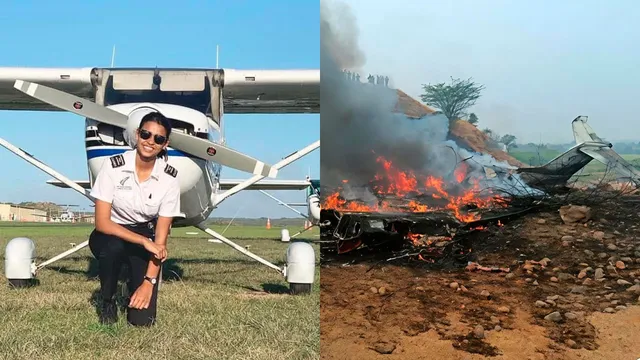
‘No Mayday Call, Just Panic’: What Were the Final Words of Ajit Pawar’s Pilot and Co-Pilot During the Baramati Crash
As Maharashtra mourns Ajit Pawar and four others lost in the Baramati plane crash, new details about the cockpit’s final moments reveal a desperate struggle and the absence of a formal distress call.
Maharashtra plunged into grief after Deputy Chief Minister and Nationalist Congress Party chief Ajit Pawar died in a tragic aircraft crash in Baramati while the chartered plane was attempting to land. The accident claimed five lives, including Pawar, the pilot, the co-pilot and two other crew members. As investigations continue, crucial information has now emerged about what transpired inside the cockpit in the last seconds before the crash.
According to preliminary findings, the aircraft did not issue a formal ‘Mayday’ call to Air Traffic Control. In aviation protocol, a Mayday call is made when a pilot loses control of the aircraft or faces an unavoidable emergency. The absence of such a call has raised questions about whether the crew believed they still had a chance to stabilise the aircraft or whether events unfolded too rapidly for formal communication.
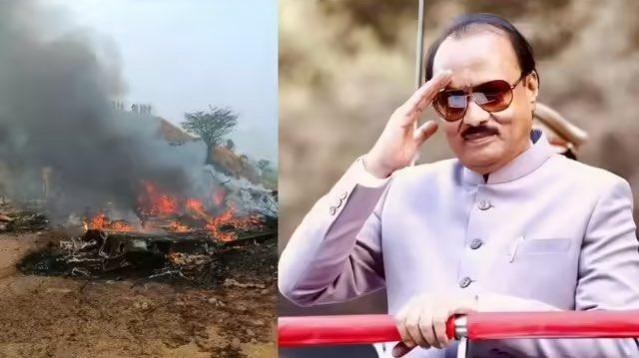
Sources familiar with the cockpit voice data suggest that instead of a structured distress message, the final moments were marked by alarmed exclamations between the pilot and co-pilot. Their last recorded words reportedly reflected urgency and shock rather than procedural communication, indicating that the aircraft situation deteriorated suddenly and severely.

Investigators believe the pilot attempted a second approach after the first landing attempt failed. During this phase, the aircraft reportedly lost stability at low altitude. With only seconds to react, the crew focused entirely on regaining control, leaving no opportunity to contact ATC through standard emergency channels.
The Directorate General of Civil Aviation (DGCA) has taken over the investigation. Officials have stated that a full assessment will be possible only after analysing the cockpit voice recorder (CVR) and flight data recorder (FDR). These devices are expected to confirm whether the pilots were attempting recovery manoeuvres, what technical alerts were triggered, and why a Mayday call was not transmitted.
Ajit Pawar was travelling to Baramati to attend a public rally related to the Zilla Parishad elections. His sudden death has sent shockwaves across Maharashtra’s political landscape. Just an hour before the accident, Pawar had shared a message on X paying tribute to freedom fighter Lala Lajpat Rai, calling him an inspiration for generations. The post has since taken on deep emotional significance for supporters and colleagues.
Born into a prominent political family, Pawar began his parliamentary journey in 1991 from the Baramati constituency and later served seven terms as a Member of the Maharashtra Legislative Assembly. He was married to Sunetra Pawar and is survived by his sons, Jay and Parth Pawar.
While tributes continue to pour in, aviation experts stress that conclusions should not be drawn until technical investigations are complete. The lack of a Mayday call does not necessarily imply negligence. In several aviation accidents, rapid mechanical failure or loss of control leaves pilots with no time to follow standard emergency procedures.
For now, the reported final words of the pilot and co-pilot stand as a haunting reminder of the intense pressure and split-second decisions faced in aviation emergencies. As the state mourns a major political loss, the nation awaits the DGCA’s findings to understand what truly went wrong in the skies over Baramati.