Surya Grahan: Day Will Turn Into Night During Century’s Longest Solar Eclipse
Surya Grahan: Day Will Turn Into Night During Century’s Longest Solar Eclipse
The rare total solar eclipse on August 2, 2027 is expected to last over six minutes and will be visible across parts of Europe, North Africa and the Middle East
The year 2027 is set to witness one of the most extraordinary astronomical events of the century as a rare total solar eclipse will occur on August 2. Scientists and skywatchers across the world are eagerly waiting for the celestial event, which is expected to last for nearly 6 minutes and 23 seconds making it one of the longest total solar eclipses visible from land between 1991 and 2114.
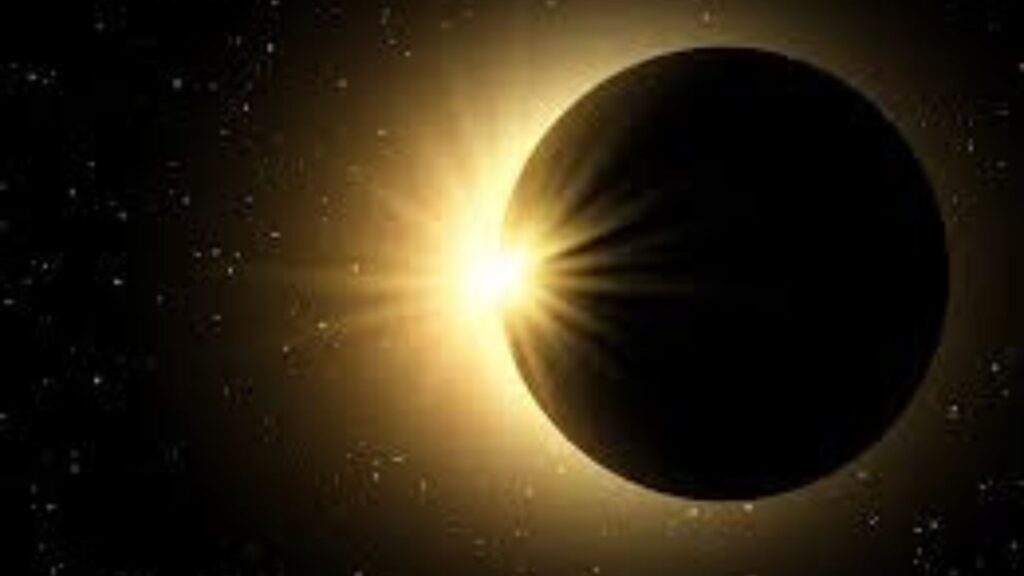
During the eclipse, the Moon will move directly between the Earth and the Sun, completely blocking sunlight for a brief period. This phenomenon, known as “totality”, will turn daytime into near-complete darkness in several regions along the eclipse path.

The eclipse will be fully visible in parts of southern Europe, North Africa and the Middle East. Countries expected to witness the dramatic darkness include Egypt, Saudi Arabia, Yemen, Libya, Morocco and Spain. Luxor in Egypt is being considered one of the best viewing locations because of the long duration of totality and typically clear skies.

In India, however, the eclipse is expected to appear only as a partial solar eclipse. While people may not experience complete darkness, portions of the Sun will still appear covered by the Moon in several regions.
Astronomers say the unusually long duration of the eclipse is due to a rare alignment of the Sun, Moon and Earth. Usually, total solar eclipses last only two to three minutes, but this event will continue for more than six minutes because of the Moon’s position being relatively closer to Earth at the time.
A solar eclipse occurs only during a new moon when the Moon passes between the Earth and the Sun. Because the Moon’s orbit is slightly tilted, such perfect alignments are rare. When the Sun is completely covered, it is called a total solar eclipse. If only the central part is blocked and a bright ring remains visible around the edges, it is called an annular solar eclipse.
Experts have advised people not to look directly at the Sun during the eclipse without proper eye protection, as the intense solar rays can permanently damage eyesight. Certified eclipse glasses or solar viewing filters are recommended for safe observation.
Traditional beliefs surrounding eclipses also continue to be followed in many households. Some people avoid cooking or eating during the eclipse period, while others prefer staying indoors until the event concludes.
With millions expected to witness the rare celestial event, the August 2, 2027 solar eclipse is likely to become one of the most talked-about astronomical spectacles of the decade.