How Pune Became Maharashtra’s Largest Higher Education and Research Destination
How Pune Became Maharashtra’s Largest Higher Education and Research Destination
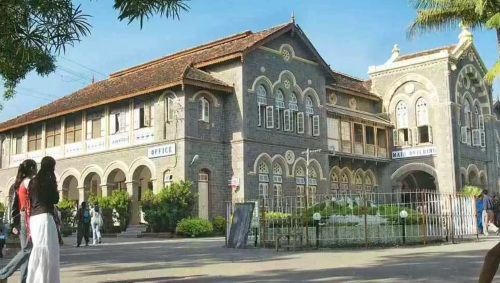
When Jawaharlal Nehru bestowed the title ‘Oxford of the East’ on Pune, the city was already home to institutions that had shaped generations Fergusson College, established in 1895 on FC Road, Deccan College with its century-old archaeology programme, and COEP, one of India’s oldest engineering institutions. Today, Pune not only upholds that name but continues its legacy with a new chapter of universities while preserving its heritage — hosting 15 of 33 private universities in Maharashtra and a total of 78 universities across the city.
A significant shift came in 2013 when the Maharashtra Government introduced new guidelines for private universities. The city experienced a surge in the private sector, many institutions evolving from well-established colleges, expanding their curriculum and introducing interdisciplinary courses that the traditional university structure had never offered before.

But Pune’s education story does not belong to any single stream. The city today covers virtually every field of study — engineering through COEP, PICT, MIT-WPU and VIT Pune; management through SIBM, SCMHRD and PUMBA; law through ILS Law College and Symbiosis Law School; medicine through Symbiosis Medical College and DY Patil; hospitality through IHM Pune; architecture through Sinhgad College of Architecture; and arts and commerce through Fergusson, SP College and BMCC. For students arriving from across Maharashtra and beyond, Pune offers something no other city in the state does — a complete education ecosystem where every ambition has an institution attached to it.

Colleges now mix culture with education. Symbiosis College, which began in 1971 as a cultural centre set up by former Fergusson College professor SB Majumdar to support foreign students, today runs 48 institutes across multiple cities with a cumulative enrolment of over 40,000 students. Its famous Navratri parties and Christmas fests have made it as well known for cultural exchange as for academics. FLAME University, established in 2015 and among the first private universities in Pune to be built entirely from scratch, pioneers liberal education in the city and is known for its interdisciplinary curriculum, international exchange programmes, and a campus that deliberately blurs the line between learning and living.
The city is also known for its emergence in the IT sector and commercial corridors, which has led to an 87% increase in employment, attracting companies like Tech Mahindra, IBM and Accenture. With Infosys, Wipro, TCS, Cognizant, Bajaj, and Mercedes-Benz all maintaining major campuses in Pune, the city offers placement opportunities that few Indian cities can match — making it a natural destination for undergraduate students looking to study and stay.
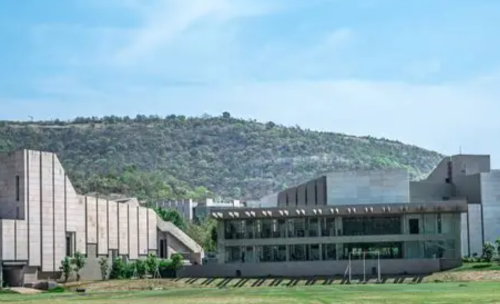
Institutions like IISER and IIT Pune are engaged in cutting-edge research in biotechnology, nanotechnology and data science, collaborating with leading international bodies. IISER Pune holds an NIRF rank of 42 nationally and its students describe an education that does not stop at the answer — one that pushes them to understand the process, the method, and the meaning behind every result. This is the kind of education that does not just prepare students for a career. It prepares them for a life of asking better questions.
The late Maharashtra Deputy CM Ajit Pawar had announced that the Pune Metropolitan Region would be developed as a national-level growth hub — the city’s foremost strength. For Pune, this feels less like a promise and more like a continuation. The title Nehru gave this city over half a century ago was never just about the number of colleges on a map. It was about what a city believes education is for. Pune, one campus at a time, keeps showing it still knows.