BCI Makes Social Media Ethics Mandatory for Law Students, Bans Courtroom Reels
BCI Makes Social Media Ethics Mandatory for Law Students, Bans Courtroom Reels
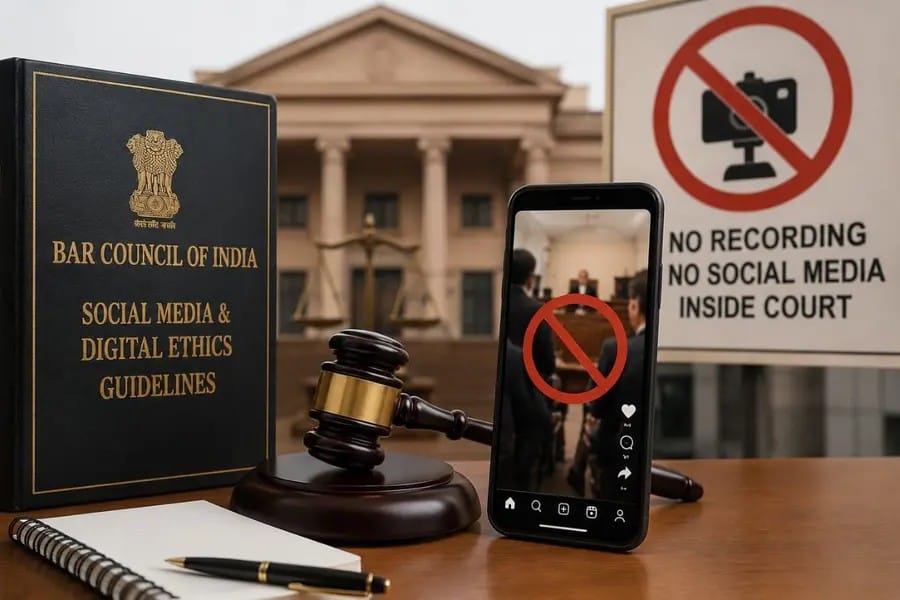
The Bar Council of India (BCI) has issued a comprehensive social media and digital ethics code for advocates, law students and interns. The new guidelines prohibit creating reels and promotional content inside court premises while making responsible online conduct a mandatory part of legal education and practice.
By Vidhi Lalla
Pune:The Bar Council of India (BCI) has introduced a new code of conduct aimed at regulating the use of social media by advocates, law students, interns and legal institutions. The guidelines seek to protect the dignity of courts, maintain client confidentiality and curb the spread of misleading legal content online.

The BCI has directed all State Bar Councils and Centres of Legal Education to implement the new framework immediately. Law colleges and universities have also been instructed to conduct awareness programmes and orientation sessions on professional ethics and digital conduct.

Under the new rules, advocates, law students and interns are prohibited from creating reels, videos, photographs or promotional content inside courtrooms, court buildings, corridors, lawyers’ chambers and other court premises. The use of lawyers’ bands, gowns or court premises for personal branding or social media publicity has also been barred.
The code makes it clear that internships are meant for learning professional ethics, courtroom discipline, legal drafting and research—not for creating social media content. Students have been advised against posting “day in court”, “day in chamber”, “internship reveal”, “courtroom drama”, “case file” or similar content that exposes professional work or turns judicial proceedings into entertainment.
Bar Council of India issues new social media code for law students.
— Bar and Bench (@barandbench) July 18, 2026
The BCI has also directed law colleges to obtain an undertaking from every student, before admission and before each internship, that they will comply with rules to ensure ethical coduct on social media and the… pic.twitter.com/grhHKvodRg
The BCI has also prohibited recording hearings, client conferences and discussions inside lawyers’ chambers. Confidential information, including client identities, litigation strategies, pleadings, draft documents and internal discussions, must never be disclosed on digital platforms.
The guidelines further caution against sharing fake court orders, misleading legal advice or AI-generated legal information that could confuse the public or undermine confidence in the justice system. Lawyers, students and interns have also been asked not to edit clips from court proceedings with music, captions or effects that ridicule judges, lawyers, litigants or the judiciary.
While educational content on legal topics, podcasts, short videos and explainers will continue to be permitted, such content must be fact-based, balanced, accurate and respectful of privacy. It should not contain sensational or misleading claims.
To strengthen enforcement, the BCI has asked State Bar Councils and Bar Associations to appoint Social Media Ethics Nodal Officers to monitor complaints and ensure compliance. Educational institutions have also been directed to appoint nodal officers, circulate the guidelines among students and faculty, and obtain separate undertakings from students at the time of admission, enrolment and before internships.

The Council has warned that violations of the code may attract disciplinary action depending on the nature and seriousness of the breach.
The move comes amid growing concerns over the increasing use of courtroom-related content on social media and aims to balance digital engagement with professional ethics, confidentiality and respect for the judicial process.
Disclaimer: The guidelines are intended to promote ethical use of social media within the legal profession. Advocates, students and institutions should refer to the official BCI circular for detailed compliance requirements.