Amar Bose: The Maestro of Silence Who Engineered the World’s First Noise-Cancelling Headphones
Amar Bose: The Maestro of Silence Who Engineered the World’s First Noise-Cancelling Headphones
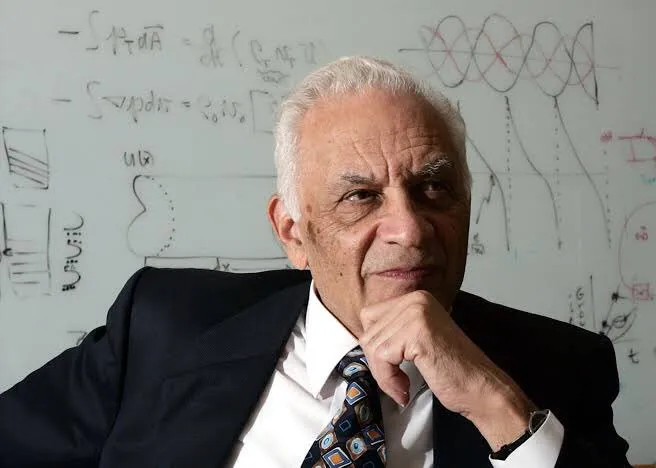
Noise-cancelling headphones have become an everyday companion for travelers, students, and dreamers alike — offering the rare gift of silence in a noisy world. Decades ago, long before such technology existed, one man imagined this possibility mid-flight, sketching equations on paper that would eventually reshape how humanity listens. That man was Amar Bose, the brilliant mind behind Bose Corporation — a pioneer who transformed both sound and science through his relentless curiosity and belief in innovation.
Amar Bose wasn’t just an engineer; he was a visionary educator, an inventor, and an entrepreneur whose influence resonated far beyond his classroom at the Massachusetts Institute of Technology (MIT). Former MIT President once described him as so magnetic that “students followed him like the Pied Piper.” And truly, they did — captivated not only by his intellect but also by the passion that flowed through his every word.
Born in the United States to a Bengali freedom fighter who fled British persecution in 1920, Bose grew up surrounded by resilience and resourcefulness. His family didn’t have much, but what they lacked in wealth, they made up for in determination. As a young boy, he taught himself to repair broken electric trains from scrap parts because his parents couldn’t afford new ones. This early habit of fixing things would soon become the foundation of his career.

During World War II, when his father’s import business collapsed, the 13-year-old Bose stepped up to help. He launched a radio repair service out of their home — his first entrepreneurial venture. “We put up signs in every hardware store saying we fix radios,” he later recalled. He even made a deal with his father: if his grades stayed high, he could skip school one day a week to repair radios. “My teachers would ask me on Monday, ‘How many radios did you fix, Bose?’” he would fondly remember. That small business quickly became one of the largest of its kind in Philadelphia.
His desire to not just fix but create soon took over. Determined to learn how radios actually worked, he enrolled at MIT, even though he initially struggled — especially with calculus. He studied tirelessly, eventually earning a scholarship and completing his PhD in Electrical Engineering.
In his ninth year at MIT, after finally earning enough money to treat himself, Bose bought a new stereo system. But when he played it, the sound quality disappointed him deeply. The specifications looked perfect on paper, yet the music sounded lifeless. This mystery consumed him. “I wanted to know why,” he said. During a teaching stint in India under a Fulbright scholarship, he began studying acoustics and psychoacoustics — the science of how people perceive sound. Those late nights of reading would set the stage for a lifetime of groundbreaking research.
Back at MIT, Bose discovered his love for teaching. “I didn’t realize at first that I would actually enjoy teaching,” he once admitted. His classes became legendary, often described by students as “Life 101.” People from every department lined up for his lessons, which demanded nearly 20 hours of weekly commitment but offered lessons that went far beyond textbooks. His motto for students was simple yet powerful: “Whatever job you’re given, ask yourself how to do it better than it’s ever been done before.”
Alongside teaching, Bose pursued research with fierce dedication. He observed that most loudspeakers directed sound straight toward the listener — unlike in concert halls, where 80 percent of sound reaches you indirectly after bouncing off surfaces. This realization inspired his mission to recreate that immersive experience in people’s homes.
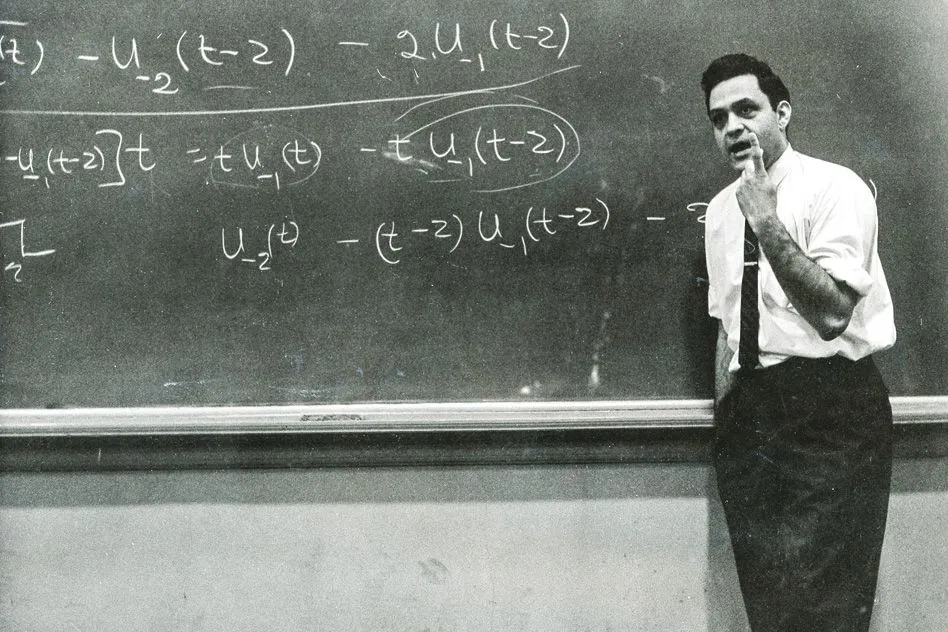
Encouraged by his mentor Professor Y. W. Lee, Bose founded Bose Corporation in 1964. The company’s early days weren’t glamorous — they survived on contracts developing power-regulating systems for military jets, which funded their experiments. His first hire was one of his students, Sherwin Greenblatt, who would later become the company’s president. Together, they worked on defense projects by day and sound experiments by night.
In 1966, after years of effort, they launched the Bose 2201 speaker — a unique eighth-of-a-sphere design that fit neatly into room corners and used reflected sound to create a concert-like experience. Despite positive reviews, it failed commercially. As Greenblatt recalled, “Everyone liked it, but no one bought it.”
But Bose didn’t give up. He went back to the drawing board and, in 1968, unveiled the Bose 901 Direct/Reflecting Speaker System, which became an instant success and remained a bestseller for more than 25 years. As Bose famously said, “You need the courage to be different — because nothing better is ever created without being different.”
His next revolutionary idea came during a transatlantic flight with his wife, Ursula. The airplane was loud, and the headphones they were given barely helped. Excited yet frustrated, Bose pulled out a notepad and began sketching mathematical equations. By the time they landed in Boston, he had conceptualized the world’s first noise-cancelling headphones. Turning that concept into reality, however, took 15 long years and over $50 million of investment. The result was the QuietComfort series, now synonymous with Bose and used even in space programs to protect astronauts’ hearing.
Bose’s inventive spirit didn’t stop there. He developed custom car audio systems, first used in the 1983 Cadillac Seville, and even spent 24 years secretly building a revolutionary suspension system that offered cars an incredibly smooth ride — eventually unveiled in 2004 under “Project Sound.”
One of his most defining choices was to keep Bose Corporation private. “The smartest decision I ever made was not taking the company public,” he once said. “It allows us to endure short-term pain for long-term innovation. I’d have been fired a hundred times at a company run by MBAs. But I never went into business to make money — we exist to innovate.”
True to his values, two years before his passing in 2013, Amar Bose donated the majority of his company shares to MIT. The dividends continue to fund research and education, though the institute can’t sell the stock or control company decisions — a gesture that perfectly reflected his lifelong devotion to learning and invention.
Even now, his legacy echoes through every pair of Bose headphones and every speaker that fills a room with music. His company still lives by his favorite saying: “If you think something’s impossible, don’t interrupt the person who’s doing it.”