CBSE Makes Skill Education Mandatory For Classes 6–8; Skill Labs To Be Set Up In All Schools
CBSE Makes Skill Education Mandatory For Classes 6–8; Skill Labs To Be Set Up In All Schools
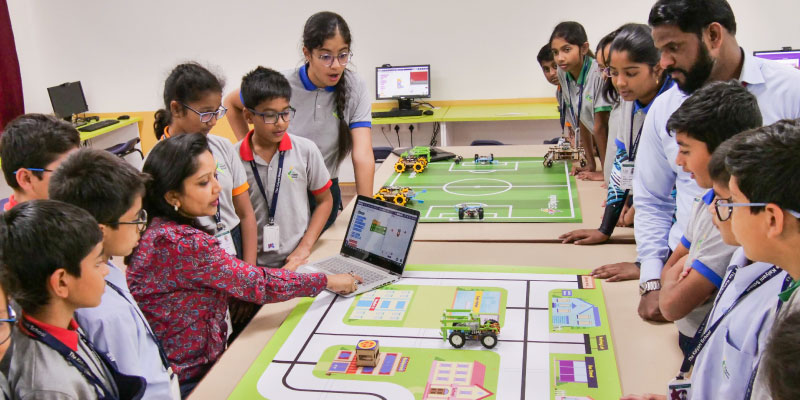
Students will now learn real-life tasks through hands-on projects, with CBSE mandating 270 hours of practical skill training over three years.
The Central Board of Secondary Education (CBSE) has announced a major shift in school education by making skill education compulsory for Classes 6 to 8 across all affiliated schools. Beginning the 2024–25 academic year, schools must integrate real-life, work-based learning into the mainstream curriculum, moving beyond traditional book-and-exam-based systems.
Under the new mandate, students will study using the NCERT-developed “Skill Bodh” series, which provides structured, hands-on activities in both print and digital formats. The initiative is aligned with the National Education Policy (NEP) 2020 and aims to build practical capability early on.

Three Categories of Mandatory Projects
Every year, students must complete three projects chosen from six options in the Skill Bodh books. Over Classes 6, 7 and 8, they will complete nine projects totaling 270 hours of practical work. Projects are divided into:
- Work with living organisms – caring for plants and animals
- Work with machines and materials – basic mechanical and tool-based tasks
- Work related to human service – community-oriented and social responsibility tasks
Dedicated Skill Periods
• 110 hours (160 periods) every year will be reserved exclusively for skill education
• Schools must allot two consecutive periods per week
• Project selection will depend on local needs and available resources
Teacher Training & New Responsibilities
Teachers will also be trained to adapt to skill-based teaching. CBSE, NCERT and PSSIVE will jointly conduct large-scale teacher training programs to prepare educators for the new format.
Skill Fairs, Portfolios And Practical Assessments
A major shift is the evaluation pattern, which moves away from traditional exams. Assessment will include:
• 10% – written exam
• 30% – viva or presentation
• 30% – activity book
• 10% – portfolio
• 20% – teacher observation
Schools must also host an annual Skill Fair, where students will display their projects, models and experiences. Parents will be able to see how students are applying real-life knowledge beyond textbooks.
Composite Skill Labs Mandatory From Next Year
From the next academic year, all CBSE schools must set up a Composite Skill Lab, offering space and equipment for hands-on learning. CBSE Director (Skill Education & Training), Biswajit Saha, announced this at the 16th All Kerala CBSE Principals’ Conference in Kochi, attended by over 900 principals.
The labs will help students gain hands-on familiarity with various professions under the National Skill Qualification Framework (NSQF). The scheme will soon extend to Classes 11 and 12 as well, with CBSE introducing 10 skill-based subjects from Class 9 onwards.
A Major Transformation In School Education
By embedding real-life work experience into the curriculum, the board aims to make students more capable, confident and employable. The focus is on ensuring progress based not only on what students study, but also on what they do and how they learn.
The move marks an important shift in Indian schooling, bringing practical skills and experiential learning to the heart of the classroom.