Delhi to Mumbai in Around 12 Hours? New Gujarat Expressway Stretch Now Open — Check Route, Entry and Exit Points
Delhi to Mumbai in Around 12 Hours? New Gujarat Expressway Stretch Now Open — Check Route, Entry and Exit Points
Travel between Delhi and India’s financial hub is steadily becoming faster and more efficient as fresh sections of the ambitious Delhi–Mumbai Expressway come online. The latest development comes from Gujarat, where a newly completed stretch has been opened to the public on a trial basis, marking another major step toward transforming long-distance road travel in the country.
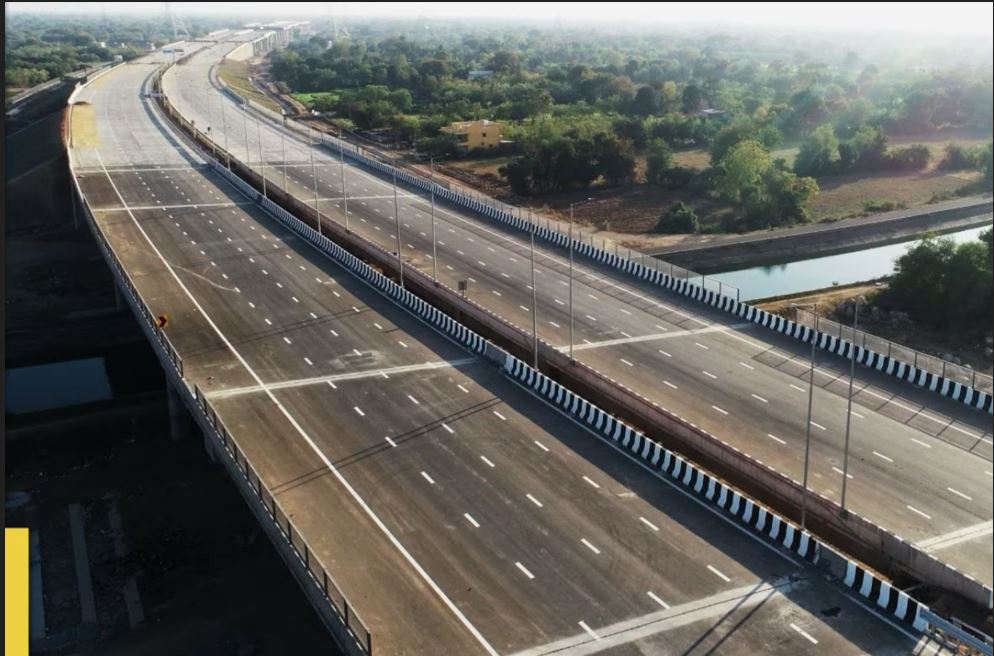
TheUnion Ministry of Road Transport and Highways has announced that the Godhra–Vadodara section is now operational for trial use starting April 13, 2026. This stretch connects Bhamaiya village near Godhra in Panchmahal district to Dodka village near Vadodara. Built as an eight-lane, access-controlled corridor, it is designed to support high-speed traffic and smoother journeys. A formal inauguration will take place after the trial phase concludes successfully.
Spanning a total length of 1,386 km, the Delhi–Mumbai Expressway is expected to cut travel time between the two cities down to just 12 hours once fully functional. It is also being recognized as one of the fastest-constructed expressway projects globally. The corridor passes through five key states—Haryana, Rajasthan, Madhya Pradesh, Gujarat, and Maharashtra—while also linking Delhi at one end.

Developed under the Bharatmala Pariyojana with an investment of around ₹1 lakh crore, the expressway aligns with the government’s PM Gati Shakti initiative, aimed at strengthening integrated infrastructure. It also connects with the Samruddhi Mahamarg, further enhancing regional connectivity.
The expressway begins from the DND Flyway in Delhi and extends through Sohna in Haryana, ultimately reaching Virar and the Jawaharlal Nehru Port Trust in Maharashtra. Along its route, it will either directly link or provide feeder access to major cities such as Jaipur, Ajmer, Kota, Udaipur, Chittorgarh, Bhopal, Indore, Ujjain, Ahmedabad, Surat, and Vadodara.
Key highlights of the project include its design speed of 100–120 km/h, smart traffic management systems, and environmentally conscious construction features. As India’s longest expressway, it is expected to significantly improve logistics efficiency and reduce travel fatigue.
Being a controlled-access highway, entry and exit are only permitted at designated interchanges. Important access points include:
- Delhi/NCR: DND, Faridabad, Sohna
- Rajasthan: Dausa, Lalsot, Kota
- Gujarat: Dahod, Vadodara, Bharuch, Surat
- Maharashtra: Vapi, Palghar, Navi Mumbai
More than 90 such interchanges are planned across the full route.
Looking ahead, further connectivity improvements are in the pipeline. The Godhra–Vadodara stretch is expected to enhance travel between Godhra, Kalol, and Vadodara. Once extended to Jhabua in Madhya Pradesh, commuters will experience even greater ease. The Jhabua–Vadodara segment, approximately 220 km long, is nearing completion, while the 115 km stretch between Godhra and Jhabua is also progressing. Work on the Gujarat–Madhya Pradesh link is likely to be finished by the end of May.
Direct expressway connectivity between Delhi and Gujarat is anticipated by the end of 2026. However, full seamless travel all the way to Mumbai is expected to become a reality next year.