Pune Residents Question Lack Of Action Against Illegal Number Plates Ahead Of HSRP Deadline
Pune Residents Question Lack Of Action Against Illegal Number Plates Ahead Of HSRP Deadline
With the June 30 deadline for installing High-Security Registration Plates approaching, residents of Pune and Pimpri-Chinchwad have raised concerns over the continued use of illegal and customised number plates on city roads.
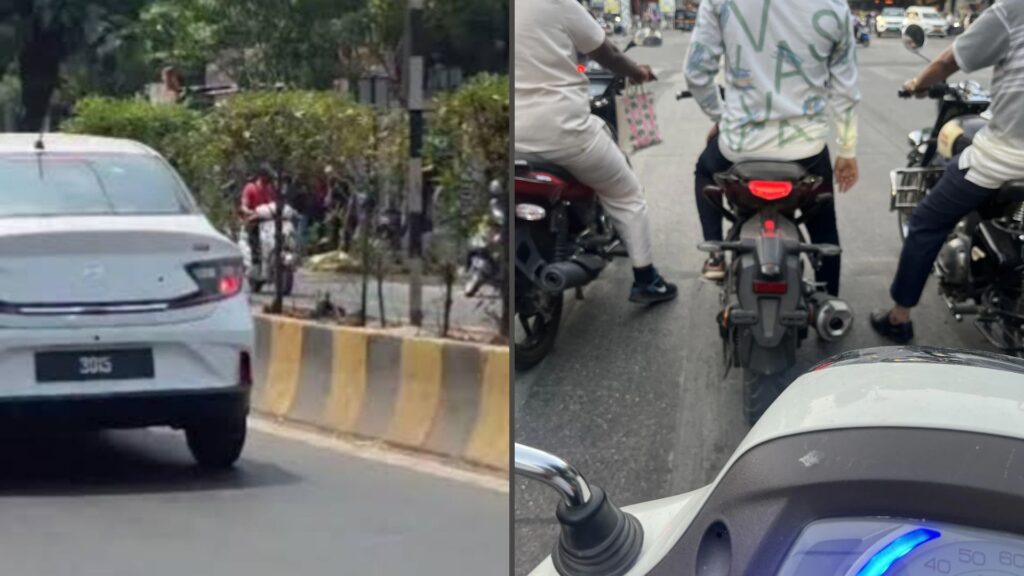
Weeks before the deadline for mandatory High-Security Registration Plates (HSRPs) on older vehicles, non-standard and customised number plates continue to be widely visible across Pune and Pimpri-Chinchwad, prompting residents to question the effectiveness of enforcement measures.

From vehicles displaying names instead of registration numbers to number plates featuring designer fonts, oversized numerals, political symbols, LED borders and barely visible state codes, several vehicles continue to violate prescribed registration norms despite clear regulations.
The Maharashtra government had recently extended the deadline for installing HSRPs on vehicles registered before April 1, 2019, until June 30, 2026. Authorities have announced that special inspection drives will begin from July 1 to check compliance.

Under the enforcement plan, vehicles found without HSRPs or proof of a valid appointment booking may face action under the Motor Vehicles Act, including a penalty of up to ₹1,000.
Residents who have already complied with the HSRP mandate say they are frustrated by the apparent lack of action against vehicles openly displaying illegal number plates. Many point out that traffic cameras regularly issue e-challans for offences such as signal jumping and speeding, yet vehicles with unreadable or modified registration plates often appear to escape scrutiny.
Citizens argue that illegal number plates not only violate the law but also make it difficult for police and traffic authorities to identify vehicles involved in accidents, traffic offences or criminal activities.
Several residents have also alleged that vehicles carrying political symbols, “Nagarsewak” stickers and other forms of political identification are among the most frequent violators of the rules.
The HSRP system was introduced to create a uniform, tamper-proof and machine-readable registration system across the country. Under Rule 50 of the Central Motor Vehicles Rules, 1989, all vehicles are required to display standardised High-Security Registration Plates at both the front and rear.
These plates are designed to be easily identifiable by law enforcement agencies, surveillance cameras and automated traffic management systems.
Any modification of the registration plate, including decorative fonts, personalised names, glowing borders or non-standard formats, is considered illegal under existing regulations.
Despite the rules, customised and fancy number plates remain a common sight on roads in Pune and Pimpri-Chinchwad. Residents say stricter enforcement is necessary to ensure that the objective of the HSRP system improved identification, road safety and law enforcement is effectively achieved.
With the June 30 deadline approaching and inspection drives scheduled to begin in July, authorities are expected to intensify checks on non-compliant vehicles across the region.
Disclaimer: Traffic regulations, penalties and enforcement procedures may be revised by authorities from time to time. Vehicle owners should verify the latest compliance requirements through official transport department channels.