EV Car Market In India Will Rise Upto Rs 50 Thousand Crores By 2025
EV Car Market In India Will Rise Upto Rs 50 Thousand Crores By 2025
India’s automobile industry is shifting into high gear, emerging as the fastest-growing sector in the country. Despite a global recession, India’s growth rate is accelerating, driven by soaring vehicle sales. In the financial year 2023, a record 2.59 crore vehicles were manufactured, with April 2024 seeing a significant increase in production across all categories – 35 lakh, 58 thousand units of two-wheeler, three-wheeler, four-wheeler, and six-wheeler vehicles.
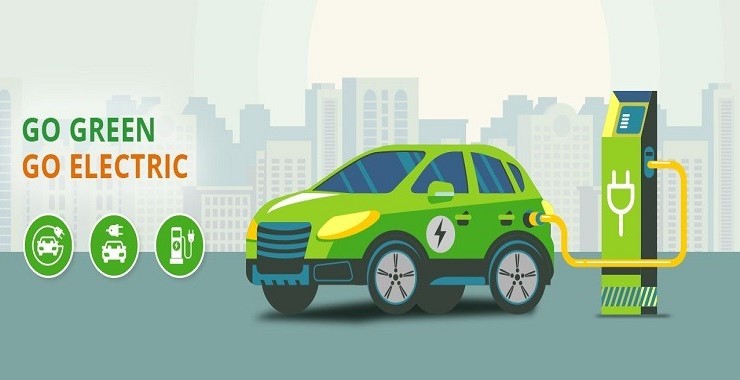
The sector’s growth is further boosted by the rising demand for electric vehicles (EVs), with 2025 predicted to be a landmark year for EV adoption. India is already a global leader in heavy vehicle production, ranking first in tractor manufacturing, second in bus production, and third in truck production. The country aims to become the granddaddy of the EV sector by 2030, with the government targeting to replace 30% of existing vehicles with EVs.
To achieve this goal, the government is offering discounts and incentives for EV adoption. The market is expected to reach a turnover of ₹50,000 crores by 2025, with companies like Tata Motors leading the charge in EV production. Tata currently dominates the EV market with a share of almost 80%, offering a range of EV vehicles including Tiago, Tigor, Nexon, Tata Punch, and Curve.

The automobile sector is a significant contributor to India’s economy, generating employment for 29 million people and driving exports. In 2017-18, 40 lakh vehicles were exported, earning valuable foreign exchange for the country. The government has been supportive of the sector since 1970, with companies like Tata Motors, M&M, and Ashok Leyland building infrastructure and investing in technological development.
Foreign investment is also pouring in, with countries like Japan, Italy, America, Netherlands, Mauritius, and South Korea investing heavily in the sector. The availability of cheap and skilled labor, conducive business environment, and supportive government policies make India an attractive destination for investment.
The demand for vehicles is driven by rapid urbanization, increasing middle-class incomes, and easy availability of loans. Two-wheelers dominate the market, accounting for 80% of total vehicle sales, followed by passenger vehicles (14%) and commercial vehicles (6%).
As the country moves towards a future dominated by electric vehicles, India’s automobile industry is