Four-Planet Sky Show This Week: How and When to Watch the Rare Alignment from India
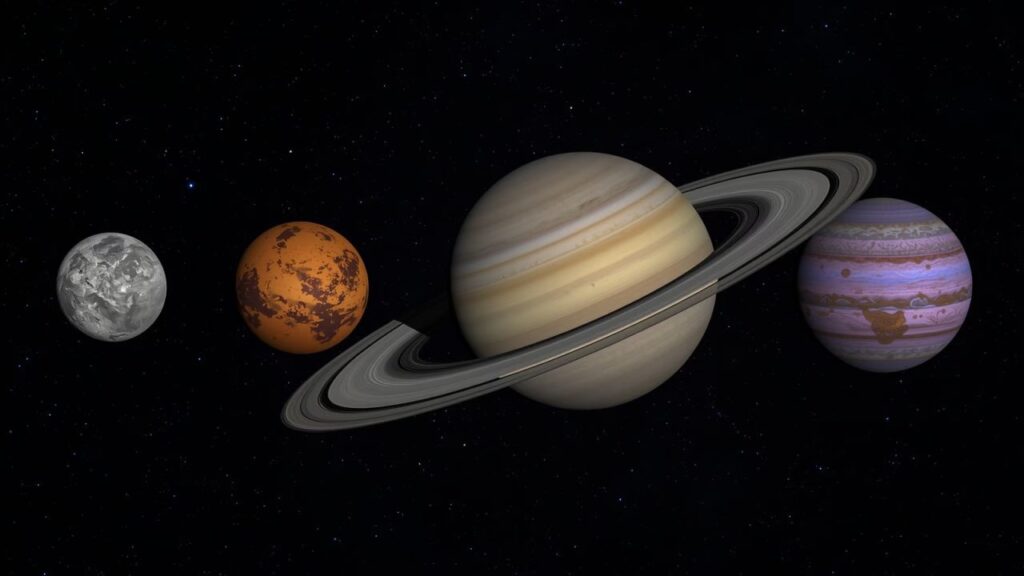
Four-Planet Sky Show This Week: How and When to Watch the Rare Alignment from India
Skywatchers have a special reason to wake up early this week. A striking celestial event is unfolding as four planets—Mercury, Mars, Saturn, and Neptune—appear grouped together in the morning sky. While such alignments aren’t uncommon in astronomy, catching multiple planets clustered so closely is always a rewarding sight for observers.
This particular alignment will be visible between April 16 and April 23, with the most favorable viewing dates falling between April 18 and April 20. On the morning of April 20, the trio of Mercury, Mars, and Saturn will appear so tightly packed that you could cover them with just three fingers held at arm’s length—a neat visual trick for observers.
What Does “Planetary Alignment” Mean?
A planetary alignment occurs when several planets appear to gather in the same region of the sky. This happens because all planets orbit the Sun along a similar flat plane. Occasionally, their positions line up in such a way that, from our perspective on Earth, they seem grouped together.

It’s important to understand that this alignment is only an optical effect. The planets are not actually close to one another in space—they remain separated by millions of kilometers. Despite popular myths, these events are completely harmless and have no physical impact on Earth.
Visibility in India: What to Expect
Yes, this celestial display can be seen from India, though it will require a bit of planning and clear skies. The ideal time to observe the alignment is about 30 minutes before sunrise, roughly between 5:00 am and 5:50 am IST.
Viewing conditions will differ across the country. Eastern cities like Kolkata will experience sunrise earlier, while places such as Mumbai will have slightly more time before daylight takes over. Cities including Chennai, Bhopal, and Delhi fall somewhere in between.
Among the four planets:
- Mercury, Mars, and Saturn will be visible to the naked eye under clear conditions.
- Neptune, being much fainter, will require binoculars or a small telescope.
Mercury will stand out as the brightest and easiest to spot. Saturn, however, will sit lower on the horizon and may fade quickly as the sky brightens.
Interestingly, southern cities like Bengaluru, Hyderabad, Chennai, and Kochi may offer slightly better viewing opportunities than northern locations such as Delhi, Lucknow, or Chandigarh. This is because locations closer to the equator allow the planets to appear a bit higher above the horizon.
Weather and Sky Conditions
April is generally a favorable month for stargazing across India. With the monsoon still weeks away, skies are often clearer, though local conditions like dust or haze could still affect visibility.
Not an Early Riser? There’s an Evening Treat Too
If waking up before dawn isn’t your thing, there’s another beautiful sight waiting in the evening. On April 18, just after sunset, a slender crescent Moon will appear close to the dazzling planet Venus in the western sky. Around 7:30 pm IST, simply step outside, look west, and enjoy an easy-to-spot pairing.