Google Doodle Celebrates India’s Space Power on the 77th Republic Day
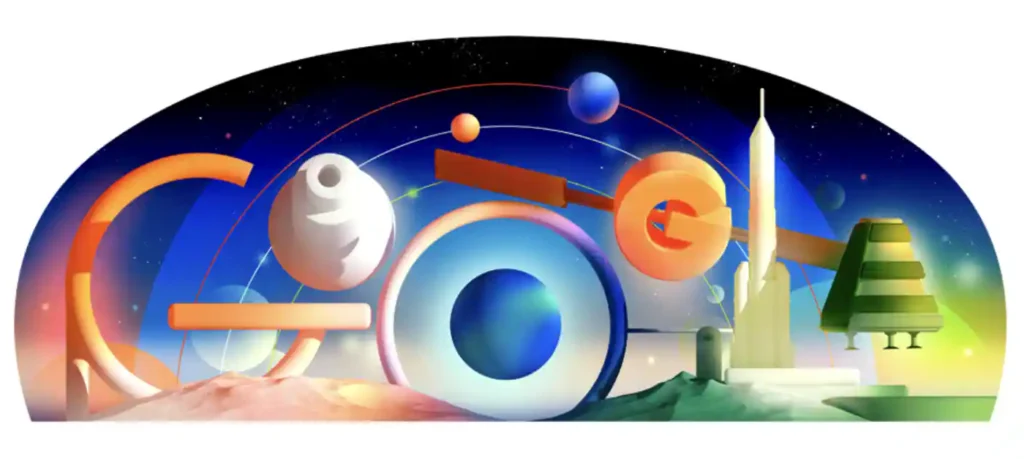
Google Doodle Celebrates India’s Space Power on the 77th Republic Day
From satellites in space to tableaux on Kartavya Path, India’s scientific pride and patriotic spirit come together on the 77th Republic Day.
As India celebrates its 77th Republic Day on January 26, 2026, the spirit of patriotism finds a unique digital expression through Google’s special Republic Day Doodle. This year, the Doodle highlights India’s remarkable journey in space exploration, weaving satellites, orbits, and space-themed imagery into the letters of the word “Google.” The design quietly honours India’s growing stature as a global space power while aligning with the national theme of “150 Years of Vande Mataram.”
The illustration features cosmic elements that reflect India’s scientific ambition and technological strength. Though Google has not released an official explanation for the artwork, the presence of space motifs clearly points to India’s achievements in satellite launches, space research, and its expanding role in global space missions. The Doodle acts as a symbolic salute to the Indian Space Research Organisation and the nation’s long-term vision in space science.
This digital tribute arrives at a time when India’s space programme is gaining unprecedented momentum. ISRO is preparing for multiple satellite launches throughout 2026. ISRO Chairman V Narayanan recently stated that extensive work is underway and that the coming year will see several missions aimed at strengthening India’s space infrastructure. The emphasis on space in the Google Doodle reflects this forward-looking approach and India’s confidence in scientific innovation.

On the ground, the Republic Day celebrations at Kartavya Path will unfold with grandeur and precision. President Droupadi Murmu will lead the nation in the celebrations, beginning with the unfurling of the national flag. The parade will commence at 9:30 am, with entry gates opening from 7 am and live television coverage starting at 10:30 am, allowing millions across the country to witness the historic event.
This year’s Republic Day carries special emotional and cultural weight because it marks 150 years of the national song “Vande Mataram.” Composed in 1876, the song became a powerful symbol of unity and resistance during India’s freedom movement. The theme for Republic Day 2026 honours this legacy and reinforces the message of national pride, sacrifice, and collective identity.
The parade will feature 30 tableaux, carefully curated to reflect two major themes: “Swatantrata ka Mantra: Vande Mataram” and “Samriddhi ka Mantra: Aatmanirbhar Bharat.” Together, they connect India’s historical struggle for freedom with its present-day focus on self-reliance, growth, and technological leadership. Each tableau will represent the diversity of India’s states and institutions while presenting a unified narrative of progress.
One of the key highlights of this year’s parade is the debut of the Bhairav Light Commando Battalion, showcasing India’s evolving defence preparedness and tactical capabilities. Alongside military contingents, the parade will display newly inducted equipment, modern weapon systems, and formations that reflect the strength of India’s armed forces.
Republic Day 2026 also gains international importance with the presence of the chief guests. The President of the European Council, Antonio Costa, and the President of the European Commission, Ursula von der Leyen, will attend the celebrations. Their participation symbolises India’s strengthening diplomatic ties with the European Union and underscores its growing influence on the global stage.
The combination of tradition, technology, and diplomacy makes this year’s Republic Day particularly significant. While the parade reflects India’s military and cultural heritage, the Google Doodle captures the spirit of scientific progress in a modern, visual language that reaches a global audience instantly.
Google Doodles themselves have a long history of celebrating important events and milestones. The first Doodle was created in 1998 as a simple message to show that Google’s founders were attending the Burning Man festival. Over the past 28 years, Doodles have evolved into a powerful form of digital storytelling, with more than 5,000 created to honour people, history, culture, and achievements across the world.
By choosing a space-inspired theme for India’s 77th Republic Day, Google has placed the spotlight on a dimension of national pride that goes beyond geography and tradition. It recognises that India’s identity today is shaped not only by its freedom struggle and cultural heritage but also by its scientific ambition and future vision.
From the echoes of “Vande Mataram” on Kartavya Path to satellites symbolically orbiting within Google’s Doodle, Republic Day 2026 becomes a celebration of how far India has come and how boldly it is looking toward the future.