Gurugram Housing Society Recovers Rs 15 Lakh After Publicly Naming Maintenance Defaulters
Gurugram Housing Society Recovers Rs 15 Lakh After Publicly Naming Maintenance Defaulters
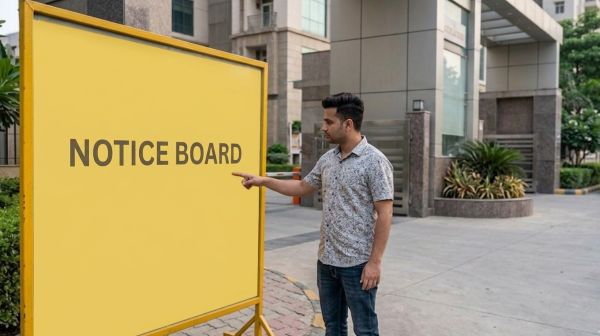
Residents of Uppal Southend township in Gurugram have found an effective way to tackle long-standing maintenance dues. By publicly displaying the names of defaulters on a large yellow board at the main gate, the township’s Residents Welfare Association (RWA) has successfully recovered around Rs 15 lakh in just a month, according to The Indian Express. Nearly one-third of those named have cleared their pending payments following the public notice.
The township, spread across Sectors 49 and 50, is home to independent floors, villas, and residential plots valued at over Rs 2 crore each. Despite being a premium locality, it had accumulated maintenance dues of roughly Rs 45 lakh. The board displayed not only the names of defaulters but also potential penalties, such as suspension of food deliveries from Zomato and Swiggy, car washing, and domestic help until dues were paid.
“Over Rs 15 lakh of the Rs 45 lakh have been recovered, with more than 40% of those named on the board paying up. We did not have to send reminders. Neighbours of those named convinced them, and more residents are coming forward to clear their dues. Mostly, only legacy defaulters – those owing over Rs 1 lakh for some time now – are yet to pay up,” said RWA general secretary Anil Anand.

The response to the initiative has been overwhelmingly positive, with RWAs from other Gurugram societies and cities like Bengaluru and Hyderabad contacting the township to replicate the approach.
The RWA has now relaxed some of its initial restrictions. While services like domestic help, car washing, and food delivery suspensions for defaulters have been eased, access to RWA social events continues to be restricted for those with unpaid dues.
Some residents, however, argue that the problem lies not just in payment delays but in unequal services. Many, particularly those paying for private security, question why they must contribute to common security charges. “Why should we pay for security, which forms 80% of the dues, when we do not get a guard. Most of those on the list face the same issue,” said Shubhi Ostwal, a clinical nutritionist named among the defaulters. Siya Chauhan, involved in manufacturing aircraft parts, raised similar concerns, pointing out that residents pay separately for their own guards yet still contribute to common security costs.
Anand countered these claims, stating that monthly maintenance remains nominal at Rs 1,100 to Rs 1,350, even with security included. He emphasized that residents benefit from other facilities such as clean roads, parks, and community events maintained by the staff funded through these dues.