Kumbh Mela: An exploration of its mythology, historical significance, astrological connections, and why millions gather for this grand event
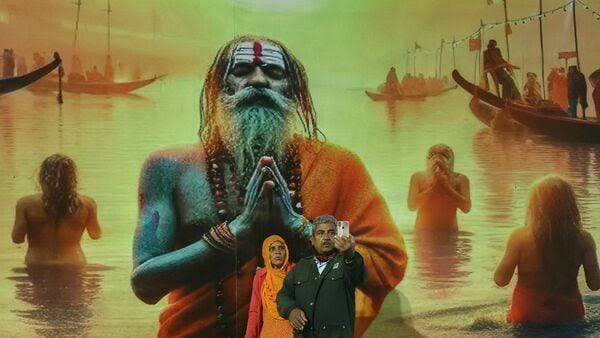
Kumbh Mela: An exploration of its mythology, historical significance, astrological connections, and why millions gather for this grand event
Numerous myths surround the Kumbh Mela, along with various theories regarding its origins.
The Maha Kumbh, scheduled from January 13 to February 26, is anticipated to become the largest temporary city in the world, hosting between 5 million to 10 million devotees at any moment.
Prayagraj is the venue for this year’s Maha Kumbh, also known as the Poorna Kumbh, which takes place every 12 years. Some assert that the festival is referenced in ancient texts like the Vedas and Puranas, while others argue that it is a more modern event, dating back only about two hundred years.
The mythological roots of the Kumbh Mela can be traced back to ancient tales. The term “kumbh” in Sanskrit translates to pitcher or pot. According to legend, during the churning of the ocean by the Devas (gods) and Asuras (often referred to as demons), Dhanvantri emerged with a pitcher filled with amrita, the nectar of immortality. To prevent the Asuras from obtaining it, Jayant, the son of Indra, fled with the pot. He was accompanied by the Sun, his son Shani, Brihaspati (the planet Jupiter), and the Moon for protection.

As Jayant hurried away, drops of amrita fell at four locations: Haridwar, Prayagraj, Ujjain, and Nashik-Trimbakeshwar. His flight lasted for 12 days, and since one day for the Devas equals one year for humans, the Kumbh Mela is celebrated at these sites every 12 years, aligned with the positions of the Sun, Moon, and Jupiter.
Prayagraj and Haridwar host the Ardh-Kumbh (meaning half) every six years. The festival that occurs every 12 years is known as the Poorna Kumbh or Maha Kumbh.
All four locations are situated along riverbanks: Haridwar is by the Ganga, Prayagraj is at the confluence of the Ganga, Yamuna, and the legendary Saraswati, Ujjain is alongside the Kshipra, and Nashik-Trimbakeshwar is near the Godavari.
It is believed that immersing oneself in these rivers during the Kumbh, coinciding with a specific celestial alignment, purifies one of sins and generates spiritual merit.
Kumbh Melas also serve as a gathering place for Sadhus and other spiritual figures, with the sadhu akhadaas drawing significant interest, allowing ordinary people to interact with them and gain insights.
The location of a Kumbh Mela is determined through astrological calculations. The 12-year interval between Kumbh Melas is linked to Jupiter’s orbit, which takes 12 years to complete one revolution around the Sun.
As stated on the Kumbh Mela website, when Jupiter is positioned in Aquarius (Kumbh rashi, symbolized by the water bearer), and the Sun and Moon are in Aries and Sagittarius respectively, the Kumbh takes place in Haridwar.
If Jupiter is in Taurus, with the Sun and Moon in Capricorn (Makar), the Kumbh is celebrated at Prayag, coinciding with Makar Sankranti.
When Jupiter is in Leo (Simha), and the Sun and Moon are in Cancer, the Kumbh is held at Nashik and Trimbakeshwar, which is why this event is also referred to as the Simhastha Kumbh.
The Shahi Snan, or royal baths, serve as the centerpiece of the Mela rituals. Devotees hold the belief that immersing themselves in the holy waters at these specific times cleanses the spirit and fosters spiritual rejuvenation. The dates for this year’s Shahi Snan are as follows:
- – January 14: Makar Sankranti (First Shahi Snan)
- – January 29: Mauni Amavasya (Second Shahi Snan)
- – February 3: Basant Panchami (Third Shahi Snan)
- – February 12: Maghi Purnima (Fifth Shahi Snan)
- – February 26: Maha Shivratri (Final Snan)
These sacred baths, along with vibrant processions and communal prayers, highlight the deep spiritual significance of the event for Hindus around the globe.
With millions anticipated to participate in the coming month, the Maha Kumbh Mela stands as a powerful symbol of faith and shared devotion, attracting individuals from diverse backgrounds to one of the most renowned religious gatherings in the world.