Latest Update on Mumbai–Pune Expressway Missing Link as it Nears Completion, Travel Time To Drop By 30 Minutes
The long-awaited bypass of the Khandala ghat section is set to transform travel between Mumbai and Pune with faster, safer and smoother journeys.
The Mumbai–Pune Expressway’s much-anticipated “missing link” is now in its final phase and is expected to be completed by March 2026. Once operational, this crucial stretch will significantly reduce travel time between the two cities by up to 30 minutes and offer a safer alternative to the accident-prone Khandala ghat section.
For years, commuters have had to navigate the steep, winding and congestion-heavy route between Lonavala and Khandala. The new missing link will completely bypass this stretch, eliminating one of the most challenging parts of the expressway. It is expected to bring a major shift in daily commuting patterns for thousands of motorists, transport operators and weekend travellers.

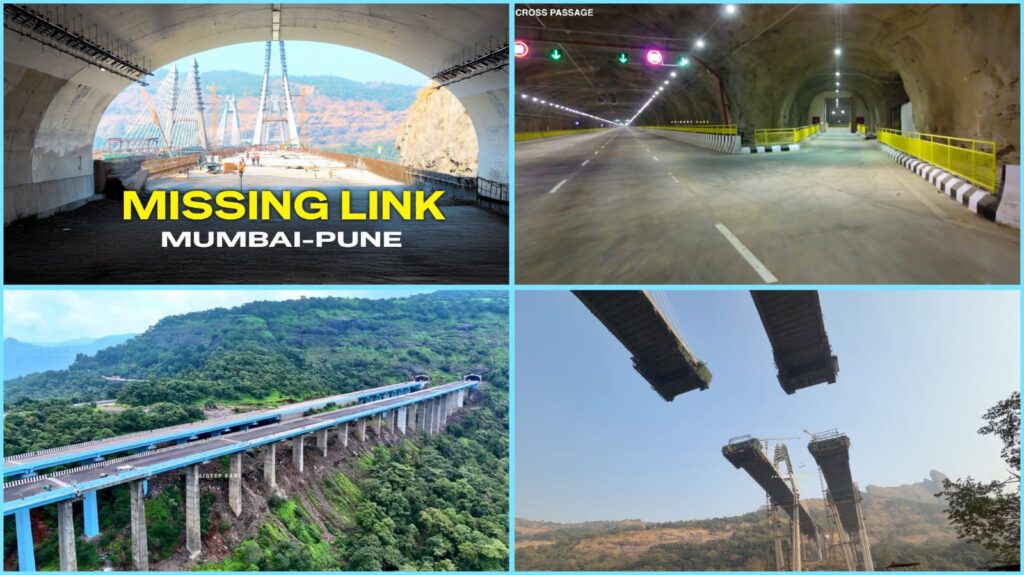
The missing link spans approximately 13.3 kilometres and runs between Kasarvati and Ambivli on the Mumbai–Pune Expressway. It is being built through the Sahyadri mountain range using modern engineering techniques, including long tunnels and elevated viaducts. These structures are designed to handle the region’s difficult terrain and heavy monsoon conditions, making travel both faster and safer.
Officials have stated that this project will not only shorten the physical distance but also ensure a smoother and more predictable driving experience. The current ghat section is known for traffic bottlenecks, sudden braking, poor visibility during rains and a higher rate of accidents. The new alignment avoids these risks by offering straighter roads, controlled gradients and modern safety features.
One of the most important benefits of the missing link is improved safety. The project includes state-of-the-art tunnels, reinforced bridges and advanced monitoring systems. These measures are expected to drastically reduce accident rates, particularly during peak hours and the monsoon season, when the ghat route becomes highly dangerous.
Another major advantage is the predictability of travel time. Commuters, truck drivers, business travellers and logistics operators often face uncertainty due to traffic snarls in the ghat section. The new stretch will make journeys more reliable, which is especially important for commercial transport and time-sensitive deliveries.
The reduction in travel time will also lead to lower fuel consumption. Shorter and smoother journeys mean less idling in traffic, fewer gear changes on steep slopes and reduced engine strain. Over time, this could result in cost savings for both private vehicle owners and transport companies.
The missing link is also expected to support economic growth. Faster connectivity between Mumbai and Pune will strengthen trade, boost tourism and improve access to industrial and commercial hubs along the corridor. Improved travel efficiency encourages business movement and makes weekend travel more convenient for families and tourists.
Officials have assured that strict safety audits will be carried out before the stretch is opened to traffic. Every aspect of the project, from tunnel stability to emergency response systems, will be tested thoroughly to ensure maximum safety for commuters.
Once operational, the missing link is set to become one of the most important infrastructure upgrades on the Mumbai–Pune Expressway since its inception. It represents a long-term solution to the congestion and safety issues that have troubled this route for decades.
For daily commuters and frequent travellers, the opening of this link will mark a major shift in how they experience the Mumbai–Pune journey. A drive that was once stressful and unpredictable through the Khandala ghat will soon become faster, safer and far more comfortable.