Love Road Trips? Soon You May Cross Toll Plazas Without Stopping
Love Road Trips? Soon You May Cross Toll Plazas Without Stopping
India is moving towards barrier-less highway tolling with automatic digital payments through FASTag and number plate recognition systems
Road travel on Indian highways could soon become much smoother as the government plans to introduce seamless “no-stop” toll collection systems across the country.

Union Road Transport and Highways Minister Nitin Gadkari said the government is working on a new tolling model where vehicles will not need to stop at toll plazas. Instead, toll charges will be deducted automatically through digital systems linked to FASTag and vehicle number plate recognition.
“You can drive at 80 km per hour without stopping. We will capture your number plate and deduct the toll based on the distance travelled,” Gadkari said while speaking at the Times Drive Auto Summit & Awards 2026.

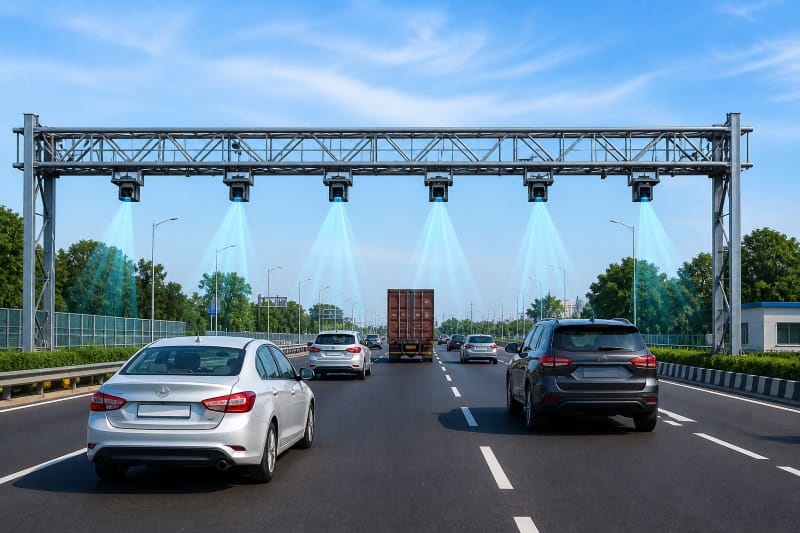
The new system is part of India’s shift towards Multi-Lane Free Flow (MLFF) tolling infrastructure, which aims to reduce congestion, waiting time and fuel wastage at toll plazas.
The first live deployments of this barrier-less tolling system have already started at Manoharpur in Rajasthan and Hyderabad in Telangana.
According to officials, the infrastructure can currently process nearly 30,000 to 35,000 vehicles daily under full highway conditions without forcing vehicles to slow down or stop.
The system works through a combination of technologies including Automatic Number Plate Recognition (ANPR), FASTag-linked RFID systems and LiDAR-based vehicle detection.
LiDAR technology uses laser pulses to detect vehicles, measure distance and classify them in real time even when traffic is dense or moving at high speed.
The deployment is being carried out through a partnership between the National Highways Authority of India (NHAI) and Cron AI’s senseEDGE platform.
Officials said the technology has been specially designed for Indian traffic conditions, including poor lane discipline, overlapping vehicles, glare, darkness and fast-moving highway traffic.
Once a vehicle passes under the tolling infrastructure, the system assigns a tracking ID, captures the number plate, identifies vehicle type based on axle count and dimensions, and deducts the toll amount digitally.
Instead of paying a fixed amount at a toll plaza, commuters will pay only for the exact distance travelled.
Gadkari also said the government has already reduced toll costs in several areas and is considering a Rs 3,000 pass for frequent highway users to enable easier travel across multiple toll routes.
The shift towards MLFF tolling comes as India rapidly expands its highway network. The National Highway network has grown from 91,287 km in 2013-14 to over 1,46,204 km by March 2025.
The government has already mandated the transition of more than 1,100 toll plazas to barrier-less systems across the country.
With FASTag penetration reaching nearly 98 percent and over 8 crore users nationwide, officials believe India is now ready for the next phase of toll collection modernisation.
Experts say the new system could significantly reduce traffic jams, idling at toll booths, stop-start movement, fuel consumption and vehicle emissions while making long-distance highway travel much faster and more convenient for commuters.