Post Office Rules Changed: No Deposits, Withdrawals And Investments Without PAN Card
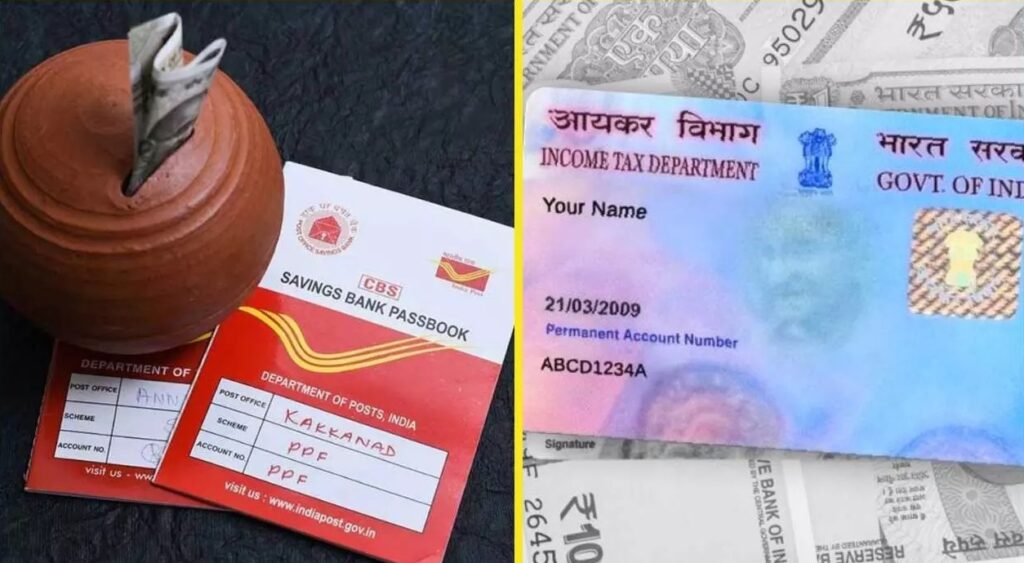
Post Office Rules Changed: No Deposits, Withdrawals And Investments Without PAN Card
Major changes under the Income Tax Rules, 2026 have come into effect for post office account holders and investors, making PAN mandatory for several financial transactions while introducing a new combined declaration form
People using post office savings schemes and banking services will now have to follow new financial rules introduced under the Income Tax Rules, 2026. The revised guidelines make PAN cards compulsory for several important transactions carried out through post offices and the Indian Post Payments Bank (IPPB).

According to the updated rules, PAN details must now be provided for opening accounts, depositing money, withdrawing funds, making fixed deposits and investing in post office schemes.
The move is aimed at improving transparency in financial transactions, tracking high-value deposits and reducing tax evasion within the savings network.

Under the revised framework, quoting a PAN number has become compulsory under multiple provisions of the Income Tax Rules, 2026.
Customers will now need a PAN card for almost every major financial activity linked to post offices and IPPB accounts.
This includes opening new post office accounts, depositing money, withdrawing funds, investing in fixed deposits and savings schemes, along with several other notified financial transactions.
Officials say the change is intended to strengthen monitoring of large financial movements and improve tax compliance.
A separate provision has also been introduced for individuals who do not possess a PAN card.
Such account holders will now have to submit Form 97 instead of the earlier Form 60.
The form will require customers to provide their name, address, transaction details, supporting identity documents and other relevant financial information. The collected details will be maintained in the tax system to ensure proper tracking of transactions conducted without PAN.
Another major change affects taxpayers who submit declarations to avoid TDS deductions on interest income.
Forms 15G and 15H have now been merged into a single unified document called Form 121.
Earlier, Form 15G was used by individuals below 60 years of age, while Form 15H was meant for senior citizens. Under the new system, all eligible taxpayers will now use only Form 121.
The form must be submitted every financial year and is applicable only when the taxpayer’s estimated total taxable income is nil.
The revised rules have already come into force, meaning account holders and investors may need to update their documentation before carrying out future transactions.
With millions of Indians relying on post office savings schemes for deposits, fixed income investments and rural banking services, the changes are expected to impact a large number of customers across the country.
Disclaimer: Financial rules and tax-related procedures may change over time. Readers are advised to verify the latest guidelines with official government or post office authorities before making transactions or investments.