Mumbai-Pune Expressway Missing Link Faces Mobile Network Issues Inside Tunnels, Commuters Raise Safety Concerns
Mumbai-Pune Expressway Missing Link Faces Mobile Network Issues Inside Tunnels, Commuters Raise Safety Concerns
Pune, May 18, 2026: While the newly opened Missing Link project on the Mumbai-Pune Expressway has significantly reduced travel time between Mumbai and Pune, commuters are now raising concerns over poor mobile connectivity inside the tunnels along the route.
The Missing Link corridor, inaugurated on May 1 in the presence of Maharashtra Chief Minister Devendra Fadnavis, Deputy Chief Minister Eknath Shinde and Deputy Chief Minister Sunetra Pawar, has eased traffic congestion in the Lonavala-Khandala ghat section and reduced accidents on the expressway.

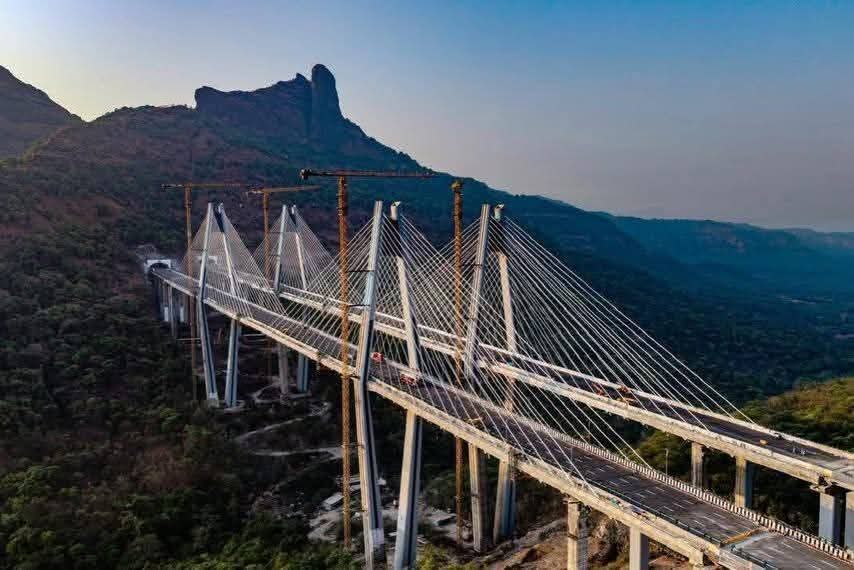
Constructed by the Maharashtra State Road Development Corporation, the 13-km-long stretch includes two tunnels and two cable-stayed bridges. The Pune-bound tunnel is reportedly among the longest tunnels in the world.

Earlier, motorists travelling through the ghat section had to cover nearly 19 km, but the new alignment has reduced the distance to 13 km, saving approximately 20 to 25 minutes of travel time.
However, several commuters have complained that mobile networks disappear completely once vehicles enter the tunnels. Drivers said the lack of connectivity could become dangerous in case of accidents, vehicle breakdowns or medical emergencies, as contacting emergency services becomes difficult inside the tunnel.
According to travellers, vehicles spend around 8 to 10 minutes inside the tunnels, during which mobile signals remain unavailable.
Experts say the tunnels have been carved through extremely hard rock formations in the Sahyadri mountain range, making it difficult for conventional telecom tower signals to penetrate inside. The tunnels are connected to bridges built across the Tiger Valley region.
Officials and technical experts have suggested that mobile connectivity inside the tunnels can be improved using “leaky feeder cables,” a special type of antenna-like cable installed along tunnel walls to transmit 4G and 5G signals.
Another proposed solution is a Distributed Antenna System (DAS), under which multiple small antennas and fibre-optic cables are installed at regular intervals inside tunnels to relay signals from outside telecom towers into the underground stretch.