Nagpur–Goa Shaktipeeth Expressway to Connect, 12 districts and Link over 20 Major Pilgrimage Sites, Cut Travel Time to 8 Hours
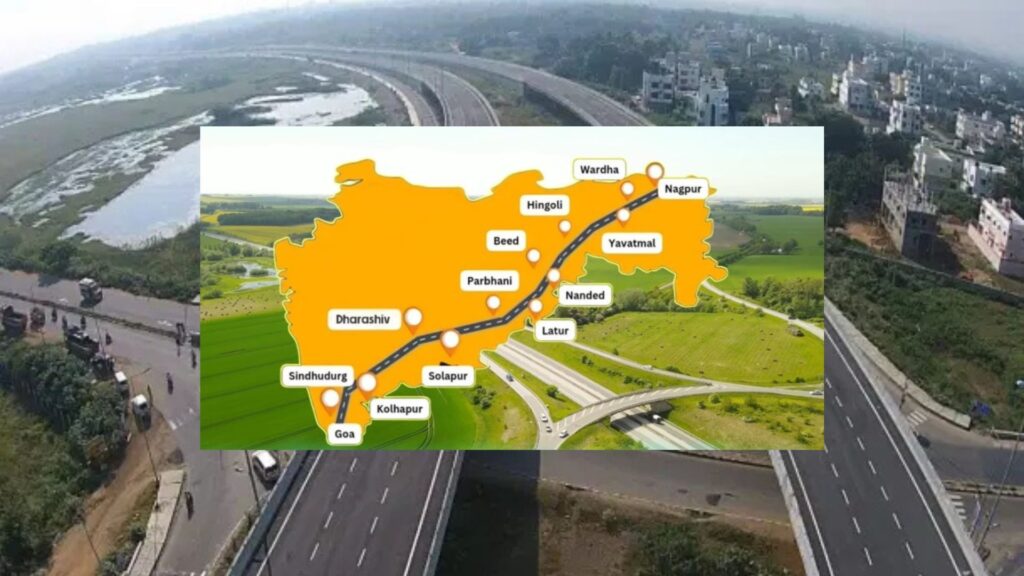
Nagpur–Goa Shaktipeeth Expressway to Connect, 12 districts and Link over 20 Major Pilgrimage Sites, Cut Travel Time to 8 Hours
The 802-km high-speed corridor will link 12 districts and connect over 20 major pilgrimage sites across Maharashtra.
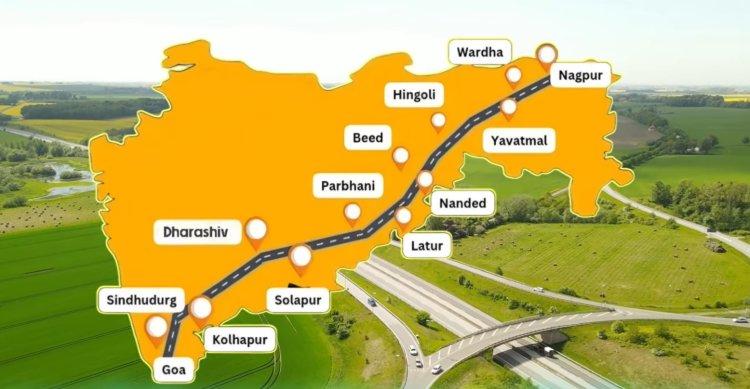
The Nagpur–Goa Shaktipeeth Expressway is set to become one of Maharashtra’s most significant infrastructure projects, promising to transform travel, regional connectivity, and religious tourism across the state. The Maharashtra government has approved land acquisition and the final alignment for the 802.6 km greenfield corridor, which will link Pawnar in Wardha district to Patra Devi in Sindhudurg.
Designed as a six-lane, access-controlled expressway, the project is expected to reduce the current 18–21-hour road journey between Nagpur and Goa to just about eight hours. It will pass through 12 districts, 39 talukas and 370 villages, connecting key regions of Vidarbha, Marathwada, Western and Southern Maharashtra.
A central highlight of the corridor is its spiritual route. The expressway will link several major Shaktipeeths and pilgrimage destinations such as Tuljapur, Kolhapur, Mahur and more than 18 other religious sites. The government believes this will significantly boost religious tourism and economic activity along the route.

For land acquisition alone, the state has sanctioned ₹20,787 crore, which includes ₹12,000 crore as principal and ₹8,787 crore as interest. The funding will be arranged through HUDCO, while the Maharashtra State Road Development Corporation (MSRDC) will execute the project. The state has assured support to bridge any revenue gap to ensure timely loan repayment.
While the alignment between Pawnar and Sangli received approval earlier, the proposed stretch through Kolhapur — covering Shiroli, Karveer, Hatkanangale, Kagal, Bhudargad and Ajra — has been cancelled under the Maharashtra Highway Act, 1955. MSRDC has been directed to study alternate routes and submit revised proposals. A final decision will follow consultations involving the Chief Minister, Deputy Chief Ministers, local ministers and elected representatives.

The expressway has previously faced major roadblocks. In June 2024, the project was paused following farmer protests and political opposition, particularly in the sugar belt areas of Kolhapur. Of the required 8,419 hectares, about 8,100 hectares belong to farmers. Fears of large-scale displacement and land loss had triggered widespread resistance, compelling the government to temporarily halt progress.
Officials have now confirmed that the expressway will connect seamlessly with multiple major corridors, including the Jalna–Nanded Expressway near Parbhani, the Surat–Chennai Expressway near Tuljapur and the Pune–Bengaluru Expressway near Tasgaon. These interchanges will enable uninterrupted, high-speed movement across Maharashtra through a network of access-controlled highways.
Once completed, the Nagpur–Goa Shaktipeeth Expressway is expected to become a vital economic, cultural and religious corridor for the state. Apart from drastically reducing travel time and improving logistics, the project aims to strengthen intra-state mobility and foster balanced regional development across Maharashtra’s eastern, central and western zones.