Pune Court Denies Bail To Owner, Contractor For Damaging Metro Tunnel
Pune Court Denies Bail To Owner, Contractor For Damaging Metro Tunnel
Pune, April 9, 2026: A Pune court has rejected the anticipatory bail pleas of a house owner and a contractor accused of damaging a metro tunnel while drilling a borewell, an incident that raised serious concerns over public safety.
The accused, identified as Dhananjay Mote (house owner) and Pratap Jagtap (contractor), were denied protection from arrest by the Pune Sessions Court. The court observed that the offence involved a threat to public safety and could not be treated lightly.
Pune Metro Tunnel Damaged By Borewell Drilling; Two Booked For Negligence – PUNE PULSE

The incident dates back to March 14, when borewell drilling was being carried out in an open space of an old residential property on Chhatrapati Shivaji Maharaj Road, near Khadak Police Station. The work was reportedly undertaken without prior permission from authorities, despite the presence of an underground metro corridor between Shivajinagar and Swargate.
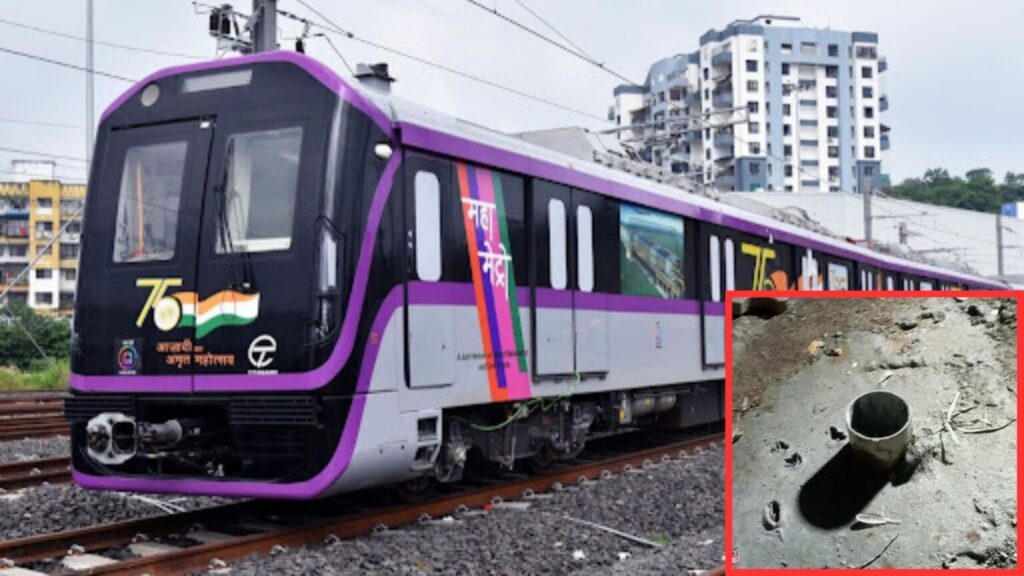
During the drilling process, the borewell equipment penetrated the metro tunnel, breaking a cement ring and creating a hole of approximately six inches in diameter.
The breach caused damage to metro property estimated at around ₹2.5 lakh and posed a significant risk to the lives of commuters and local residents. Following the incident, a complaint was filed by a senior official of Pune Metro, after which Khadak Police registered a case under relevant provisions of the Bharatiya Nyaya Sanhita and the Metro Railway Act.
During the hearing, the prosecution argued that the accused were aware of their actions and still proceeded in a manner that endangered public safety. Accepting this argument, the court highlighted that offences under the Metro Railway Act could attract punishment of up to 10 years of rigorous imprisonment.
The ruling is expected to act as a deterrent against unauthorized excavation activities and underscores the importance of obtaining proper permissions before undertaking such work, especially in sensitive urban infrastructure zones.