Pune Shines as India’s Fastest-Growing Office Hub, Nearly Doubles Leasing Activity: ANAROCK Report

Pune Poised for Major Economic Boost as New Industrial Policy Unveils Defence Corridors, NABL Labs and GCC Hub
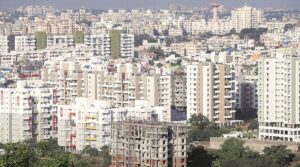
Rising steadily on the country’s commercial real estate map, Pune has taken the spotlight as India’s fastest-growing office market, nearly doubling its leasing activity to 6.2 million sq. ft. this year, according to a new report by ANAROCK Research. The surge highlights a strong revival in corporate demand, particularly from the banking, financial services and insurance (BFSI) sector, co-working operators, and IT companies, all of which have fueled the city’s rapid transformation into a major business destination.
The report notes that while Pune has seen the most significant growth, Bengaluru continues to dominate the country’s office market. The Karnataka capital recorded an impressive 9.95 million sq. ft. of leasing until September 2025, registering a 22 percent rise from the previous year. Despite persistent challenges such as traffic congestion and infrastructure shortfalls, Bengaluru remains the top choice for occupiers, led by IT and ITeS companies, global capability centres (GCCs), and co-working players.
IT and ITeS firms alone contributed 27 percent of total office space absorption across India, with much of the demand focused around Whitefield, Outer Ring Road, and surrounding business districts. The city also saw the sharpest rental increase among major metros, up 9 percent, while its vacancy rate dropped to 12.2 percent from 13 percent last year, suggesting that new spaces are being quickly taken up.

Meanwhile, Pune’s office market continues to impress with its remarkable momentum. The city recorded a 97 percent year-on-year increase in net absorption and a 168 percent rise in new completions, driven by strong interest from engineering firms, IT parks, startups, and BFSI companies. Industry experts credit Pune’s growth to its affordable rental values, expanding metro and public transport connectivity, and a rapidly growing base of multinational firms.
Once regarded as a satellite city to Mumbai, Pune has now evolved into one of India’s most dynamic and sought-after commercial hubs, particularly in the post-pandemic era where hybrid and flexible working models have reshaped corporate preferences.
Not all cities, however, are witnessing the same momentum. Kolkata remains under pressure, registering a decline in office leasing activity. The city’s net absorption fell to 0.85 million sq. ft. until September 2025, down from 1.05 million sq. ft. a year earlier — a 19 percent annual drop. Vacancy levels remain high at 17.8 percent, only marginally lower than last year’s 18.3 percent.
The report attributes this sluggish performance to limited Grade-A supply, slower infrastructure growth, and the absence of large multinational tenants, all of which continue to weigh on Kolkata’s ability to compete with more vibrant markets.
Across India’s top seven office markets, the report paints a picture of a sector in robust health. Net absorption reached a six-year high of 42 million sq. ft., driven by continued expansion from the technology, BFSI, and co-working sectors. Average rentals rose 6 percent year-on-year to ₹90 per sq. ft., while the overall vacancy rate fell to 16.2 percent, signaling improved balance between demand and supply.
Chennai emerged as the tightest market, posting the lowest vacancy rate of 8.9 percent, whereas Hyderabad recorded the highest vacancy of 26.5 percent, largely due to an oversupply of new developments despite healthy leasing volumes. Altogether, Bengaluru, NCR, and the Mumbai Metropolitan Region (MMR) accounted for nearly 60 percent of total leasing activity, underlining their continued dominance in India’s commercial real estate scene.
As the landscape continues to evolve, the data underscores how the country’s office market is adapting to changing corporate needs. Pune and Chennai are now the most promising growth stories, while Bengaluru holds its ground as the traditional leader despite infrastructure hurdles. On the other hand, Kolkata’s lagging performance serves as a reminder that consistent policy support and infrastructure investment are essential for long-term competitiveness.