Renamed Indian Cities: A Cultural Shift Rooted in History and Identity
Renamed Indian Cities: A Cultural Shift Rooted in History and Identity
India’s urban landscape is witnessing a notable transformation, not just in infrastructure or development, but in the very names by which its cities are known.
In recent years, the move to rename towns and cities has gained momentum, reflecting efforts to reconnect with indigenous roots, erase colonial legacies, and assert cultural identities. These changes are not just administrative; they signal a deeper narrative about reclaiming history and honoring traditional, regional, or spiritual significance. A growing list of cities have been renamed to reflect their ancient, local, or pre-colonial names, in a move widely viewed as part of a broader cultural reassertion.
Take Varanasi, for instance. Once known as Kashi, this sacred city on the banks of the Ganges is considered one of the oldest continuously inhabited cities in the world. Its ancient name, Kashi, is deeply woven into Hindu mythology and spiritual tradition.
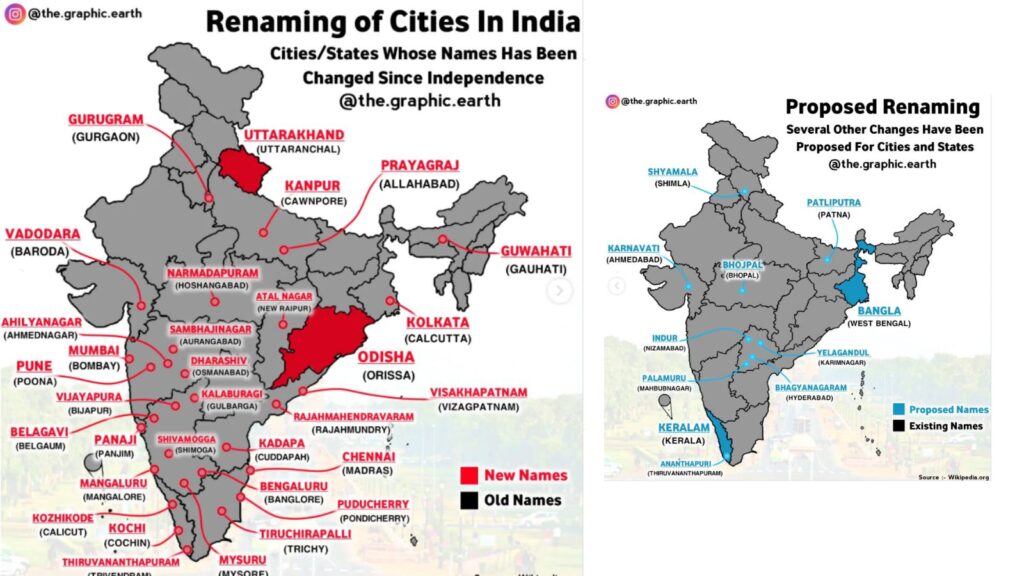
Known globally for its tech industry, Bangalore was officially renamed Bengaluru in 2006. The change was made to reflect the city’s historical roots and its original Kannada name, which dates back to the 9th century.

The Union Territory’s name was changed from Pondicherry to Puducherry in 2006. Meaning “new town” in Tamil, the new name better represents the region’s language and cultural identity, while its French colonial architecture continues to add to its charm.
The name change from Orissa to Odisha was made to match how the name is actually pronounced in the local language. “Odisha” comes from an old word, “Odda Visaya,” that has been used to describe the area for a long time. The previous spelling, “Orissa,” was based on the colonial-era English version and didn’t reflect the true local pronunciation.
Mumbai, India’s financial capital, was formerly known as Bombay, a name introduced by the British. The shift to “Mumbai” in the 1990s was seen as a step toward restoring its original Marathi identity, linked to the local goddess Mumbā Devī.
Similarly, Chennai, once called Madras, reclaimed its Tamil roots with a name that reflects its regional heritage. Kolkata, which was called Calcutta during the British Raj, also returned to its Bengali origin.
More recently, Allahabad was officially renamed Prayagraj, reviving its ancient name which references the sacred confluence of the Ganga, Yamuna, and the mythical Saraswati rivers. This renaming was not only symbolic of cultural revival but also held religious significance, particularly in the context of the Kumbh Mela.
The capital city Delhi traces its roots to Indraprastha, the legendary city of the Pandavas mentioned in the Mahabharata. Though the name Delhi remains, the cultural memory of Indraprastha continues to be evoked in literature and tradition.
Several Indian cities, while retaining their current names officially, have deep historical roots or have been known by different names in the past names that reflect ancient legacies, cultural significance, or colonial influence. Originally known as Bhagyanagar, Hyderabad, the capital of Telangana, was established in the late 16th century by Muhammad Quli Qutb Shah and named after either Hyder Mahal or in honor of Imam Ali (also called Hyder). It was once part of the Golconda Sultanate and later became a princely state under the Nizam.
Originally Vridhnagar, now Vadnagar, located in Gujarat, is an ancient town with archaeological roots dating back over 2,500 years. While its name has remained largely unchanged, it holds deep spiritual and historical significance as the birthplace of Prime Minister Narendra Modi and a once-flourishing center of Buddhist and Hindu traditions. Ahmednagar, named after Ahmad Nizam Shah I who founded it in 1494, was once a prominent center of the Nizam Shahi dynasty and played a vital role in Deccan politics, is now, Ahilyanagar.
Guwahati, now a bustling city in Assam, was historically known as Pragjyotishpur—an important city in ancient Kamarupa kingdom and mentioned in several Hindu scriptures. Jamshedpur, in Jharkhand, is a relatively modern industrial city established by Jamsetji Tata and named in his honor, originally known as Sakchi before it was developed into India’s first planned industrial city. Ahmedabad, originally was Karnavati, founded by Sultan Ahmed Shah in 1411, has always borne his name, though the region itself existed as a thriving settlement even during ancient times under names like Ashaval.
Lastly, Gulbarga, now officially renamed to Kalaburagi, was the first capital of the Bahmani Sultanate in the Deccan. Its new name reflects its Kannada roots, Kalaburagi meaning “land of stones.” Each of these cities carries a layered identity, where names old and new coexist with narratives of empire, faith, resilience, and transformation.
Other notable transformations include:
- Poona becoming Pune, aligning with its Marathi pronunciation.
- Cochin being renamed to Kochi, reflecting its Malayalam heritage.
- Akbarabad, the name Agra held during the Mughal era, reverting to Agra, rooted in ancient Indian texts.
- Rāmdāspur, the earlier name for Amritsar, now echoes in local memory though not officially reinstated.
- Patna, which was once Pataliputra, the grand capital of the Maurya and Gupta empires, stands as a reminder of India’s ancient administrative brilliance.
The trend continues with several other cities under consideration for name changes, part of a larger movement that sees naming as more than nomenclature, it is an assertion of identity, pride, and belonging. Critics argue these changes can divert attention from governance issues or carry political motives, while proponents view them as long-overdue corrections to colonial distortions and a tribute to India’s civilizational heritage.
As India continues to evolve, the names of its cities serve as powerful symbols of its complex, layered history merging the ancient with the modern, and the local with the national. For residents and visitors alike, these renamings invite a deeper appreciation of the stories that each city carries through time.