Summer Heat Alert: Not Just ACs, These Household Gadgets Can Also Overheat And Turn Dangerous
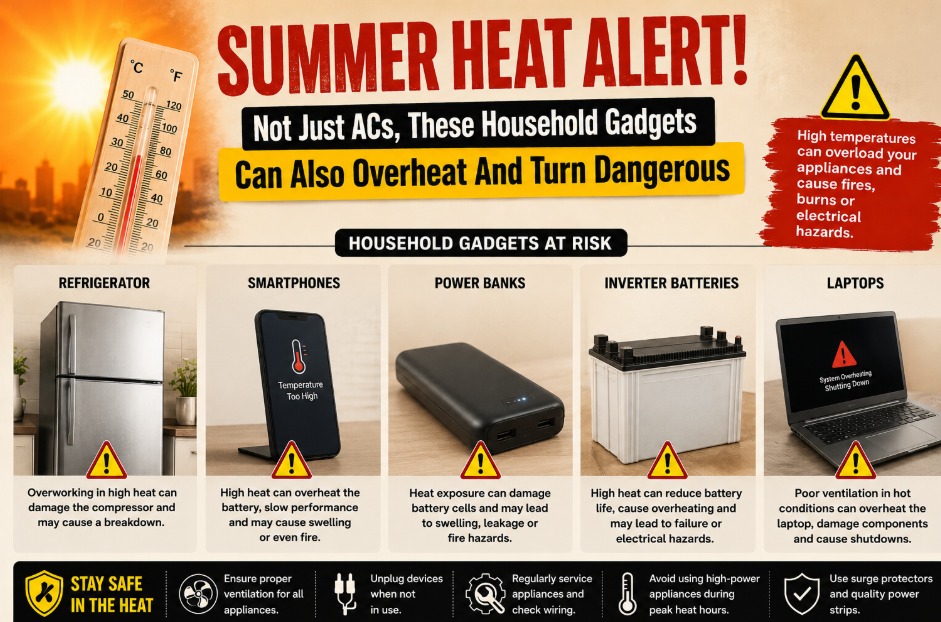
Summer Heat Alert: Not Just ACs, These Household Gadgets Can Also Overheat And Turn Dangerous
Rising summer temperatures can damage electronic gadgets and increase the risk of overheating, fire and explosions. Here’s how to keep devices like smartphones, refrigerators, laptops and power banks safe during extreme heat.
May 8: With temperatures soaring above 40°C in many parts of the country, experts are warning citizens to be extra careful while using electronic appliances during summer. While incidents of air conditioner blasts often grab attention during heatwaves, several other commonly used household gadgets can also become risky if not handled properly.

Extreme heat can put additional pressure on electrical devices, increasing the chances of overheating, short circuits, smoke or even explosions. Experts say proper ventilation, careful charging habits and regular maintenance can help prevent accidents.

Here are some household gadgets that require extra attention during the summer season:
Refrigerator
Refrigerators work continuously during summer to maintain cooling, putting additional load on the compressor. Many households place fridges too close to walls, blocking airflow and causing the compressor to overheat.
Experts recommend keeping refrigerators at least six inches away from the wall to allow proper ventilation. Cleaning the back coils regularly and disconnecting the power supply before maintenance can also help improve safety and efficiency.
Smartphones
Smartphones are among the most common gadgets affected by overheating during summer. Most phones use lithium-ion batteries, which are highly sensitive to excessive heat.
Leaving phones under direct sunlight, charging them for long hours or using heavy applications such as gaming while charging can increase battery temperature significantly. Experts also warn against leaving phones inside parked vehicles, where temperatures can cross 50°C.
Users are advised to avoid direct sunlight exposure, use only original chargers and minimise phone usage while charging.
Power Banks
Like smartphones, power banks also contain lithium-ion batteries and can become dangerous if exposed to high temperatures for long periods.
People often leave power banks inside cars, backpacks or bike storage compartments during travel. Heat buildup inside closed spaces can trigger chemical reactions within the battery, increasing the risk of swelling, leakage or explosion.
Experts recommend storing power banks in cool, dry places and avoiding cheap or low-quality products that may lack proper safety features.
Inverter Batteries
Frequent power cuts during summer lead to increased use of inverter systems. During charging and discharging cycles, inverter batteries release gases such as hydrogen and oxygen. In poorly ventilated spaces, these gases can accumulate and become hazardous.
A minor spark in such conditions can trigger a serious blast or fire. Low water levels in batteries can also create safety risks.
Experts suggest placing inverter batteries in open, ventilated areas and checking water levels regularly. Battery terminals should also be cleaned periodically to prevent carbon buildup.
Laptops
Continuous use of laptops during hot weather can cause processors and batteries to heat up rapidly. Many users place laptops on beds, cushions or soft surfaces, blocking air vents and preventing heat from escaping.
This can lead to overheating of internal components, smoke or, in severe cases, fire hazards. Experts advise using laptops on hard, flat surfaces and ensuring that cooling vents remain unobstructed.
As temperatures continue to rise across India, citizens are being urged to use electronic appliances carefully and follow basic safety measures to reduce the risk of overheating-related accidents during the summer season.
Disclaimer:
This article is intended for general awareness and informational purposes only. Readers are advised to follow manufacturer instructions and consult authorised technicians or safety experts for proper handling and maintenance of electronic appliances.