Supreme Court Halts Notification Easing Environmental Clearance For Large Housing Projects
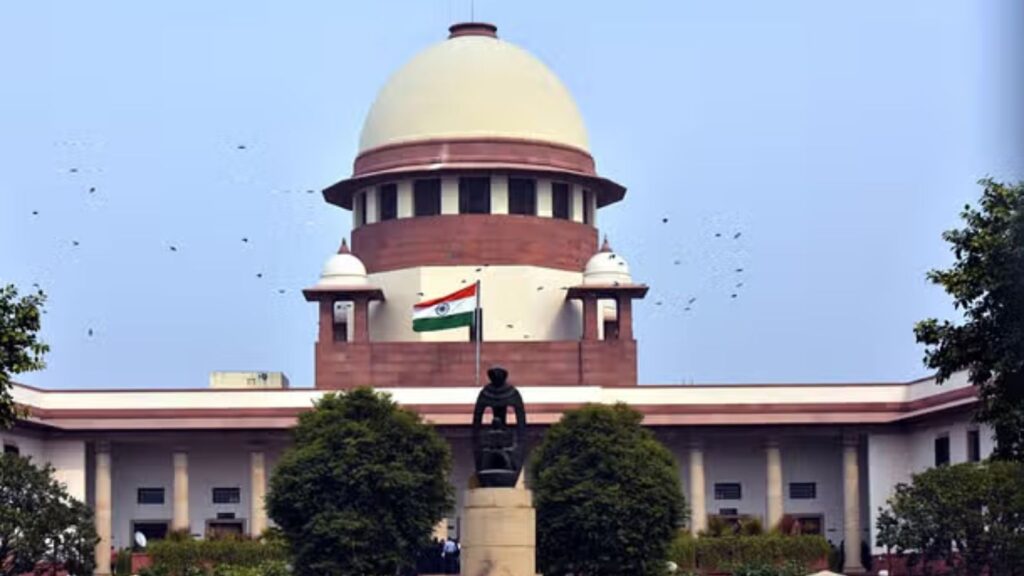
Supreme Court Halts Notification Easing Environmental Clearance For Large Housing Projects
The Supreme Court has put a hold on a recent government notification that exempted certain projects from prior environmental clearance under the Environment Impact Assessment (EIA) norms. The court also issued a notice to the Union Ministry of Environment, Forests, and Climate Change following a public interest litigation (PIL) filed by NGO Vanashakti.
The PIL, submitted on February 16, challenges the dilution of environmental clearance requirements. It specifically opposes the government’s January 29 notification, which removed the mandatory prior clearance for construction projects up to 1,50,000 square meters, including industrial sheds and educational institutions such as schools, colleges, and hostels. Additionally, the PIL contests a January 30 memorandum that expanded the exemption to private universities, technical institutions, warehouses, and industrial facilities.
During a hearing on Monday, a Supreme Court bench comprising Justices Abhay Oka and Ujjal Bhuyan reviewed the petition presented by senior counsel Gopal Sankaranarayanan and issued a notice to the Centre. The next hearing is scheduled for March 28. Meanwhile, the court ordered a stay on the implementation of the January 29 notification and the January 30 memorandum.

The petition argues that excluding these large-scale projects from EIA norms could lead to unchecked construction in ecologically sensitive regions, protected wildlife areas, and heavily polluted zones. The previous threshold required environmental clearance for any construction exceeding 20,000 square meters, but the revised policy would allow projects as large as 16 lakh square feet to bypass this requirement.
Legal experts warn that if the notification were enforced, it could have widespread environmental consequences, including unregulated construction and irreversible damage to land, air, and water resources. The stay order from the Supreme Court ensures that the existing clearance norms remain in place while the case is under review.